Most floors fail slowly. A commercial kitchen or brewery floor can fail in a year. It is wet most of the day, it takes boiling water, hot oil and caustic cleaners, it is hosed down every night, and the people on it are carrying knives, hot pans and full kegs. A coating that would last a decade in a warehouse can be lifting at the drains of a busy kitchen before the next lease renewal.
We coat commercial kitchens alongside garages, warehouses and plant floors, and there are breweries in the Vista business park on our list. What follows is what decides whether one of these floors lasts, written for the owner, operator or facilities manager planning the work.
What a kitchen or brewery floor goes through
The abuse is specific, and it is worth naming because each part leads to a different line in the specification.
- Water, all the time. Mopping, wash-down, spills, condensation off walk-ins and fermenters. Water gets under any edge or crack it can find
- Heat. Boiling water dumped from kettles and stockpots, hot oil from fryers, steam cleaning. Thermal shock, cold one minute and scalding the next, is hard on any coating
- Chemicals. Caustic and acid cleaners in breweries, degreasers in kitchens, sanitizers everywhere. Food acids from citrus, vinegar, wine and dairy etch bare concrete
- Fats and oils. Grease soaks into unprotected concrete and stops anything bonding to it later
- Impact and load. Dropped pans, steel-wheeled carts, kegs, pallet jacks and equipment dragged out for cleaning
A floor that is only specified for one of these fails at the next one. That is why the conversation starts with how the space is actually used, not with a product name.
Why bare or sealed concrete does not hold up
Concrete is porous and it is attacked by acids. In a kitchen that means grease and food acids soak into the surface, the cement paste is slowly etched away, and the floor becomes rough, stained and hard to clean. A topical sealer slows that down for a while, but it is thin, it wears off in the traffic lanes, and it does not stand up to hot water or caustic cleaners.
It is also why polished concrete, which is a good floor in many commercial spaces, is usually the wrong one here. We covered that in can existing concrete be polished: a polish leaves the slab itself exposed, and in a kitchen the slab is exactly what needs protecting.
What the specification has to cover
A coating for one of these floors is a system, and these are the parts of it that matter.
Chemical resistance for the actual chemicals. A brewery running caustic and acid cleaning cycles needs a different build from a café that mops with a neutral cleaner. Tell whoever is specifying the floor what you clean with and what gets spilled, and ask them which parts of the system are rated for it. Our approach on industrial floors is the same here: the specification follows the process on the floor.
Heat. Some coating systems handle hot water and thermal shock much better than others. Around kettles, fryers and dish areas this is often the deciding factor. In the trade, cement-based urethane systems are commonly used where heat and wash-down are both severe, and standard epoxies are fine in cooler, drier areas of the same building. A good specification can use different builds in different zones.
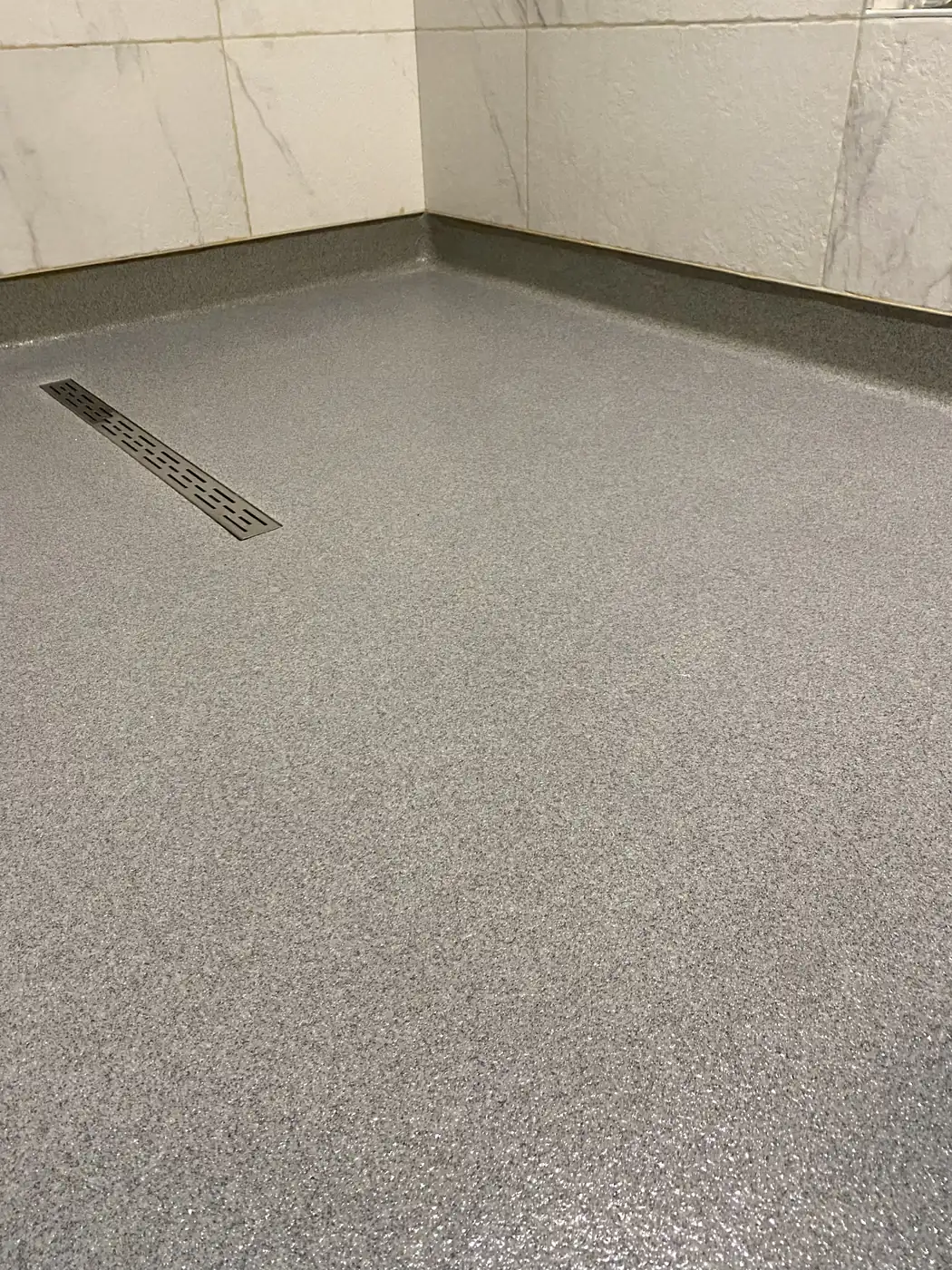
Coving. The floor coating is carried up the wall as a curved base, so there is no joint where the floor meets the wall for water and food waste to collect in. The photo above shows a coved base meeting the wall tile. In food areas it is usually expected, and it is far easier to keep clean than a floor with a separate rubber base.
Drains and fall. Water needs somewhere to go. The coating is worked into drains and trench drains so the joint between them is sealed rather than left as a gap for water to get under. A coating cannot change the fall of the slab much, so if water already sits in places, that needs to be known at the start.
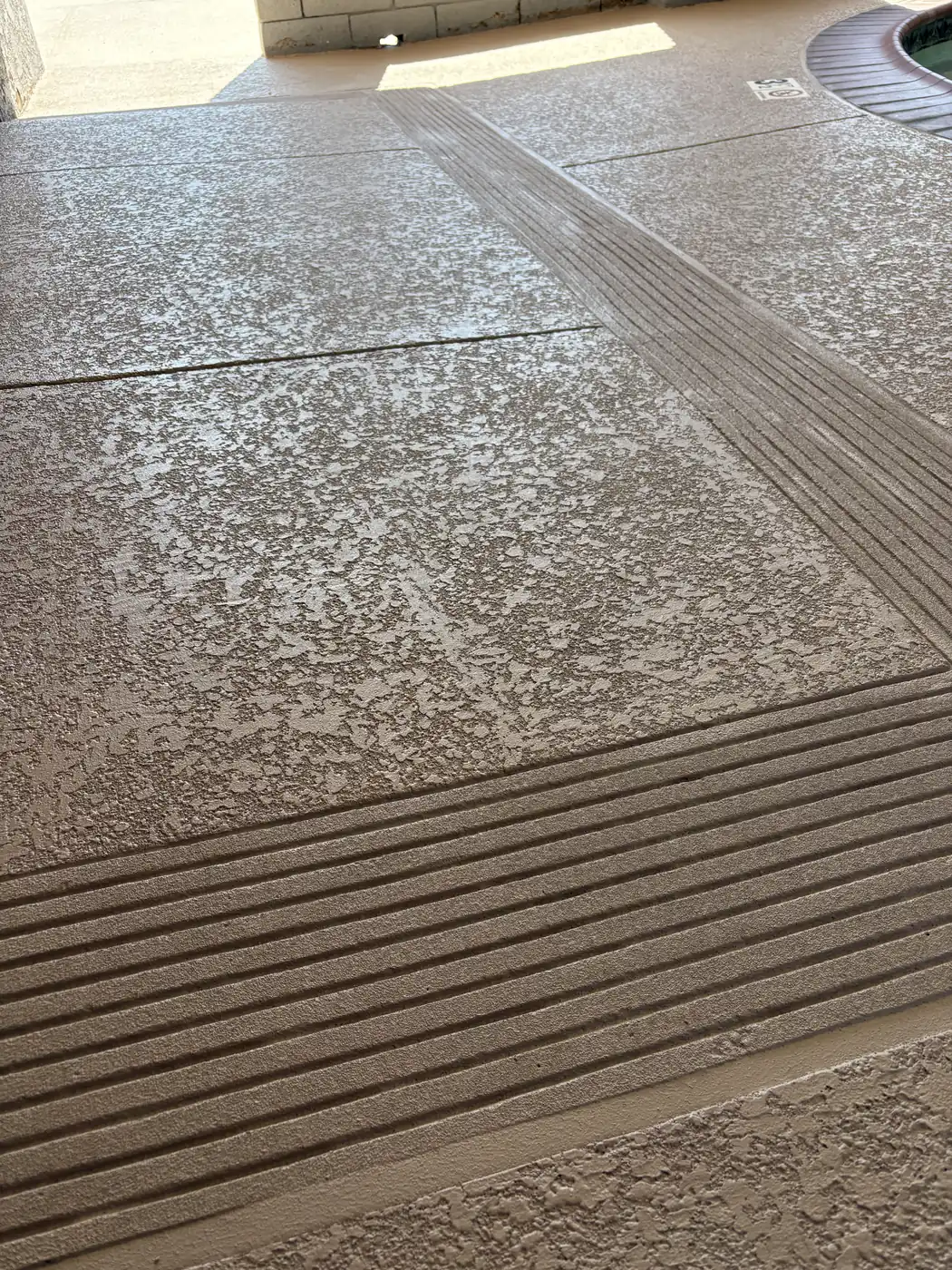
Grip. A wet, greasy floor is a slip hazard, and in a kitchen grip is part of the specification from the beginning. Texture can be varied across the floor, with more under the line and in the dish area and less where carts roll. Are coated concrete floors slippery explains how grip is built into a coating.
Cleanability. Every bit of texture that adds grip also holds dirt. The balance between the two is a real decision, and it is better made with your kitchen manager in the room than left to the installer.
Preparation is where these floors are won or lost
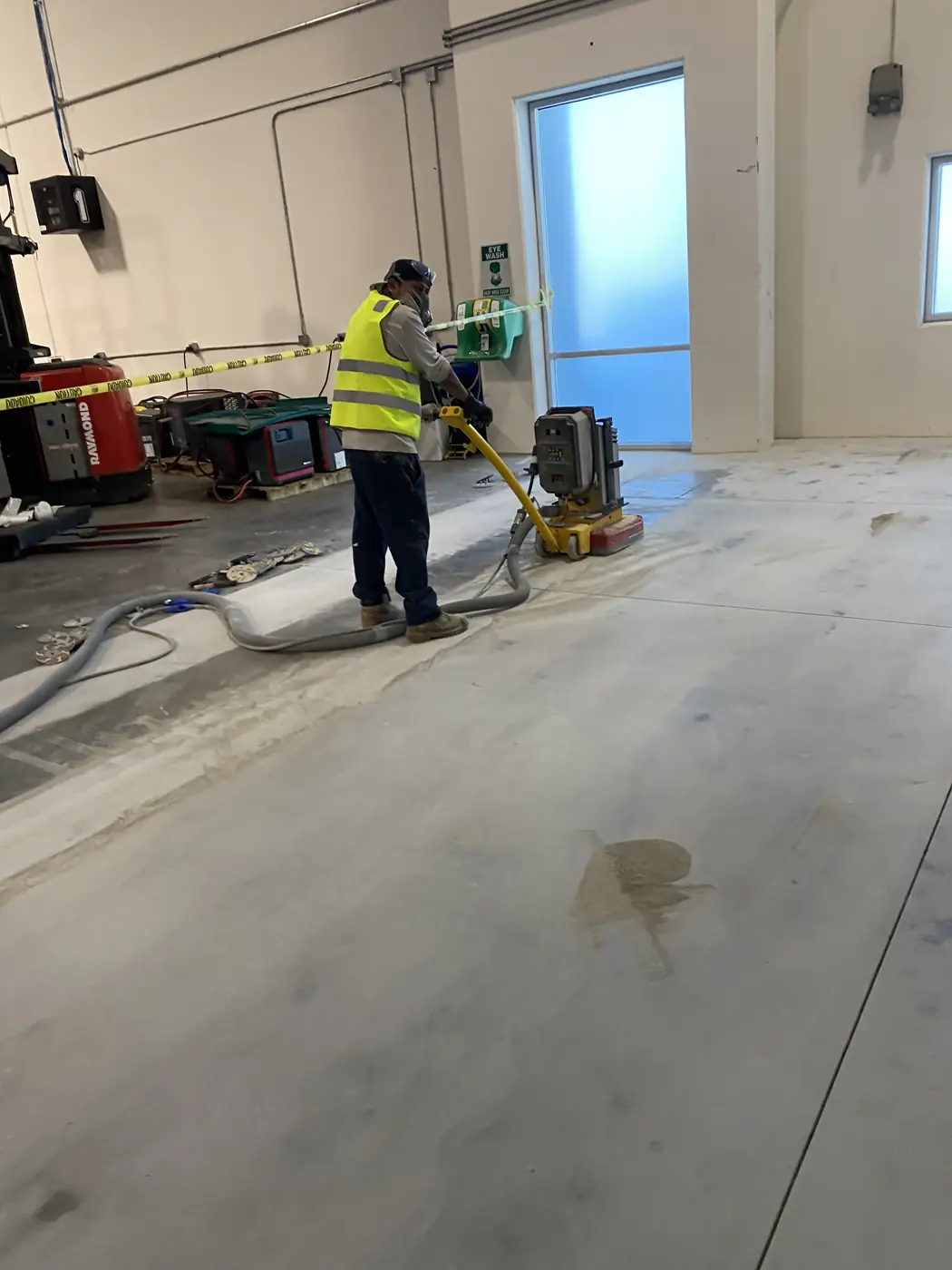
Kitchen and brewery slabs are usually the hardest floors to prepare that a coating contractor sees. Years of grease have soaked into the concrete, there is often an old coating or tile adhesive that has to come off, and the concrete around drains has frequently been eaten away by chemicals and standing water.
All of that has to be dealt with before anything new goes down.
- Grease and oil are removed mechanically and by degreasing. Concrete that has absorbed fat for years can keep bleeding it back up, and we would rather say so at the estimate than find out when the coating lifts. Coating an oil-soaked floor goes into that in detail
- Old coatings, tile and adhesive come off back to sound concrete. Our own crews do the removal, and how old floor coatings are removed shows what that involves
- Damaged concrete around drains and under old equipment is cut back and rebuilt so the new floor is not bridging soft or crumbling material
- The surface is ground to open it up so the coating can key into it, rather than being washed and rolled
None of it is visible once the floor is finished, and almost every failed kitchen floor we are asked to strip failed here rather than because of the product.
Inspections and permits
Floors in food preparation areas are subject to county environmental health requirements, and new or remodeled food facilities usually go through a plan check. The general expectation is a floor that is smooth, durable, non-absorbent and easy to clean, with coved bases in the right places. The exact requirements are the county's to set, so the operator or their designer should confirm them with environmental health before the specification is fixed, not after the floor is down.
Keeping the kitchen open
The biggest worry for most operators is downtime. A few things make it manageable.
- Phasing. The floor can be split into sections, done in an agreed order, so part of the operation keeps running. It takes longer overall, but it is often much cheaper than closing
- Out-of-hours work. Nights and weekends are normal for us on commercial floors. Tell us the hours you actually have and we will tell you honestly whether the work fits them
- Return-to-service dates up front. You need to know when staff can walk on each section, when equipment can go back, and when the floor can take hot water and full cleaning again. Those are separate dates, and you should have all of them before the work starts
- Moving equipment. Decide early who disconnects and moves what. Gas and plumbing connections are a job for your own trades, and the schedule falls apart if they are not booked
Getting bids you can compare
Commercial kitchen floors vary in price more than most work, because the preparation varies so much. When you compare bids, ask each contractor the same questions: how is the floor prepared and with what equipment, what comes off, what system goes in each area and what is it rated for, how are the coving and drains detailed, who does the work, and what does the warranty cover. Our own questions to ask a concrete coating contractor has the full list, and commercial epoxy flooring cost per square foot covers what moves the number.
Getting the floor looked at
We have been preparing and coating concrete in Southern California since 1976, and our own crews do the removal, the preparation and the installation. Every job carries five years on material and one year on labor. There is more on the systems we use on our epoxy floor coatings and industrial floor coatings pages. Book a free on-site estimate and we will walk the floor with you, ask what happens on it, and specify for that.