Polished concrete is the one floor finish with nothing added on top. The slab is ground with progressively finer diamond tooling, hardened with a densifier along the way, and taken up to the level of shine you want. There is no film to peel, because the shine is the concrete itself.
That is also the catch. With a coating, the product is the floor and the slab is just what holds it up. With polishing, the slab is the floor. Whatever your concrete is, the finished floor will be a refined version of exactly that. So the useful question is not whether a slab can be polished. Most can. It is what yours will look like when it is.
How hard the concrete is
Polishing works by refining a hard surface, the same way stone is polished. Hard, well-cured concrete takes a deep, clear shine and keeps it under traffic. Soft concrete does not. A slab that was rained on while it was placed, finished with too much water, or never cured properly has a weak, dusty top layer that resists taking a polish.
A densifier helps. It is a liquid that soaks into the surface and reacts with the concrete to harden it, and it is part of every polish we do. It improves a marginal slab. It does not rescue a genuinely soft one. Hardness is one of the first things we look at on an estimate, because it decides both the tooling and whether polishing is the right call at all.
What is on it now
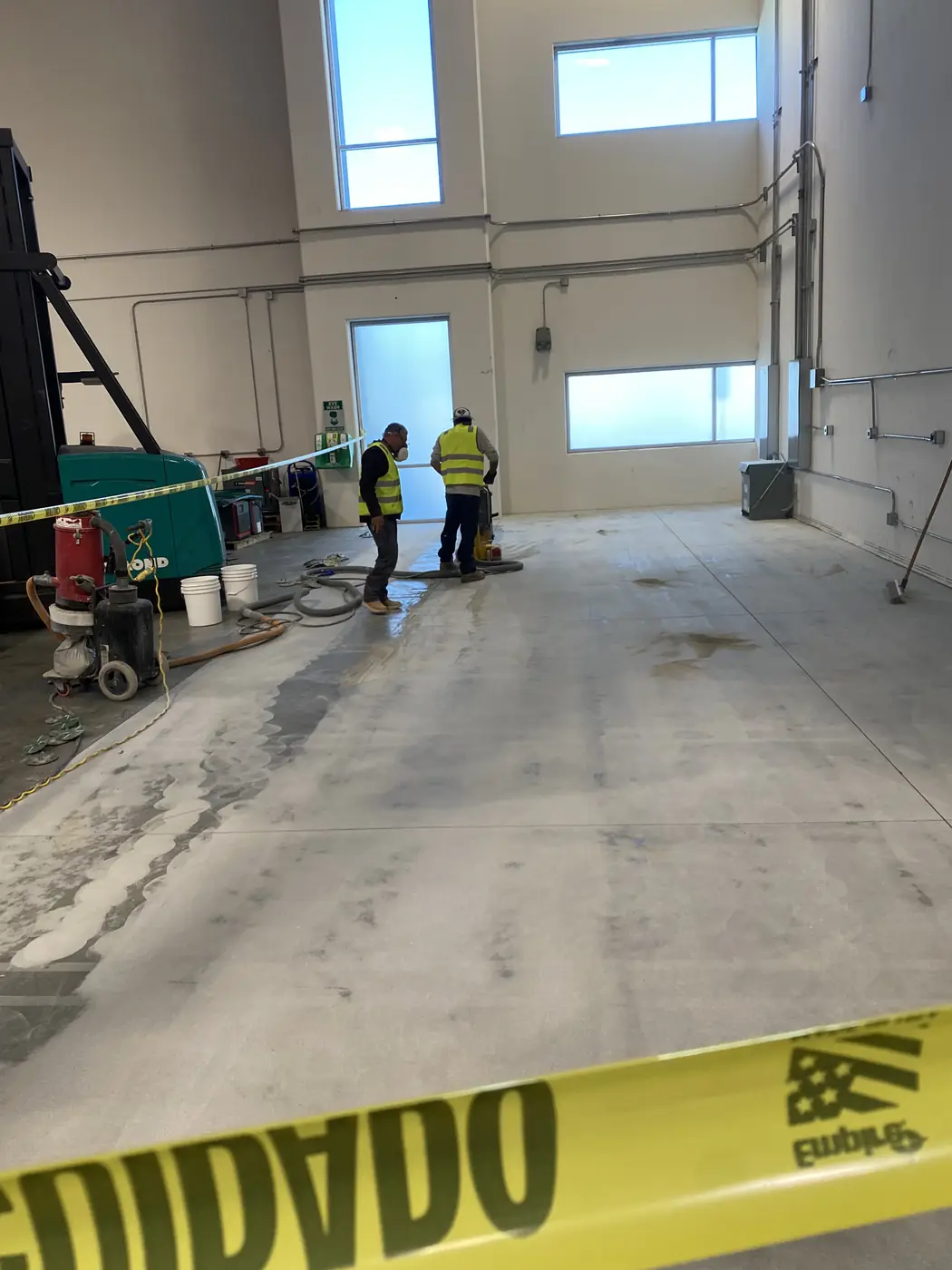
Anything on the slab has to come off before polishing starts: epoxy, paint, sealer, tile thinset, carpet glue. Removal is work we do ourselves, as a service in its own right, and the methods are covered in how old coatings come off concrete.
What has soaked into the slab matters more than what is sitting on it. Oil that has penetrated deep into a shop floor, or the shadow left where glue lay for thirty years, can survive the grind and show in the finished floor. Polishing has no film to hide it under. On a floor with that kind of history it is worth grinding a test area first, so you can see what comes through before committing to the whole thing.
How flat it is
A grinder is a flat, rigid machine. On a wavy slab it cuts the high spots first and deepest, and barely touches the low ones. Since the look of polished concrete depends on how deep the cut goes, a wavy slab polishes unevenly: more stone showing on the highs, more smooth paste in the lows.
On a warehouse floor nobody minds. In a showroom or a living room it matters. A slab can be ground flatter, but that is more passes and more time, and it pushes the floor towards a heavier stone exposure everywhere.
How much stone you want to see
Concrete is sand and stone held in cement paste. The top surface of a troweled slab is mostly paste. The deeper the grind, the more of the sand and then the stone appears. There are three broad looks:
- Cream: only the very top is refined. The floor is smooth and even in tone, with the natural mottling of the original trowel finish. It needs a flat, well-finished slab, because there is almost no depth of cut to correct anything
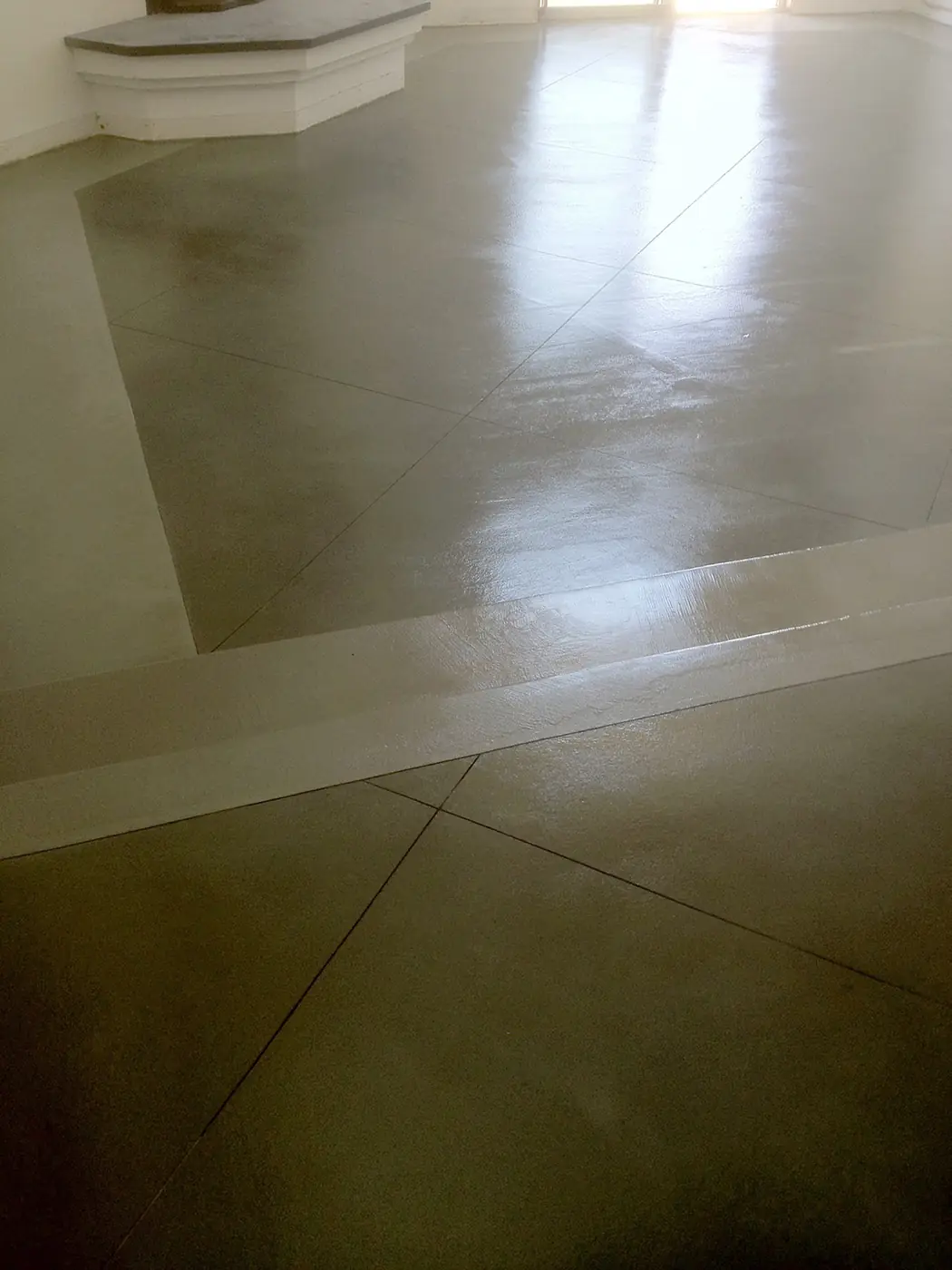
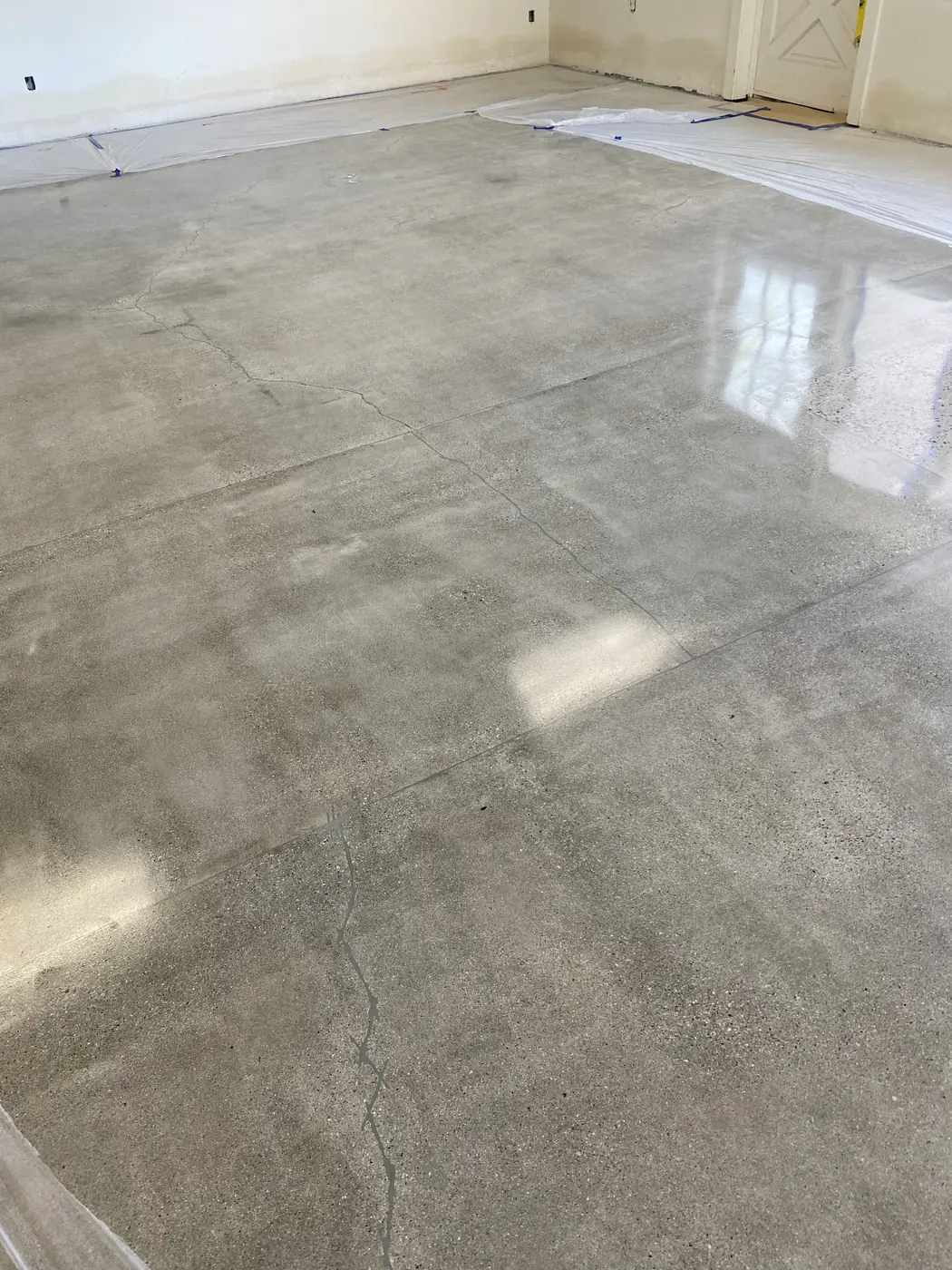
- Salt and pepper: a slightly deeper cut exposes the fine sand, giving a lightly speckled surface. This is the most common result on an existing slab, and it is what the floor in the photo above shows
- Exposed aggregate: a deep grind reveals the larger stones, for a look close to terrazzo. It takes the most work, and what it looks like depends entirely on the stone that went into your concrete when it was poured, which nobody chose for its looks
You can choose the target. The slab decides how evenly it can be hit.
Cracks, joints and patches stay visible
Look at the photo at the top of this page. That floor is finished, and you can see the saw-cut joints running across it and two cracks that were filled before polishing. This is what an honest polished floor looks like on an existing slab.
Cracks are filled so they do not collect dirt or chip at the edges, but a filled crack is still a visible line. Joints stay, and get filled or left open depending on the use of the floor. Old patches, trench lines where plumbing was added, and holes from removed walls and anchors will all read as different from the concrete around them, because they are different concrete.
Most owners see this as character, and it is a large part of why polished concrete looks like what it is rather than like a product. If what you are picturing is a flawless, uniform surface, a polished existing slab is not going to be that, and we would rather say so at the estimate than at the handover.
Gloss is your choice
Shine is set by how far up the grit sequence the floor is taken, and it is agreed before we start. It runs from a low satin, which hides dust and scuffs well and suits a warehouse or workshop, through to a full mirror finish that reflects the lights, which suits retail floors and showrooms.
People often assume a glossy floor must be slippery. Clean and dry, polished concrete gives better grip than it looks like it should. Like any hard floor, it is a different story with water or oil on it, so entrances get matting and spills get wiped up.
Color and graphics
A slab can be dyed before the final polishing passes, which locks the color into the concrete rather than leaving it sitting on top. Lines and graphics can also be saw-cut into the floor and colored. We have cut court markings into hall floors and graphics into dining areas, and there are examples in our gallery.
When polishing is the wrong answer
It is not right for every floor, and the slab is not the only reason.
- The slab is too soft or too damaged. A coating or an overlay will give a better floor than a polish that will not hold
- The floor sees acids or harsh chemicals. Concrete is etched by acids, and that includes food acids in a commercial kitchen. A coating protects the slab; a polish leaves it exposed
- It is a wash-down area that needs a seamless surface carried up the walls and sloped to drains
- You need a uniform, flawless look, or a specific solid color
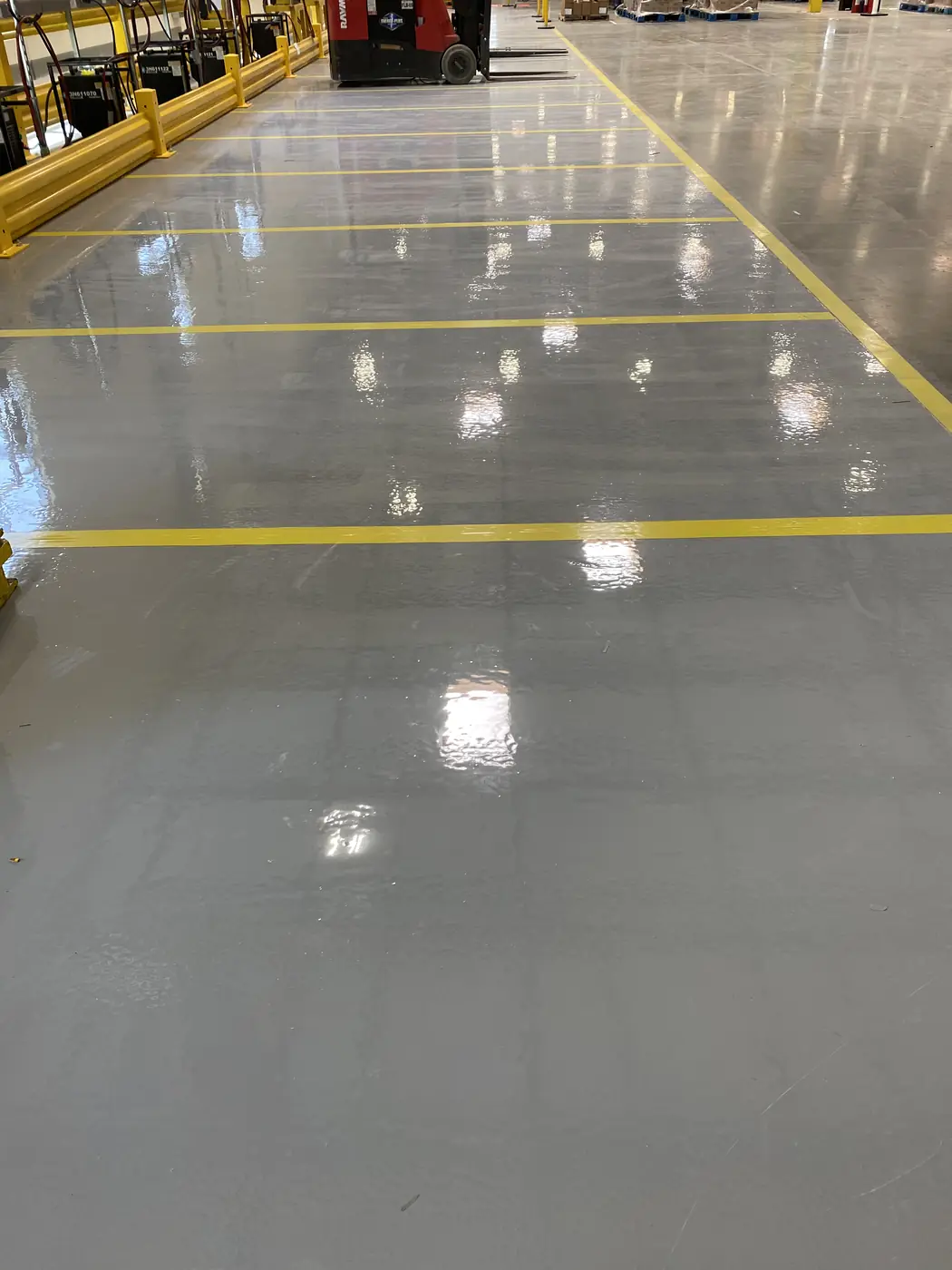
We went through that choice in detail in polished concrete vs epoxy. If the floor has to carry aisle markings and forklift traffic, how warehouse floor striping survives is worth reading too.
Getting it quoted
We have been grinding and preparing concrete since 1976, and the same skills that make a coating bond are the ones that make a polish come out right. Our own crews do all of it, from removing the old flooring to the final pass. The detail is on our polished concrete page. Book a free on-site estimate and we will look at your slab and tell you plainly what it will give you. If it will not take a good polish, you will hear that before you spend money on it.