One of the reasons people choose a finished concrete floor is that it asks for so little. No grout lines, no fibers, nothing to refinish every few years. That is true. But low maintenance is not no maintenance, and the little these floors need is specific. Most of the damage we see on floors that were installed properly comes down to two things: grit that was left to grind into the surface, and the wrong cleaner.
This is a practical guide, floor by floor. If your floor came with care instructions from whoever installed it, follow those first. They know what system is down.
The one rule for all of them
Grit is the enemy. Sand and fine dirt under shoes and tires act like sandpaper, and they dull a glossy surface one footstep at a time. Every floor on this page lasts longer and looks better if the grit is taken off it regularly, and nearly everything else is secondary.
That means a dust mop or soft broom often, a mat at the door, and not waiting for the floor to look dirty. In the Inland Empire and the high desert, where wind puts dust into every garage, it matters more than it does at the coast.
The first weeks
A new coating or sealer is dry long before it is fully cured. Foot traffic comes back well before vehicles and heavy furniture do, and we give you both dates for your job up front. Keep to them. Most early damage is a car parked a day too soon or a refrigerator dragged across a sealer that was still soft. Hold off on wet cleaning until the floor has reached full cure.
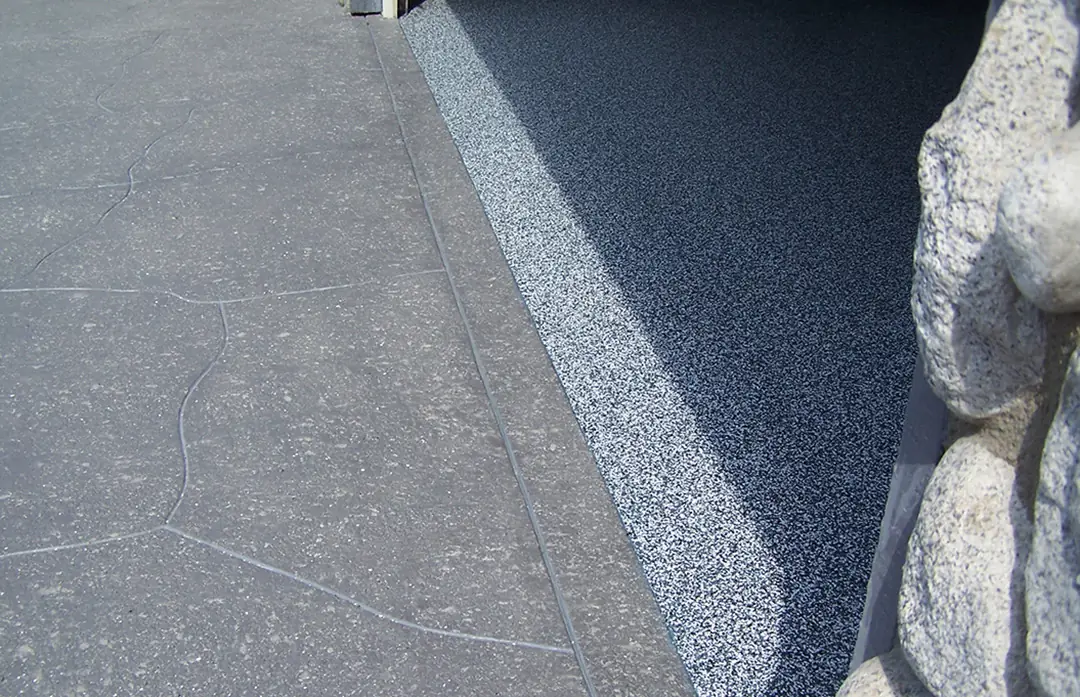
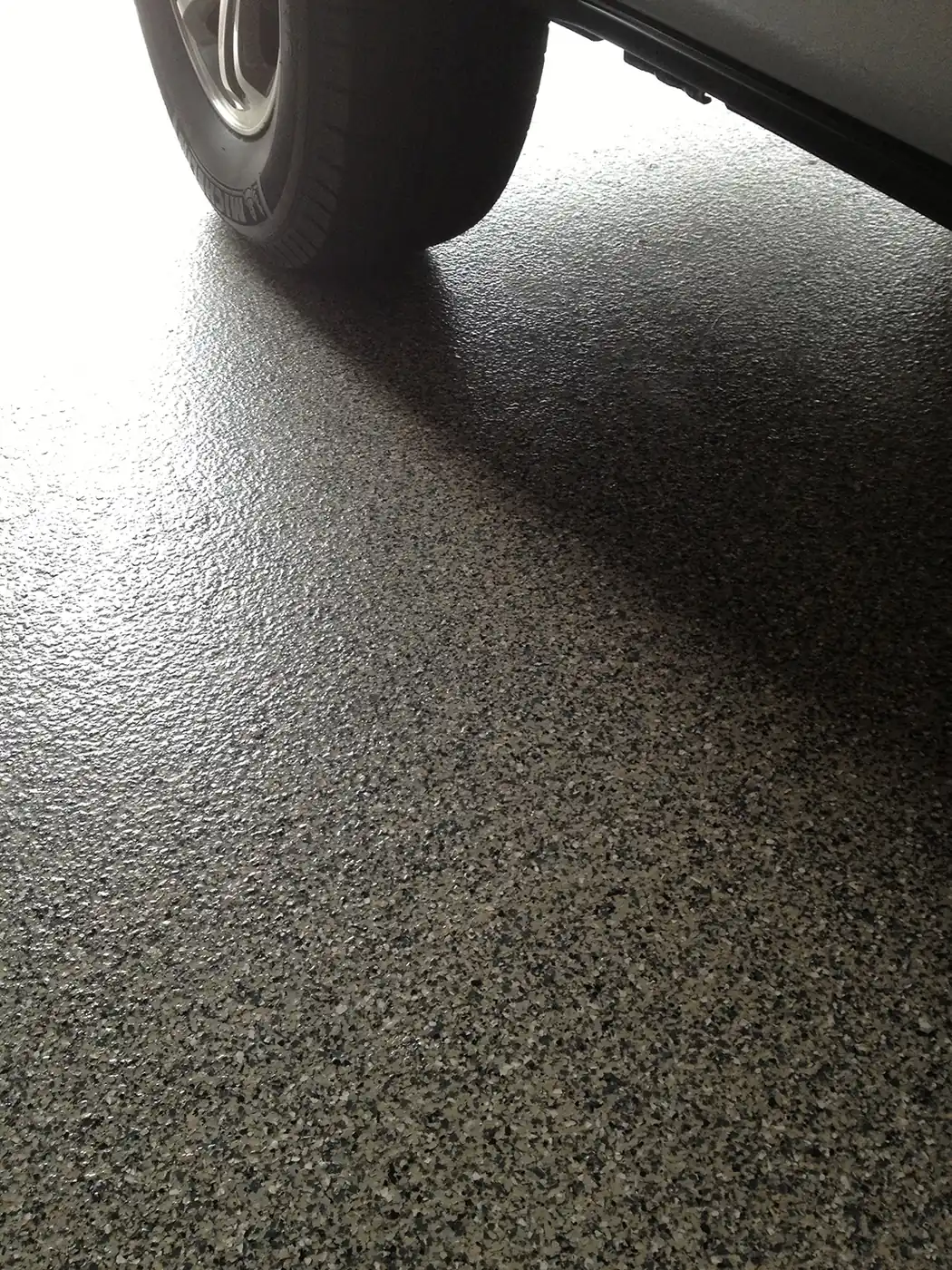
Garage floor coatings
A properly installed garage coating is built for hot tires, oil and dropped tools, so care is mostly about keeping it clean enough to stay good looking and not slippery.
- Routine: dust mop or sweep with a soft broom. A leaf blower works well on a flake floor
- Washing: a mop or a soft deck brush with a mild, pH-neutral cleaner in warm water, then a rinse. Squeegee it out of the door rather than leaving puddles to dry
- Skip soap-based cleaners. They leave a film that dulls the gloss and turns slippery the next time the floor is wet
- Skip vinegar and citrus cleaners. They are acids, and used week after week they take the shine off a topcoat
- Spills: wipe up oil, gasoline, brake fluid and coolant when you see them. A good coating resists all of these, but resisting a spill for an afternoon is not the same as sitting under it for a month. Battery acid and brake fluid are the ones to move quickly on
- Point loads: put a piece of plywood under jack stands, floor jacks and motorcycle kickstands. A coating handles a car easily. It handles the same weight concentrated on a square inch of steel less well
- Rust: metal cans and tools left on a damp floor leave rust rings. They usually lift with a non-abrasive cleaner if they are caught early
If you are seeing the coating lift where the tires sit, that is not a cleaning problem. It is a bond failure, and we explained it in why epoxy garage floor kits peel.
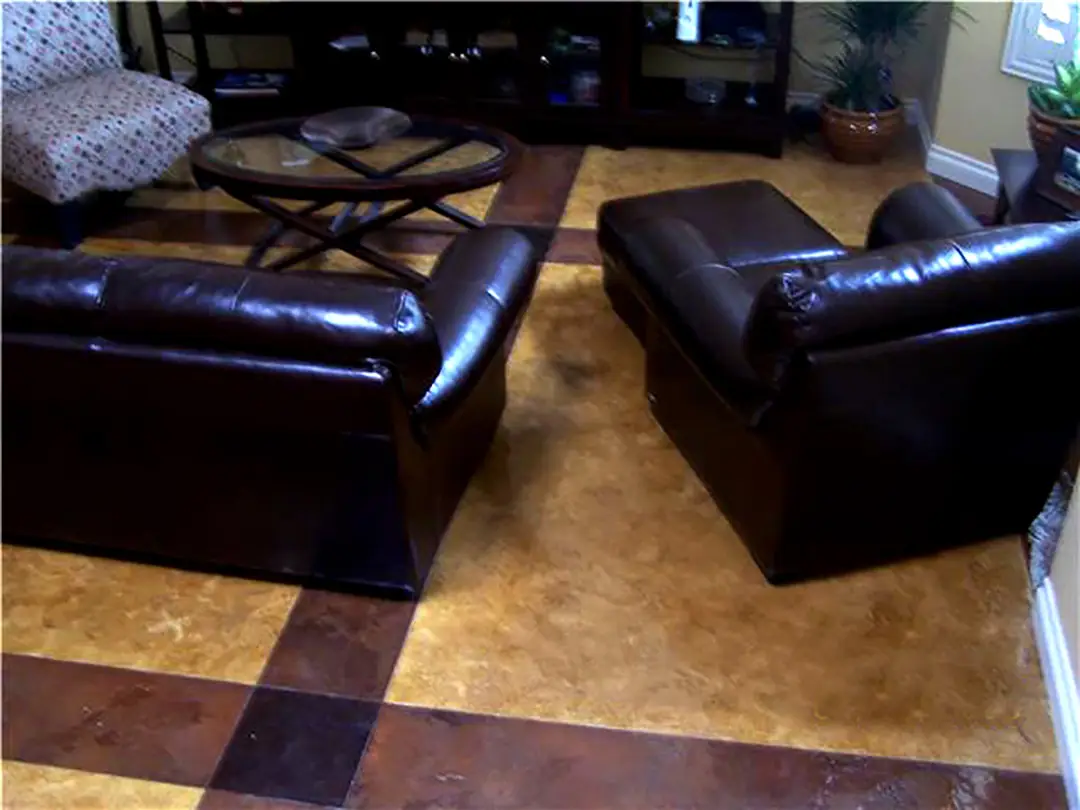
Stained and sealed interior floors
On a stained floor the color is in the concrete, so it cannot wear off. What takes the wear is the sealer on top, and looking after the floor really means looking after the sealer.
- Routine: a microfiber dust mop. This is the single most useful habit, because grit is what scratches a sealer
- Washing: a damp mop with a pH-neutral cleaner. Damp, not flooded
- Avoid: ammonia, bleach, vinegar, citrus and abrasive powders. All of them dull or soften a sealer over time
- Furniture: felt pads under chair and table legs, and lift heavy pieces rather than dragging them. Check the pads now and then, because a pad with grit embedded in it is worse than no pad
- Rugs: use rugs and mats that breathe. Rubber and latex backings can trap moisture against a sealer and leave a cloudy mark the shape of the mat
- Doors: a mat inside each exterior door catches most of the grit before it reaches the floor
Over the years the traffic lanes will go dull before the rest of the room does. That is the sealer doing its job. It can be recoated in a day without redoing the floor, and the color underneath comes back up as it was. More on how these floors are made is in staining the concrete under your carpet or tile.
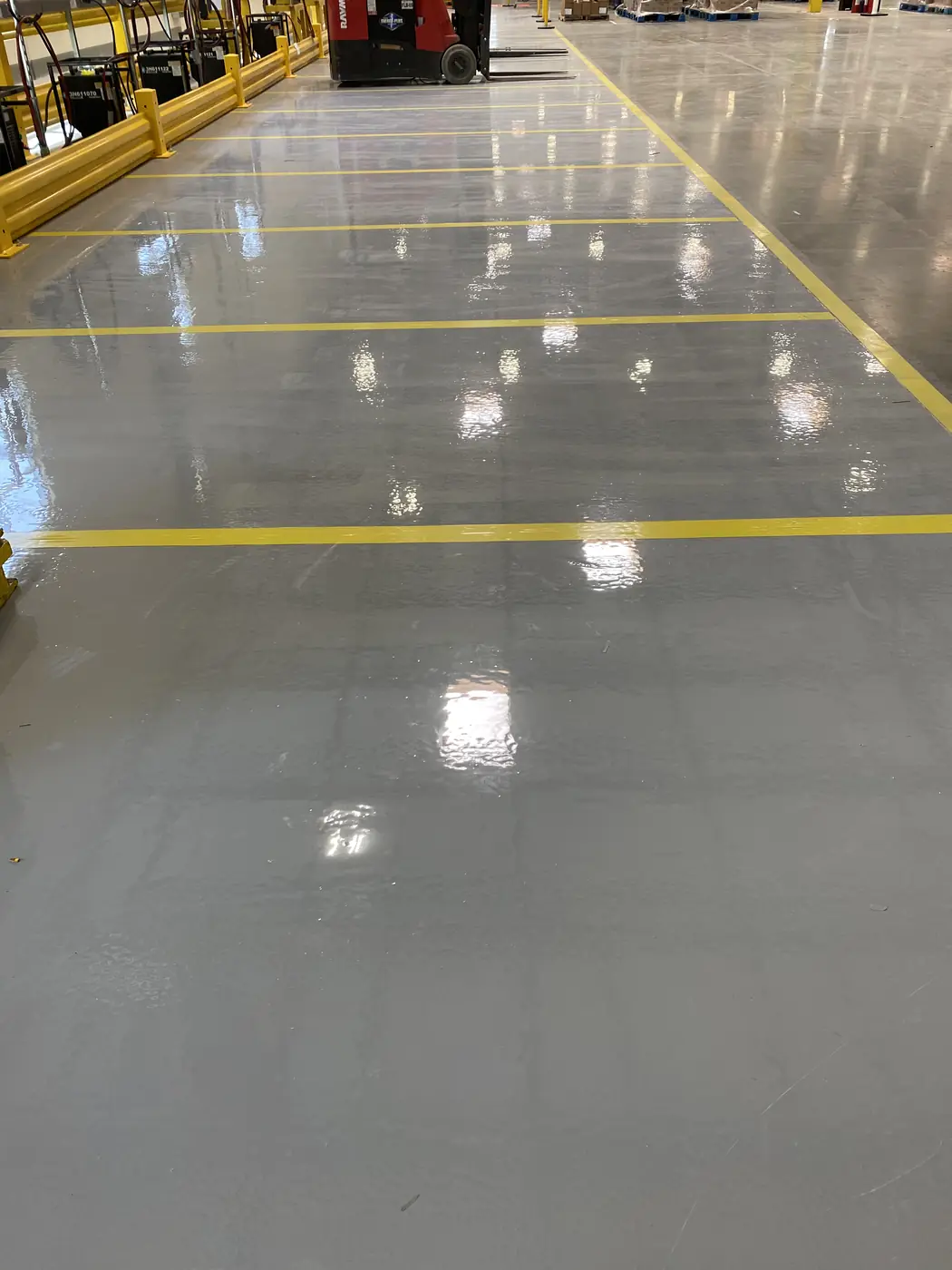
Polished concrete
A polished floor has no coating on it at all, so there is nothing to peel or recoat. It is the hardest wearing of the four, with one weakness: acid. Concrete is etched by acids, and an etch mark on a polished floor is a dull spot that has to be re-polished out.
- Routine: a microfiber dust mop, daily in a commercial space. On a large floor, an auto-scrubber with soft pads
- Washing: a pH-neutral cleaner made for concrete. Let it sit long enough to lift the dirt, but do not let it dry on the floor
- Spills: wipe up vinegar, citrus juice, wine, soda, pickle brine and anything else acidic promptly. The longer it sits, the deeper the mark
- Avoid: acidic and strongly alkaline cleaners, and do not wax it. Wax builds up, yellows and hides the finish you paid for
If a polished floor loses its shine in the traffic lanes after years of use, it can be brought back with the finer stages of the polishing process rather than starting again. How polished floors are made, and what decides how they look, is in can your existing slab be polished.
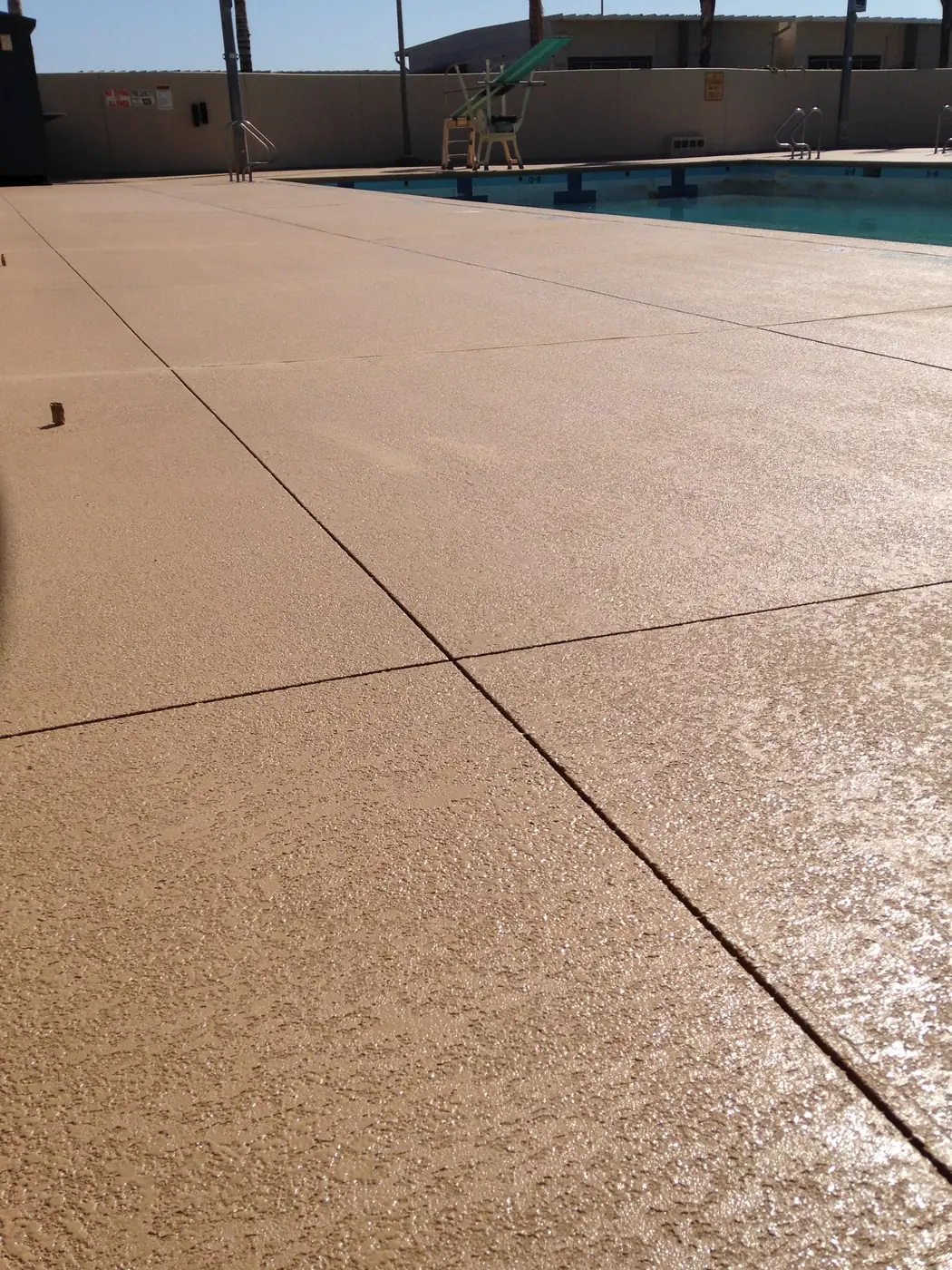
Pool decks, patios and exterior coatings
Outside, the job is keeping things from sitting on the surface: leaves, fertilizer, pool chemicals and hard water.
- Routine: sweep or blow it off, and hose it down. Rinse the area around the pool regularly, since chlorinated and salt water leave deposits as they dry
- Washing: a deck brush and a mild cleaner handles most things. A pressure washer is fine if it is used gently: a wide fan tip, held well back from the surface, and kept moving. A narrow tip held close can cut into a textured coating
- Leaves and planters: wet leaves, and pots sitting directly on the deck, leave tannin and rust stains. Lift pots onto feet, and do not let leaves sit through a rainy week
- Fertilizer: sweep granules off straight away. Many contain iron, which leaves orange spots when it gets wet
- Sprinklers: irrigation that hits the deck every morning will leave hard water deposits, and rust stains if the water carries iron. Adjust the heads so they miss it
- Never use muriatic acid on a coated or stained surface, no matter what the pool store suggests. It attacks the finish and the concrete under it
- Furniture: plastic or rubber feet on metal chairs and tables, which otherwise scratch and leave rust
A textured deck coating will need a fresh color coat eventually, because sun and foot traffic are relentless in this climate. Done before the surface wears through, that is a straightforward job. What the different deck systems involve is in pool deck resurfacing cost.
Signs it is time for a recoat
Sealers and topcoats are the part of the floor designed to wear, so that the floor itself does not. They are due for attention when:
- The traffic lanes stay dull even when the floor is freshly cleaned
- Water soaks in and darkens the surface instead of beading on it
- The floor has become noticeably harder to clean than it used to be
- Outdoors, the color looks chalky or faded in the areas that get the most sun
The time to act is before the wear layer is gone. Recoating a worn sealer is quick. Leaving it until the surface underneath is damaged turns a one-day recoat into a repair.
If something does not look right
Peeling, bubbling, white hazing under a sealer, or a coating lifting in sheets are not maintenance problems, and no cleaner will fix them. They point to a bond or moisture issue underneath. Our own work is backed by five years on material and one year on labor, so if it is one of ours, call us. On a floor someone else installed, we can tell you what has gone wrong and whether it can be recoated or needs to come off, since coating removal is a service in its own right for us.
We have been finishing concrete since 1976 across Riverside, San Diego, Orange, LA and San Bernardino counties. If your floor needs a recoat, or you are not sure what it needs, book a free on-site estimate and we will take a look.