Somewhere in the last few years, polyaspartic became the word garage floor companies lead with, and epoxy became the word they use for whatever the competitor is selling. It makes for a simple sales pitch. It is not how the two materials actually relate, and it leaves homeowners across the Inland Empire choosing a chemistry when they should be choosing a system.
Here is what each one does, where each one is genuinely better, and why the floors that last longest in Riverside County garages usually use both.
What epoxy is
Epoxy is a two-part resin that cures by chemical reaction into a hard, thick, well-bonded layer. It has been the standard garage and industrial floor coating for decades because it does the important thing extremely well: on properly ground concrete it soaks into the profile and grips. It builds thickness in a single coat, it fills minor surface texture, and it is the most forgiving material there is for a base coat.
Its limits are known. Standard epoxy ambers and chalks under direct UV, so a floor that sees hours of sun through an open door will yellow over the years. It cures slowly, which means a day between coats and several days before a car goes on it. And in high heat it has a short working window, which is a real consideration in a Hemet or Victorville garage in August.
What polyaspartic is
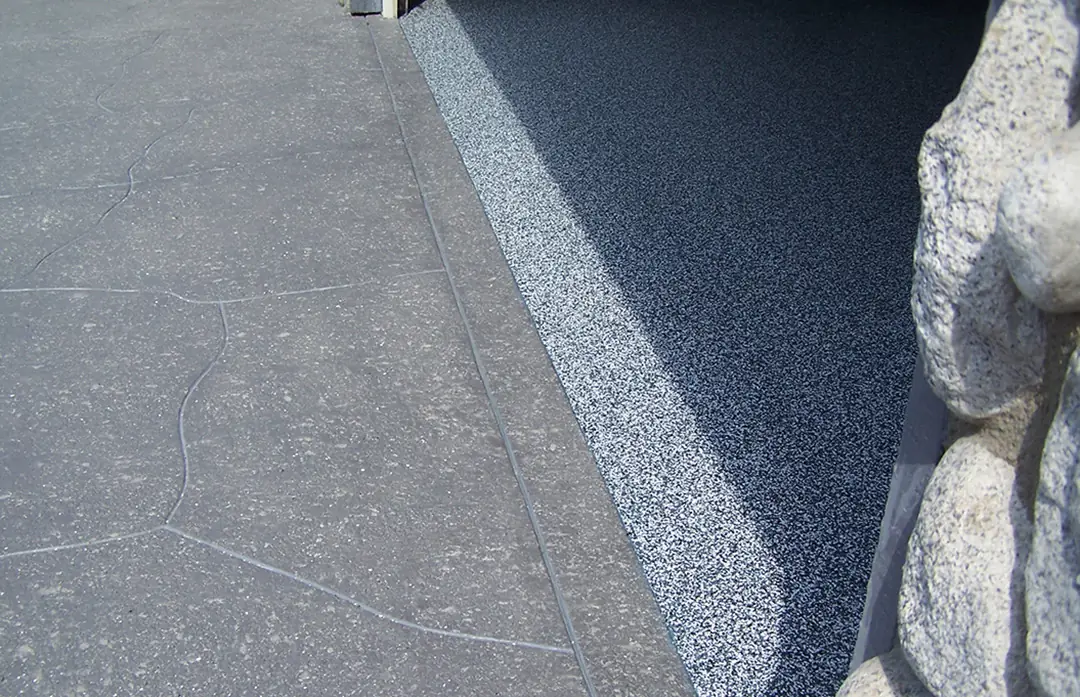
Polyaspartic is a type of aliphatic polyurea. It cures fast, it stays clear under UV, and it is more flexible and more abrasion-resistant than epoxy as a top layer. A polyaspartic topcoat is what keeps a flake floor looking the way it did on day one after five summers of sun through the door.
It also has limits, and they are the ones the sales pitch skips. It is thinner per coat than epoxy and does not build the same way. It is less tolerant of a slab that is still giving up moisture. Its fast cure is a double-edged thing: it is a difficult material to apply well in heat, because the working time is short and a crew that is not used to it ends up with roller marks and lap lines. And it costs more per gallon.
The honest comparison
Bond to concrete. Epoxy is the better base. It wets out into a ground profile and builds a thick, forgiving layer. This is why most of the floors that market themselves as polyaspartic still have an epoxy or a polyaspartic primer underneath, and why we would rather see a flake broadcast into an epoxy base than into a thin polyaspartic one.
UV and color stability. Polyaspartic wins outright. If the garage door stands open for hours or the floor runs out into daylight, an epoxy clear coat will amber. A polyaspartic topcoat will not.
Cure time. Polyaspartic wins. A floor with a polyaspartic topcoat is usually walkable the same day and takes a car back sooner. That matters if the garage is your only parking or your workshop.
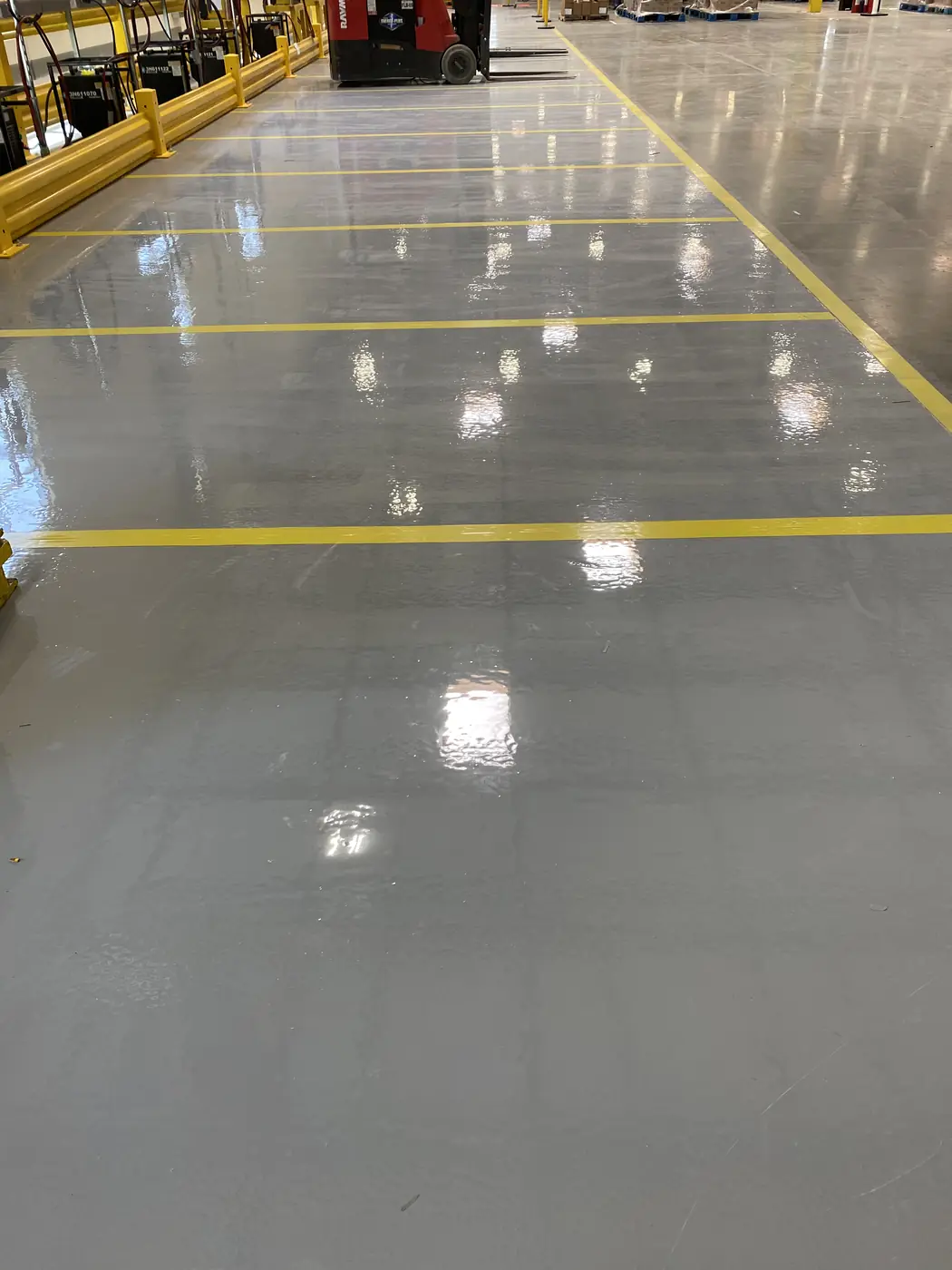
Abrasion and chemical resistance. Polyaspartic is the tougher wear surface for a garage that gets dropped tools, hot tires and road grit. Epoxy is more than adequate for most family garages and is the standard in industrial floors for a reason.
Heat during application. This is where the inland climate matters. Both materials have a working time that shrinks as the temperature rises, and polyaspartic's shrinks faster. Applying it well on a hot slab is a skill. A floor that was rushed in the heat shows it.
Cost. Polyaspartic costs more in material. On a two-car garage the difference is real but not enormous; the preparation is still the larger share of the price, as we explained in what a garage floor coating costs in the Inland Empire.
Why most of our floors use both
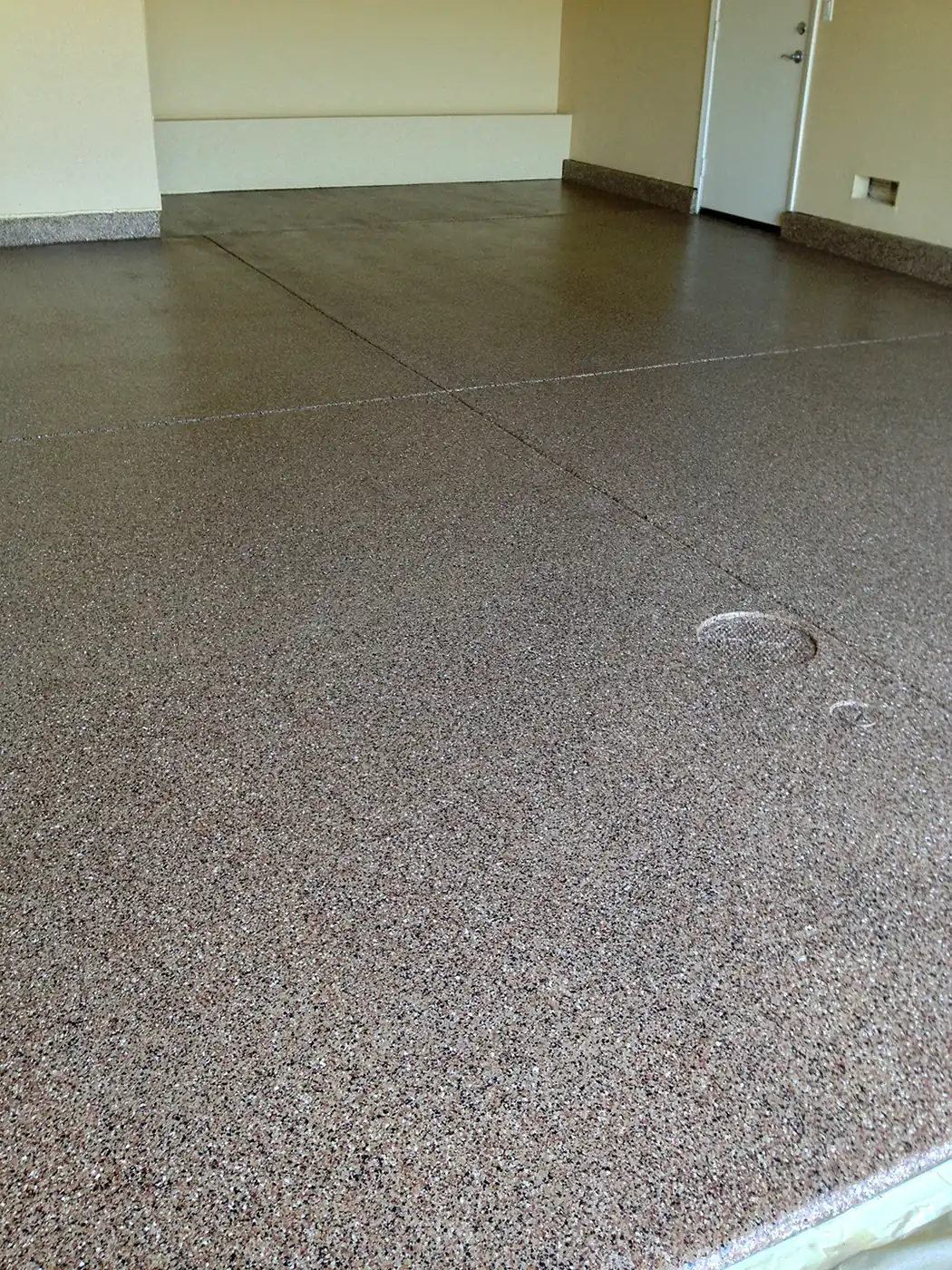
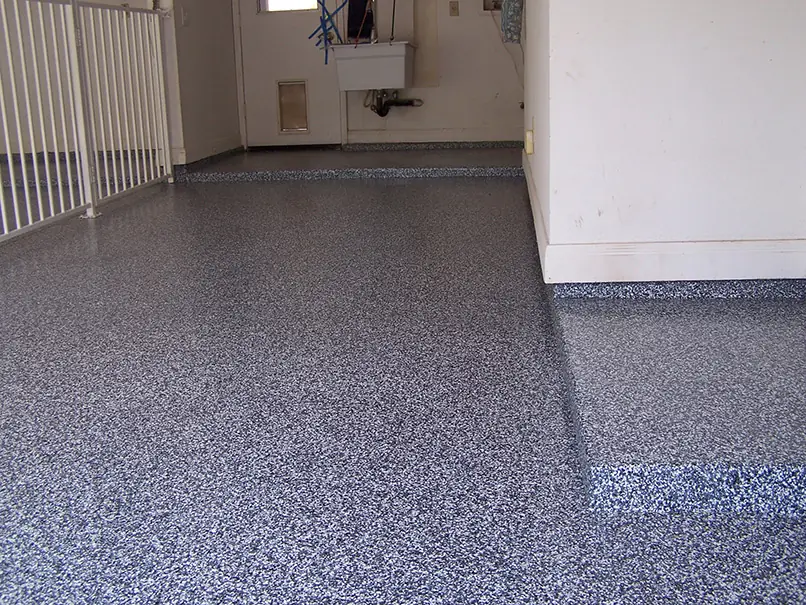
The system that performs best on a Southern California garage is not one or the other. It is a ground slab, an epoxy base coat that bonds into the profile and carries the flake, and a clear topcoat chosen for the conditions. On a floor that sees sun, that topcoat is polyaspartic. On an enclosed shop floor that never sees daylight and needs the thickest possible build, an epoxy or urethane topcoat can be the better answer.
The chemistry on the top layer is a decision worth making. The chemistry of the base is far less important than whether the concrete underneath it was ground, and that is where the floors that fail were lost, whichever material they were sold as. We see this every week on removal jobs. Our note on why epoxy garage floor kits peel applies to polyaspartic kits just as well: the failure is in the preparation, not the resin.
What to ask a contractor
If you are collecting quotes, three questions cut through the marketing.
- How is the concrete prepared? The only good answer is mechanical grinding with diamond tooling. Acid etching is not preparation.
- What is the base coat, and what is the topcoat? A one-coat polyaspartic floor is thin. A flake floor with an epoxy base and a polyaspartic clear is a system.
- What is the return-to-service time for foot traffic and for vehicles, in writing, for the week the work is done? Fast-cure materials still need their cure, and the answer changes with the weather.
Moisture changes the answer
One more thing. Near the coast, and on some inland slabs with no vapor barrier under them, moisture rising through the concrete will lift any coating regardless of its chemistry. Polyaspartic is less tolerant of it than epoxy. We test for it on the estimate, and where it is present the fix is a moisture-mitigating primer before either material goes near the floor. We covered it in why coastal garage floors keep failing.
Let the slab decide
We have been preparing concrete since 1976, and the material fashions have changed several times in that period. What has not changed is that a coating is only as good as the surface it is bonded to. Come to the estimate with questions about polyaspartic and epoxy by all means, but expect Dave to spend most of the visit looking at the concrete, because that is what decides the floor.
Our garage floor coatings and epoxy floor coatings both start with the grind. Estimates are free and on site across Riverside, San Bernardino, San Diego, Orange and Los Angeles counties. Book yours here.