The first question on almost every garage floor estimate is the price, and the honest answer is that it depends on the slab more than the square footage. That is not a dodge. Two garages of identical size can be quoted hundreds of dollars apart because one has a sound, bare slab and the other has a failed kit coating, a decade of oil and a crack running the width of the bay.
This guide explains what garage floor coatings cost across Southern California, what a quote is made of, and what you can do before the estimate to keep the number down. We do not publish a per-square-foot price, because a single figure would be wrong for most of the garages we look at. What follows is the range you will meet when you start collecting quotes, and the reasons behind it.
The range, honestly
Across the Inland Empire and San Diego County, a professionally installed garage floor coating with proper mechanical preparation typically runs somewhere between five and twelve dollars per square foot. A standard two-car garage is roughly 400 to 500 square feet, so most homeowners are looking at a total in the low-to-mid thousands, with three-car garages and workshops scaling up from there.
Those are market figures, not our price list. Where a specific garage lands inside that range comes down to four things, and every one of them is visible on the slab before a drop of product goes down.
What you are actually paying for
A garage floor is two jobs: the preparation and the coating. The coating is the part people shop on, and it is the smaller part of the cost. The preparation is where the labor, the equipment and most of the money go, and it is the only part that decides whether the floor is still bonded in ten years.
Grinding. Every floor we do is mechanically ground with diamond tooling before anything is applied. That takes off the weak top layer, the old sealer and the laitance, and leaves an open profile the resin can key into. Acid etching, which is what a hardware-store kit tells you to do, does not achieve that. Grinding is equipment-heavy and slow, and it is the single largest line in the cost of a properly done floor.
Repair. Cracks are chased out and filled. Spalled patches and pitted areas are ground back to sound concrete and repaired. Cove edges and step nosings are built up where the design calls for them.
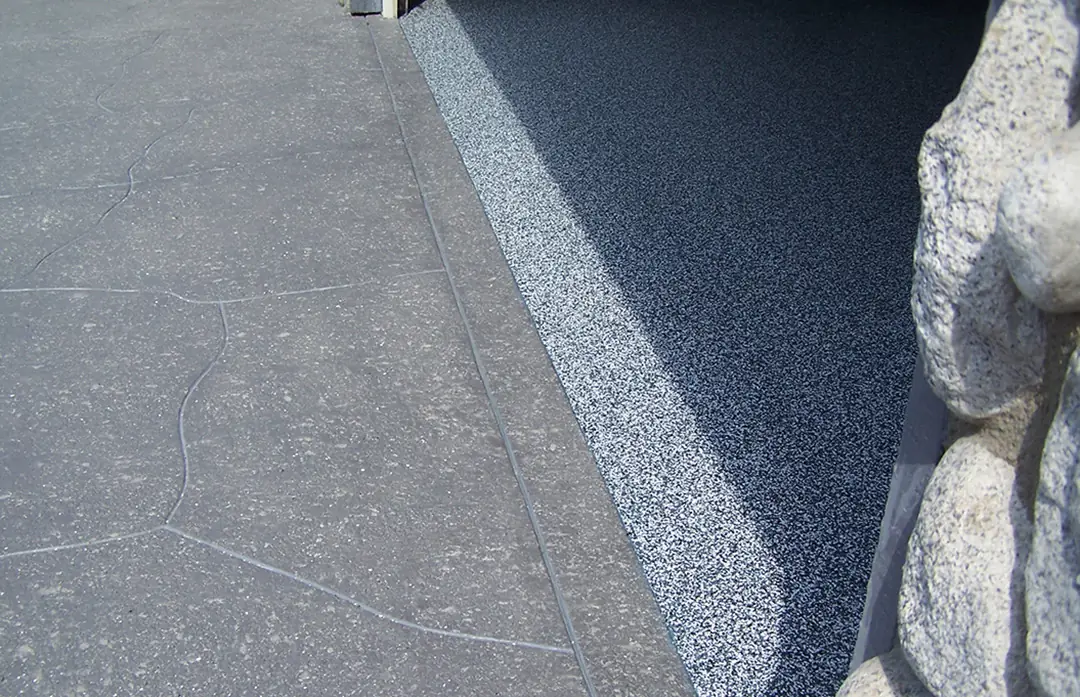
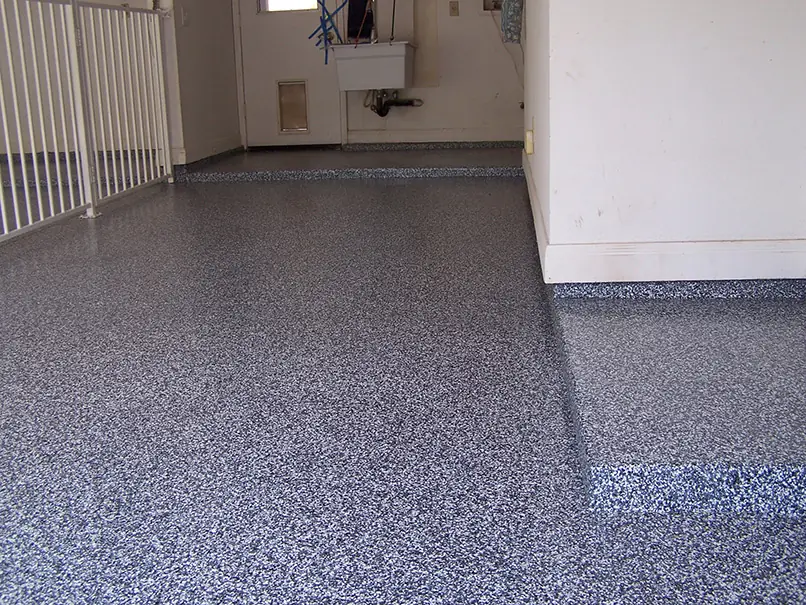
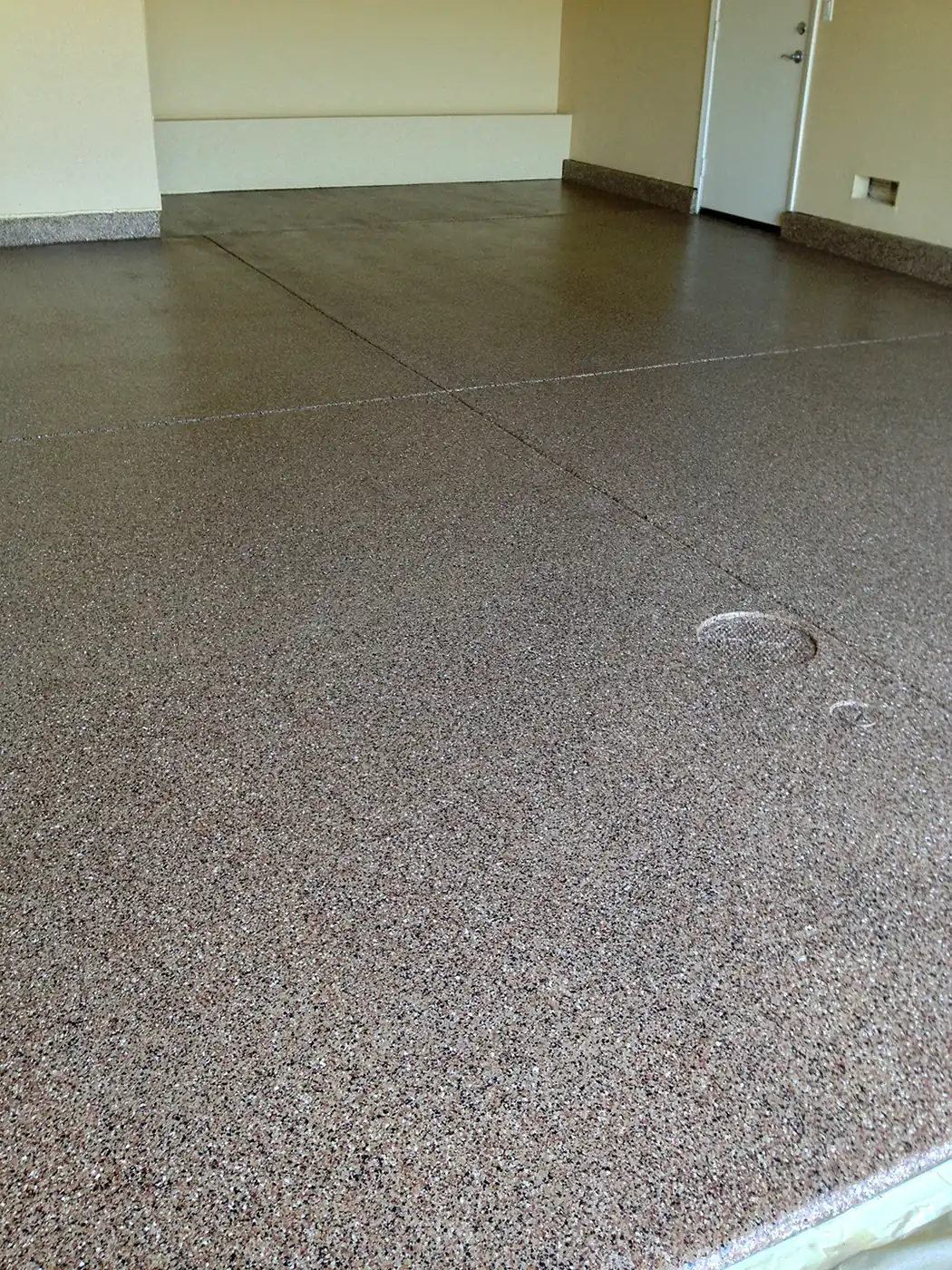
The system. A flake floor is a base coat, a broadcast of vinyl chip, a scrape and a clear topcoat. A solid-color floor is a base and one or two topcoats. The topcoat material, whether epoxy, polyaspartic or urethane, is where the product cost varies. We covered the difference in polyaspartic vs epoxy for a Southern California garage.
Labor and cure. A two-car garage is usually a two-day job for our crew: grind and repair on the first day, coat on the second. That is two days of a trained crew and a truck full of equipment, and it is priced as such.
The four things that move the number
1. What is already on the floor
A bare slab that has only ever seen a car is the cheapest starting point. A slab with a failed coating on it is not, because that coating has to come off completely before anything new goes down. Coating over a peeling floor buys the same failure in a new color, so concrete coating removal becomes its own line on the quote.
If you are weighing a weekend kit now against a proper floor later, this is the reason to skip the kit. Removing a half-failed consumer coating costs more than preparing a bare slab, because we have to take off what you put on before we can start. We explained the mechanism in why epoxy garage floor kits peel.
2. The condition of the concrete
Oil is the usual issue. A garage that has had a car in it for fifteen years has oil in the slab, not just on it, and it has to be dealt with or the coating lifts in exactly the spot under the engine. Most of it comes out with the grind and a treatment; a badly saturated floor gets tested in a section before we commit to the whole slab.
Cracks, spalling and pitting all add repair time. A slab with moisture coming up through it is a different conversation again, and one we would rather have at the estimate than after the floor is down. Coastal garages get this more than inland ones, which we wrote about in why coastal garage floors keep failing.
3. The system you choose
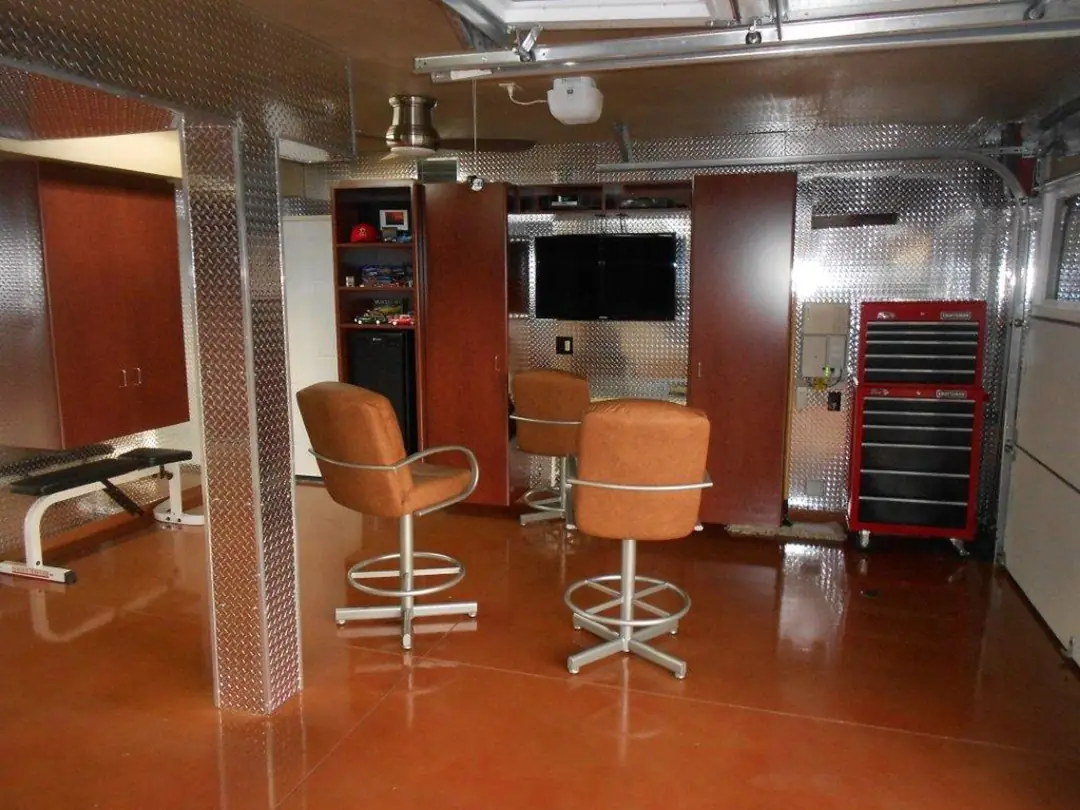
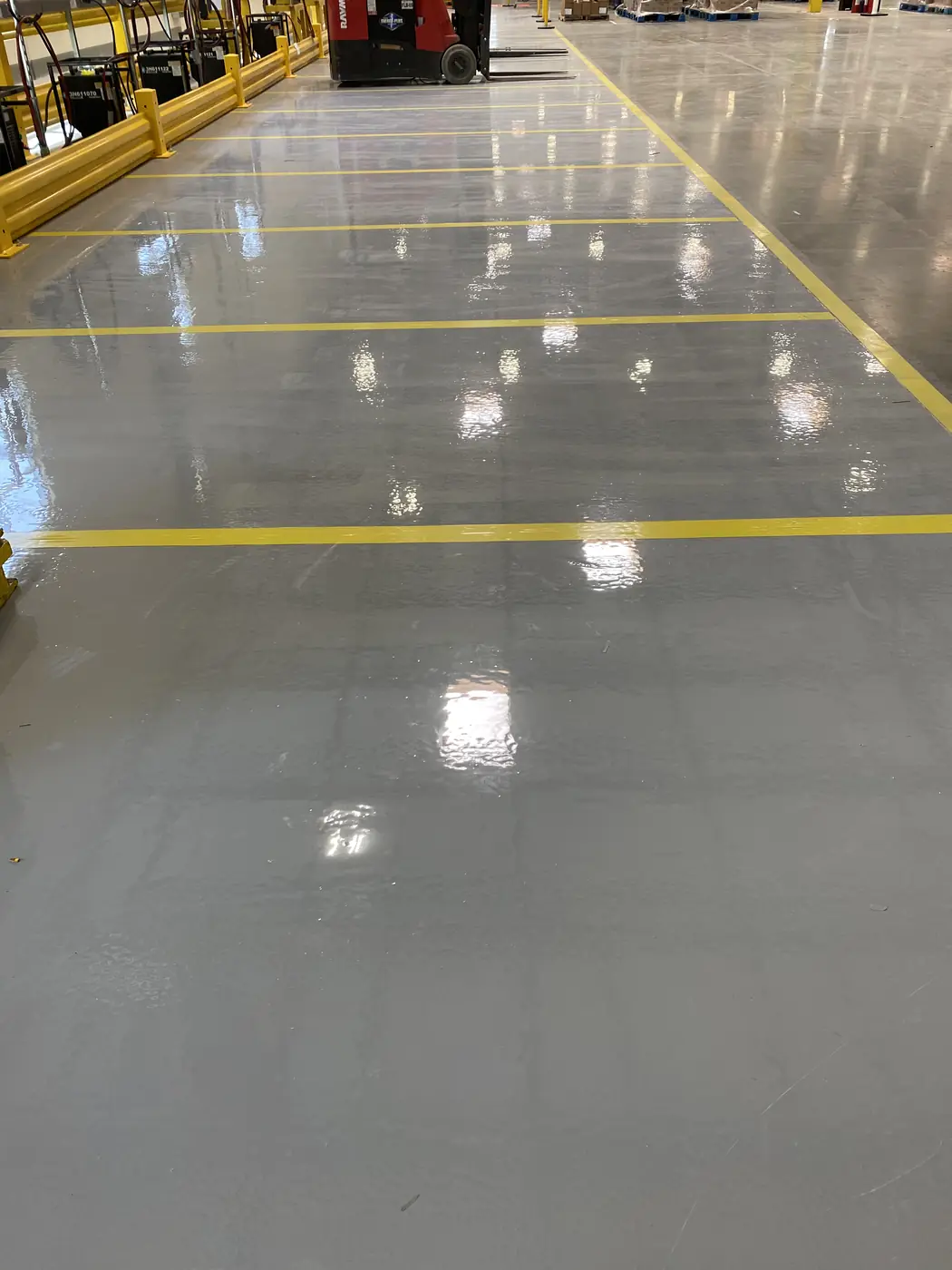
Flake is the standard garage floor across the Inland Empire for a reason: it hides dust and tire marks, it gives grip underfoot, and it is forgiving of the small imperfections that every used slab has. A solid color with a clear coat looks sharper and shows off a car, but it shows everything else too, and it usually takes an extra coat to get the depth right.
A polyaspartic topcoat costs more in material than a standard epoxy clear and cures faster, which matters if you cannot lose the garage for long. A UV-stable topcoat is worth paying for on any floor that gets direct sun through an open door for hours a day, because standard epoxy ambers.
4. Size, shape and access
Square footage matters less than people expect, because the fixed costs of mobilizing a crew and grinding equipment are the same for a small garage as a large one. Per square foot, a three-car garage is cheaper than a one-car. Steps, coved edges, built-in cabinets that have to be worked around and a garage that is full of belongings on the day all add time.
What you can do before the estimate
Clear the garage. Everything that is on the floor has to move for the work, and a crew that spends the first two hours shifting shelving is two hours you are paying for.
Do not etch, seal or paint anything in the meantime. Whatever you put on the floor now, we take off later.
If there is a coating on the floor already, tell us what it is if you know. An unknown coating gets a test patch to see how it comes off before we quote the whole floor, and knowing the product saves that step.
Is it worth it against a kit?
A hardware-store kit costs a few hundred dollars and a Saturday. A professional floor costs thousands. That gap is real, and for a rental or a workshop nobody cares about, the kit is a fair choice for a few years.
What the gap buys is a floor that stays bonded. The kit floors we are called to strip almost all failed the same way, lifting in sheets where the tires sit, usually inside two years. The cost of a proper floor after a failed kit is the cost of the floor plus the removal, so the cheapest sequence is to do it once.
Get a real number for your slab
Every estimate we do is free and on site, because the only way to price a garage floor properly is to look at the concrete. Dave will tell you what your slab needs, what it does not need, and what the number is for your floor rather than a range you have to guess inside.
We have been preparing concrete since 1976, our own crews do every stage, and every floor carries five years on material and one year on labor. Book a free on-site estimate anywhere across Riverside, San Bernardino, San Diego, Orange and Los Angeles counties, or read more about our garage floor coatings first.