Every summer we get the same call from Temecula, Indio, Riverside and El Cajon: the pool is fine, the deck is not, and nobody can cross it barefoot between eleven and five.
This is a solvable problem and it does not involve demolition.
Why bare concrete gets so hot
Two things are working against you. The first is color. Mid-gray concrete absorbs a large share of the sunlight that hits it and converts it to heat. A lighter surface reflects considerably more of it and runs cooler as a result.
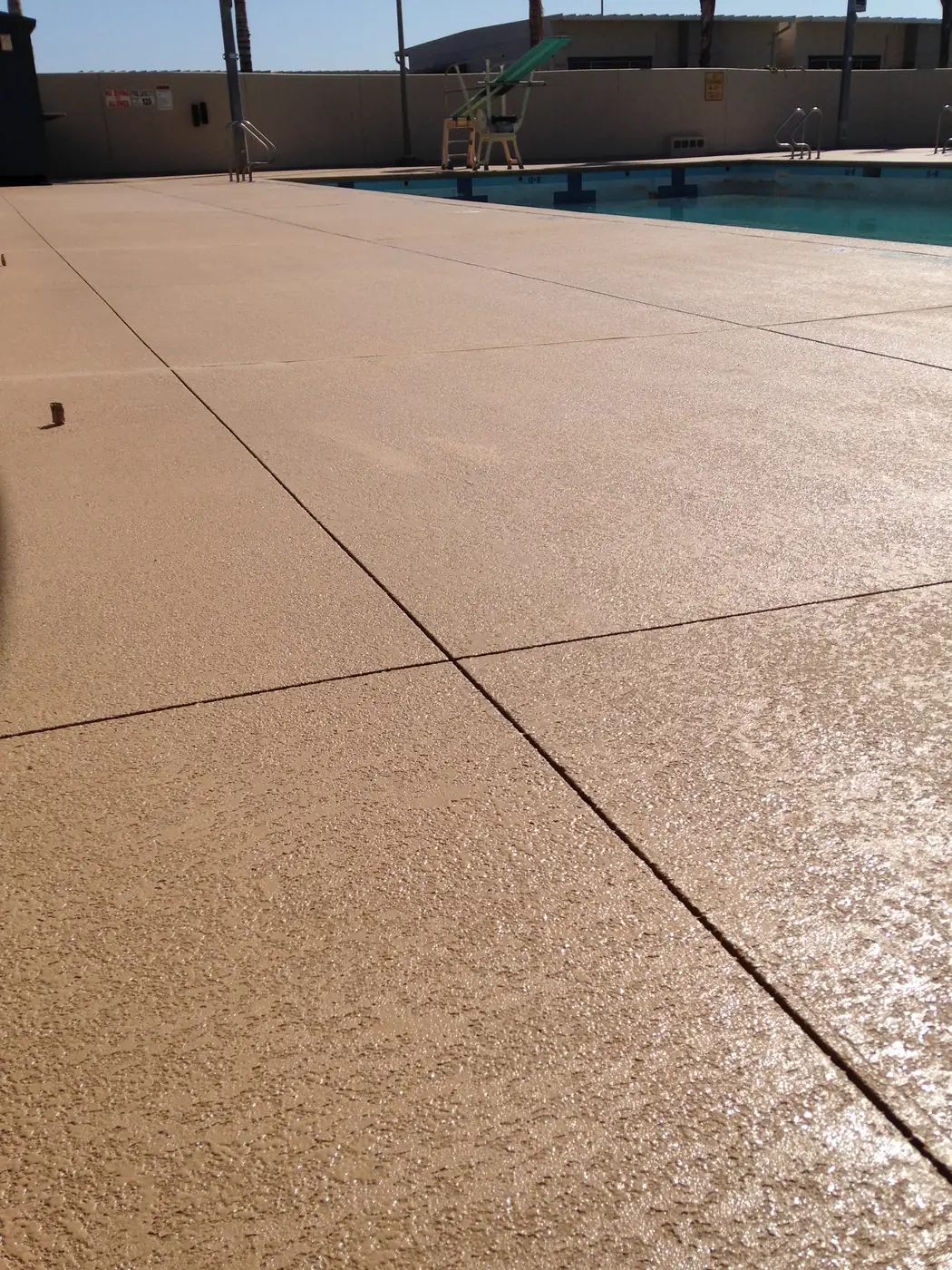
The second is contact area. A smooth trowelled slab puts the whole sole of your foot in contact with hot surface. A textured surface only touches the high points, so less heat transfers and it transfers more slowly. That is why a textured deck feels dramatically better than a smooth one even at the same color.
Put both together — a light color and a proper texture — and you get a deck that is usable in the afternoon. That combination is what the trade calls a cool deck, and it is the single most requested job we do between May and September.
What a cool deck coating actually is
It is a cementitious or acrylic surfacing laid over your existing concrete, finished with a texture while it is still workable. It is a few millimeters thick, so it does not change the level of the deck enough to matter at doorways or at the coping.
The important parts:
- Color. Sand, bone and light earth tones. We bring samples out and let you hold them in the sun on your own deck, because a color chip indoors tells you nothing about how it behaves at two in the afternoon.
- Texture. Set on site, not chosen from a menu. Enough grip when it is wet, not so much that it is uncomfortable on bare feet or hard to clean. We walk it wet with you before we call it finished.
- A UV-stable sealer. This is where cheap jobs cut corners. Inland Empire and Coachella Valley sun will chalk out a coating that was not specified for it, and it will be two shades lighter by the second summer.
The slip-resistance side
For a lot of our customers — particularly in the 55-plus communities around Sun City, Hemet, Jess Ranch and Sun City Shadow Hills — the temperature is secondary. The reason for the job is that the deck is slippery when wet.
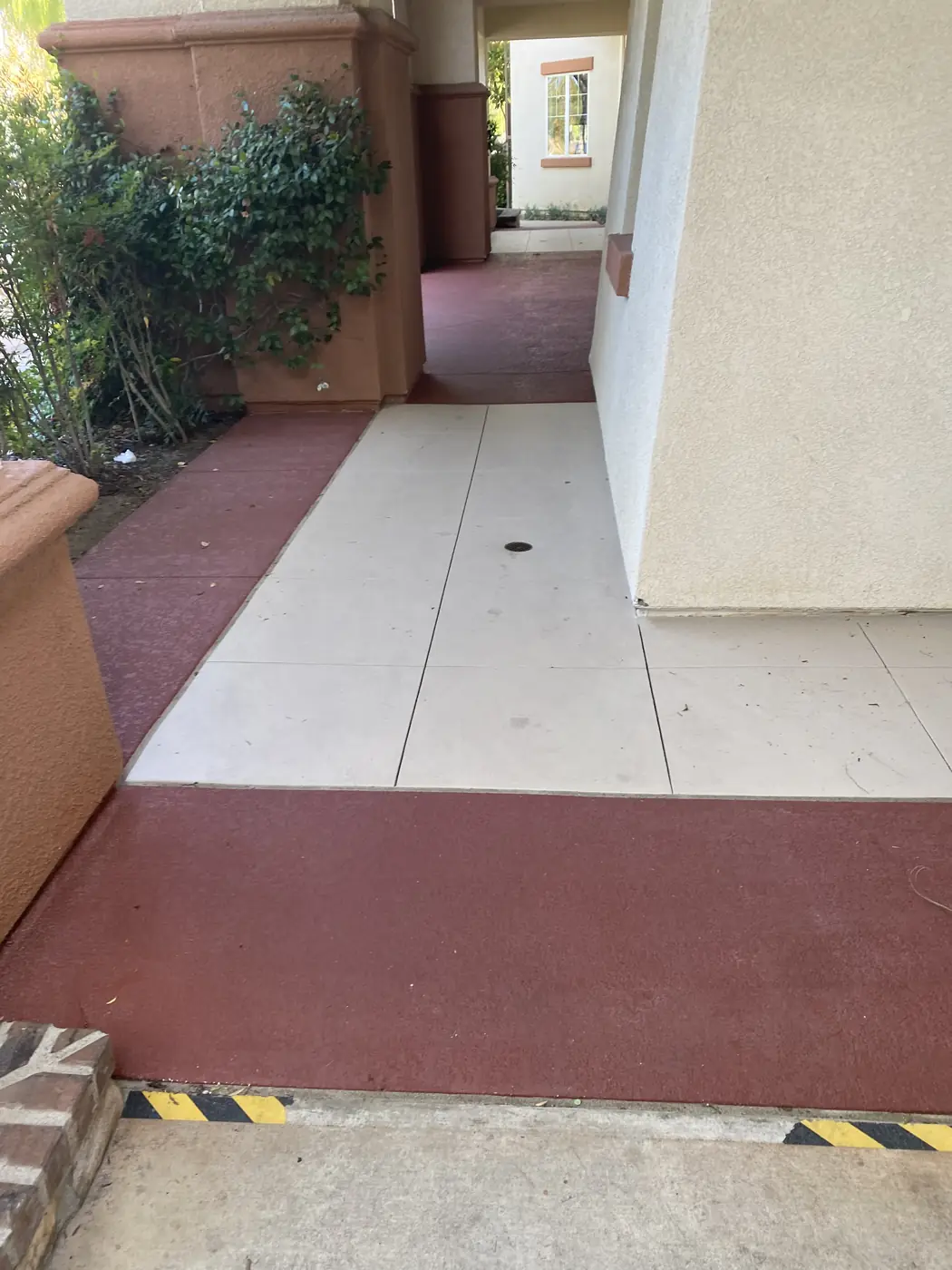
Texture solves both problems at once, which is convenient. Where there are steps we will also put a contrasting color on the nosing so the edge of each step reads clearly. It costs almost nothing to include and it makes a genuine difference.
When the deck needs repair first
A coating is a surface. It cannot fix a structural problem underneath, and anyone who tells you otherwise is selling you a year.
- Hairline cracks and surface wear — fine. Routed, filled, coated over.
- Spalling and flaking — repairable. We grind back to sound concrete, rebuild, then resurface. Common on older decks and in the High Desert, where freeze-thaw does the damage.
- Sections that have lifted or dropped relative to each other — that is active movement. A coating will crack along the same line. We will tell you that rather than hide it.
More on that distinction in resurfacing versus replacing concrete.
Splash pads and commercial decks
We do a lot of municipal and community aquatic work — multi-color splash pads laid out to a drawing, competition pool decks, and shade-structure areas. Those are the same principles at a much larger scale, with harder wear and a shutdown window that has to be met. There are photographs of that work in our gallery.
While we are there
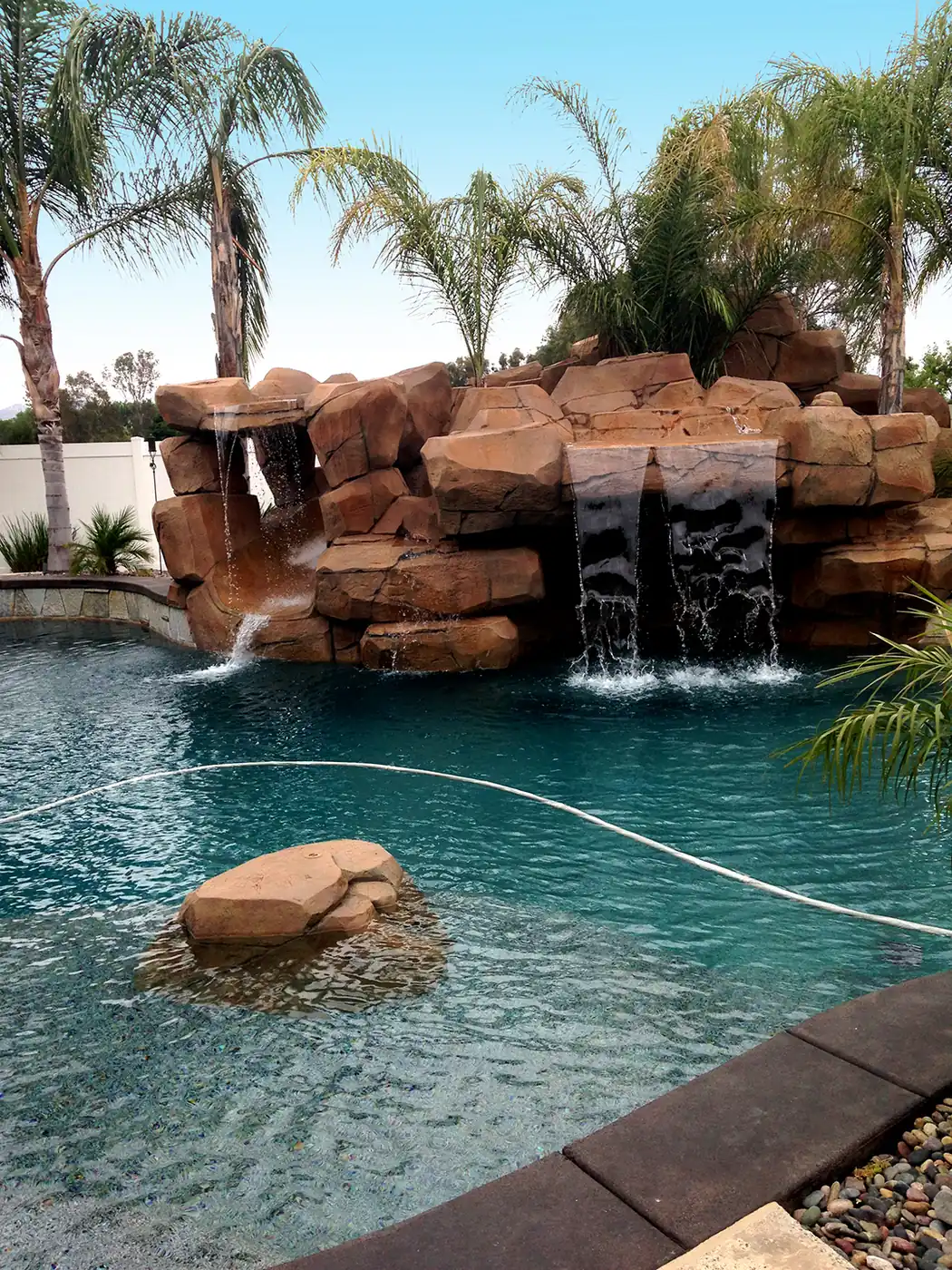
If you have faux rock, a waterfall or boulder features around the pool, they have almost certainly faded in the same sun that cooked your deck. Doing both at once is the sensible way to get them to sit together — see restoring faded faux rock.
We cover Riverside, San Diego, Orange, Los Angeles and San Bernardino counties from our yard in Wildomar. Book a free on-site estimate and we will bring samples out to your deck.