It is one of the first questions people ask about a coated floor, and it is a fair one. Most of us have seen a glossy garage floor with a puddle on it, or skidded on a sealed patio after the sprinklers ran. A smooth, shiny surface with water on it is slippery, whatever it is made of.
A coated floor does not have to be like that. Grip is something that gets built into a coating on purpose, and how much of it a floor needs depends on where the floor is and who walks on it. This guide covers where slipperiness comes from, how grip is added for garages, shops and pool decks, and what can be done about a floor that is already slick.
Why some coated floors are slippery
A few things make a floor slippery, and usually more than one of them is at work.
- A smooth, glossy surface. A clear coat over a solid color, or a sealer on smooth concrete, can be as smooth as glass. Dry, it grips fine. Wet, a thin film of water sits between your shoe and the floor
- Something on the surface. Water is the obvious one. Oil, coolant, sawdust, fine sand and the film left by soap-based cleaners all make a floor slicker than the coating on its own
- Worn texture. A textured coating that has worn smooth in the traffic lanes has lost the grip it started with. Pool decks and splash pads show this first, along the paths people walk most
- The wrong system for the place. A finish that is fine in a dry, enclosed room can be the wrong choice for a patio, an entry that gets rained on or a ramp
Notice that none of these is about epoxy or any other material as such. Slipperiness comes from the finish and from what ends up on it.
How grip is built into a coating
There are a handful of ways to give a coated floor more grip, and a good contractor will match the method to the floor.
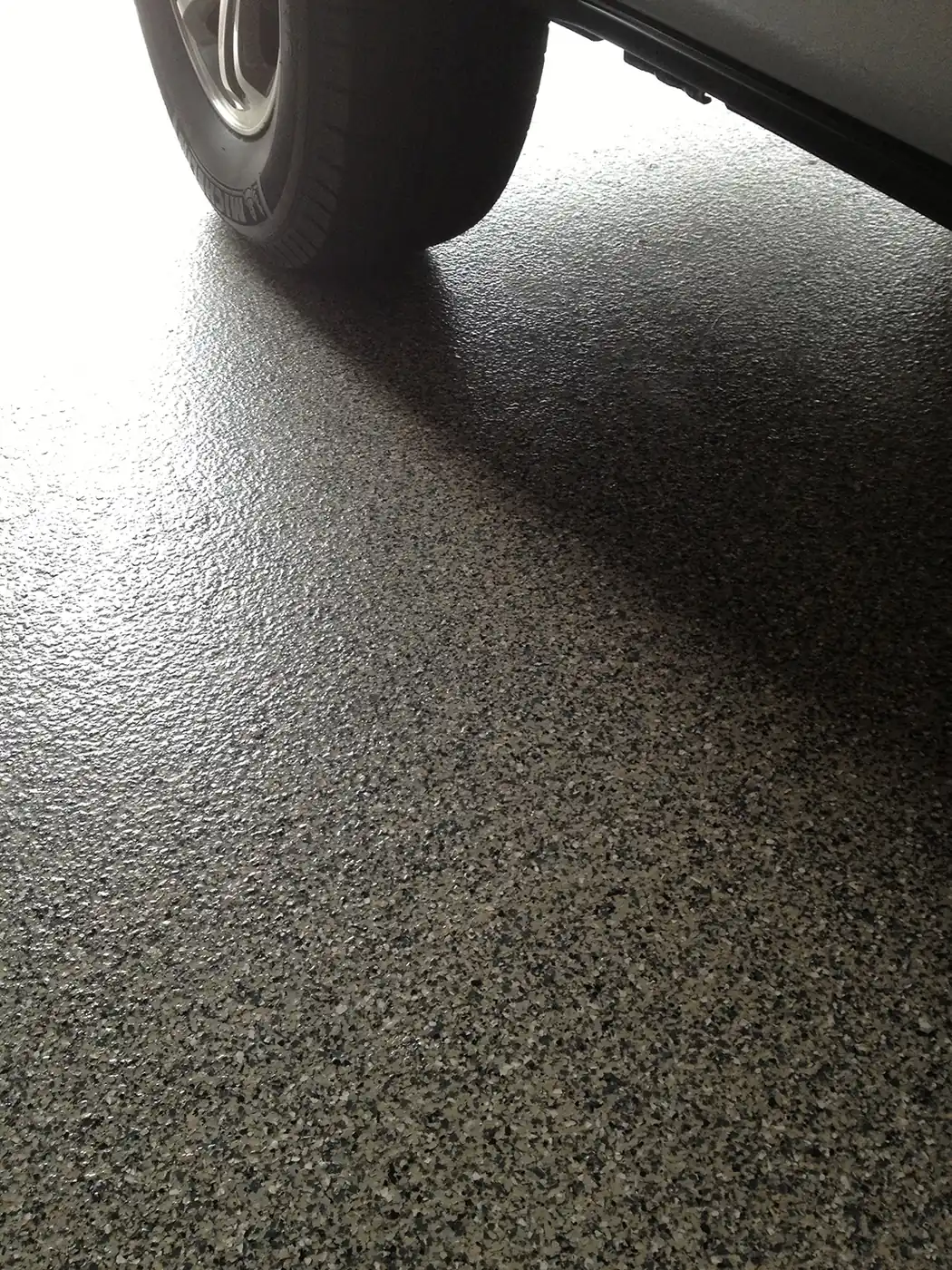
Flake. A broadcast of vinyl flake into the base coat leaves a slight texture on the surface even after the clear coat goes over it. It is one of the reasons most garages get flake: as well as hiding dust and tire marks, it gives you grip underfoot.
Aggregate in the topcoat. A fine grit can be mixed into or broadcast onto the topcoat to give a solid-color or flake floor more bite. The more grit, the more grip, and the harder the floor is to mop. On a working floor that is often the right trade.
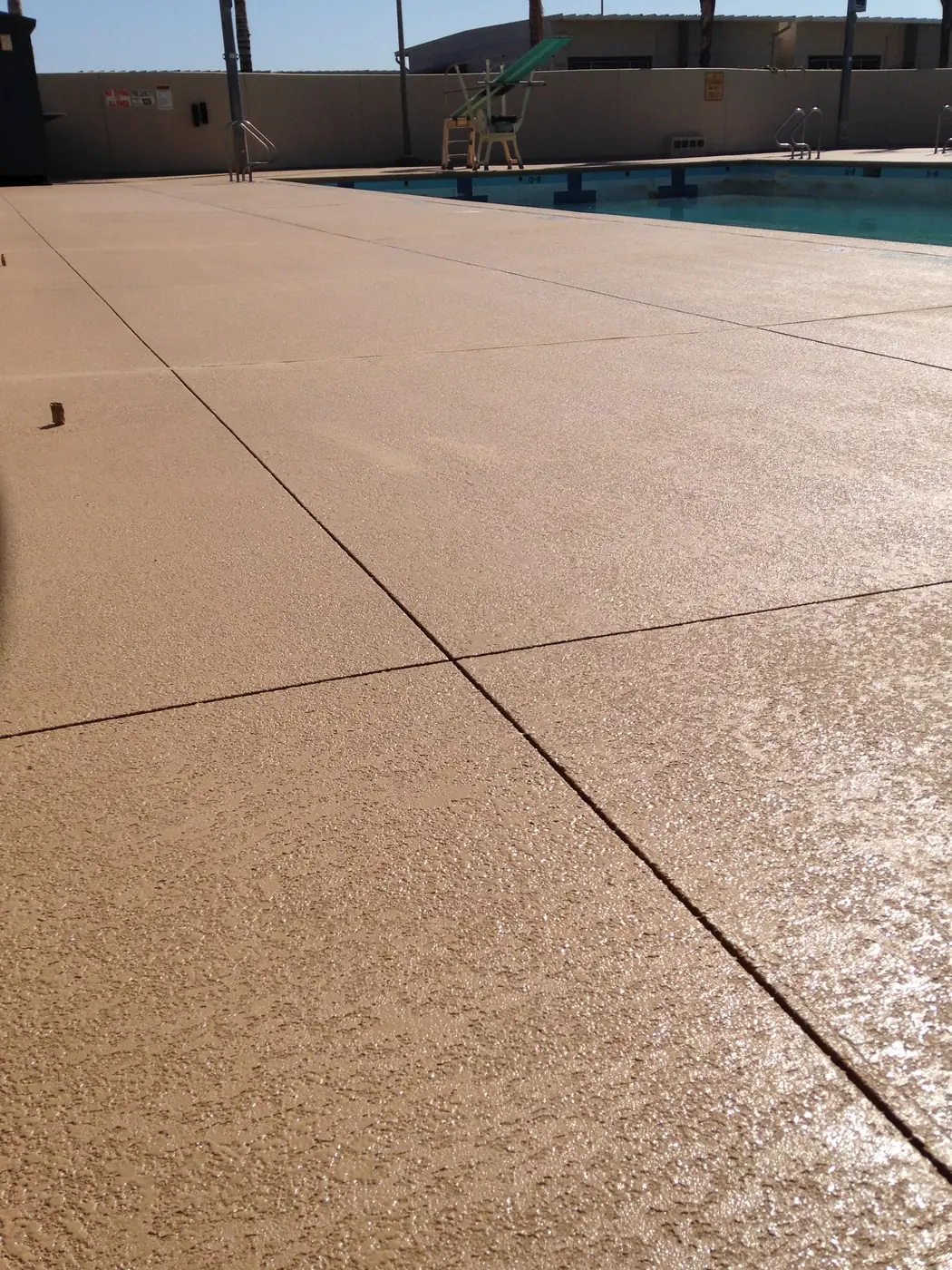
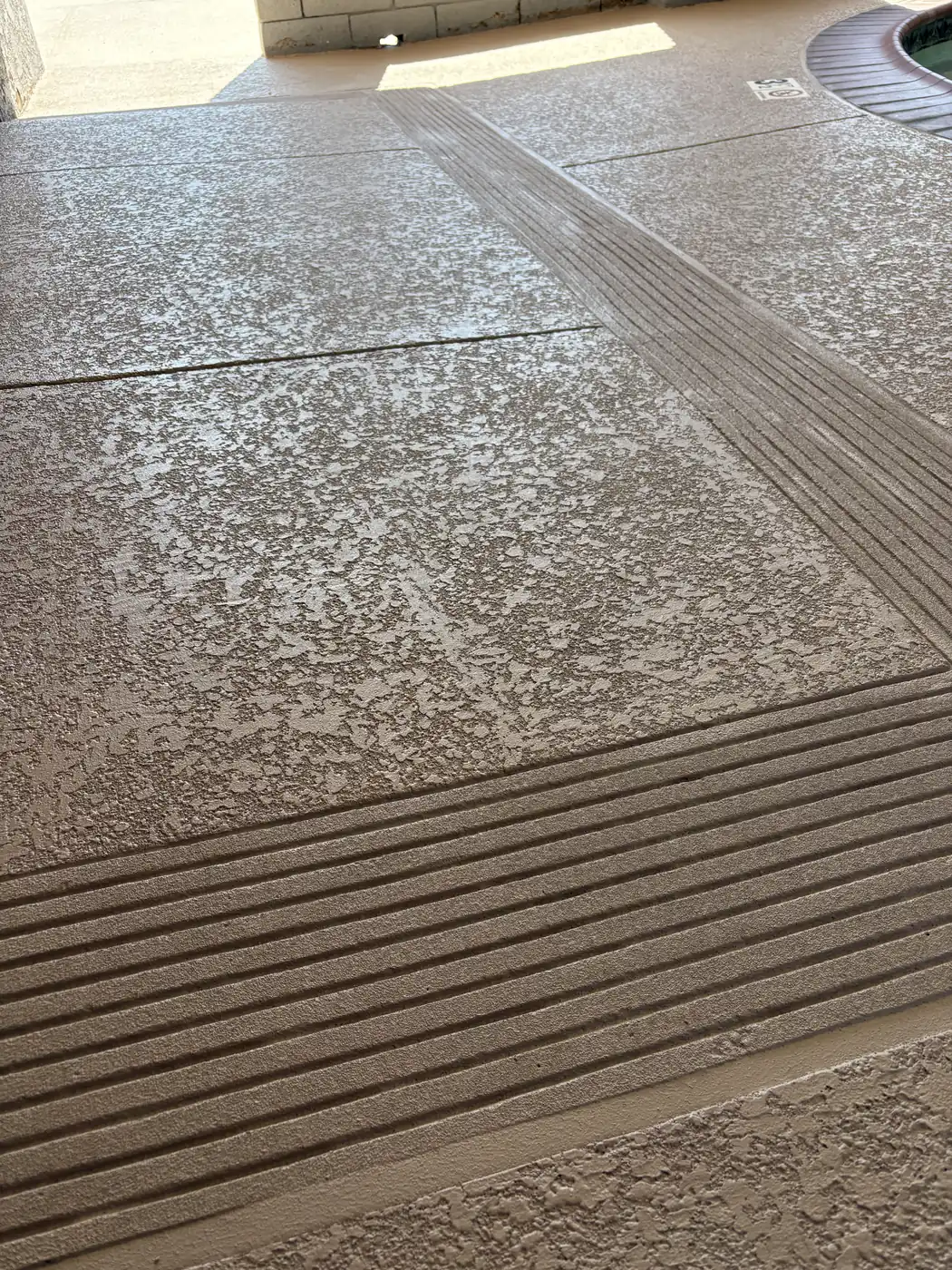
Texture. Outdoor coatings for pool decks, patios and splash pads are textured as they go down, with a knockdown or sand finish. The texture gives grip when wet and, on a pool deck, keeps the surface cooler for bare feet. It is set on site to suit who will be using the deck.
Grooved treads and edges. On steps, ramps and pool entries, grooved non-slip treads can be formed into the surface on top of the deck texture. They put extra grip exactly where people are most likely to slip, and a contrasting color on a step nosing makes the edge easy to see.
The trade-off is always the same. More grip means a rougher surface, which is harder to clean and less comfortable for bare feet and knees. The aim is enough grip for the conditions, not as much as possible.
Garage floors
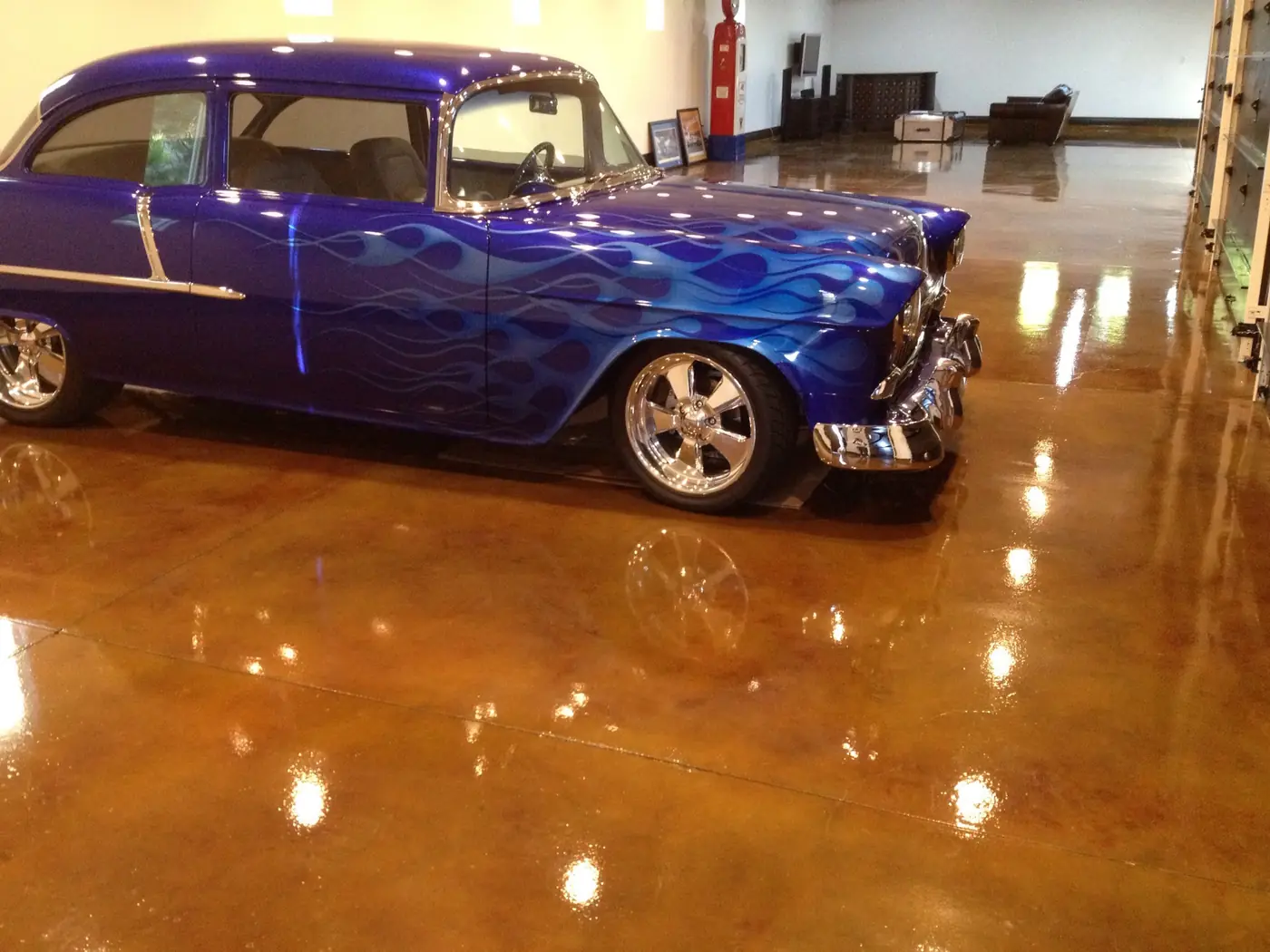
Most garage floors are dry most of the time, and the slippery moments come from water dripping off a car after rain or a wash, and from oil and coolant spills. A flake floor gives good grip for the way most garages are used. A solid color with a high-gloss clear coat looks sharper and shows off a car better, but it is the slicker of the two when wet, and it can take some fine aggregate in the topcoat if that matters to you.
If the garage doubles as a workshop, or anyone in the house is unsteady on their feet, say so at the estimate. It changes the specification, and it is far easier to build grip in at the start than to add it later. Flake, solid color or stain goes through the garage finishes in more detail.
Shops and commercial floors
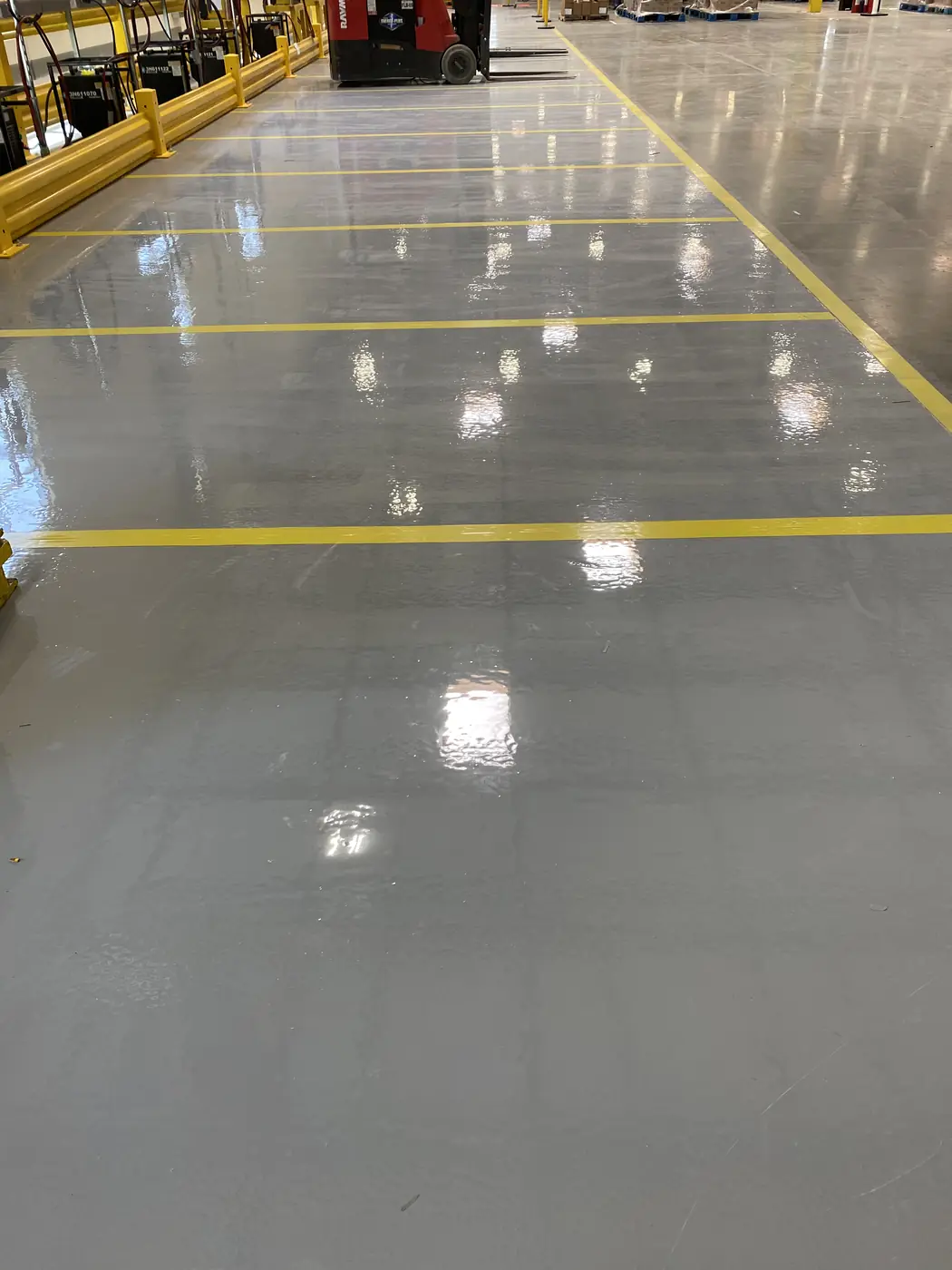
A service bay, a commercial kitchen or a plant floor sees water, oil and fluids every day, so grip is usually part of the specification from the start. The texture can also vary across one floor: more grit at the wash bay, the drains and the entries, less where carts roll and the floor needs to clean easily.
If your business has a slip-resistance requirement from an insurer, a landlord or a corporate standard, bring it to the estimate so the floor can be specified to it. Epoxy floors for auto repair shops covers how a service bay floor is put together.
Pool decks, patios and splash pads
Outside, the surface is wet often and people are barefoot. This is where a smooth sealer or a glossy coating does the most harm, and where a textured coating does the most good. On our pool deck work the grip is matched to the users: a family pool, an apartment complex and a splash pad full of running children are different specifications, and bare feet and older users both come into it.
Painted or glossy-sealed driveways and patios are a common source of slips, because paint and film-forming sealers leave the surface smoother than the concrete was. Why painted concrete driveways peel covers what happens to paint outdoors.
What to do about a floor that is already slippery
Start with the cheap things, because they solve more cases than you would expect.
- Clean it properly. Soap-based cleaners leave a film that makes a floor slicker every time it gets wet. Switching to a pH-neutral cleaner and rinsing it off can make a noticeable difference. How to clean coated concrete floors has the details for each type of floor
- Deal with the source. A dripping car, a sprinkler hitting the patio or a mop left wet all make a floor slippery that would not be otherwise. Mats at entries catch water and grit before they reach the floor
- Recoat with grip. If the coating is still sound and well bonded, a new topcoat with aggregate in it can add grip without redoing the floor. On a worn textured deck, a fresh texture and color coat restores the grip
- Start again. If the coating is peeling, or was never right for the place, it is better to take it off and put down a system that suits it
A recoat only works over a coating that is still bonded. Putting a grippy topcoat over a failing coating gives you the same failure with more texture on it.
Ask about grip at the estimate
We have been preparing and coating concrete since 1976, with our own crews on every job and five years on material and one year on labor behind it. If a floor is slippery now, or you want to make sure a new one will not be, tell us where it is and who uses it. Our garage floor coatings, epoxy floor coatings and pool deck and patio coatings pages go into each system. Book a free on-site estimate and we will look at the floor with you and tell you what it needs.