A painted driveway follows a predictable path. It looks sharp for the first few months. Then the sealer or paint goes cloudy where the sprinklers hit it, turns up at the edges of the tire tracks, and starts coming off in flakes where the car sits. By the second or third summer it is patchy, and a patchy painted driveway looks worse than the plain concrete did before anyone touched it.
This is not usually bad workmanship or a cheap product. It is what happens to a film on exterior concrete.
Paint is a film, and concrete moves water
Paint, porch-and-floor enamel and most driveway coatings work the same way: they form a continuous skin on top of the concrete. That skin has to stay stuck to the surface to survive.
Concrete makes that hard. It is porous, and driveways are almost never poured over a vapor barrier. Ground moisture moves up through the slab every day, and the sun cooks the surface every afternoon. When a film sits on top, the moisture coming up has nowhere to go. It collects under the paint, pressure builds, and the film blisters and lets go. Sprinkler overspray soaking in from the edges makes it worse.
That is why painted driveways often fail first along the edges and in low spots where water sits, and why a paint job that would last for years on a garage wall barely lasts a couple of summers on a driveway.
Tires finish the job
The second enemy is the car. A tire coming off a hot road is soft and slightly sticky. Park it on a film coating and the rubber grips the surface; drive away and it pulls. If the film is even slightly weakened by moisture underneath, the tire lifts it. Do that twice a day for a year and you get the classic pattern: two stripes of bare concrete exactly where the wheels sit.
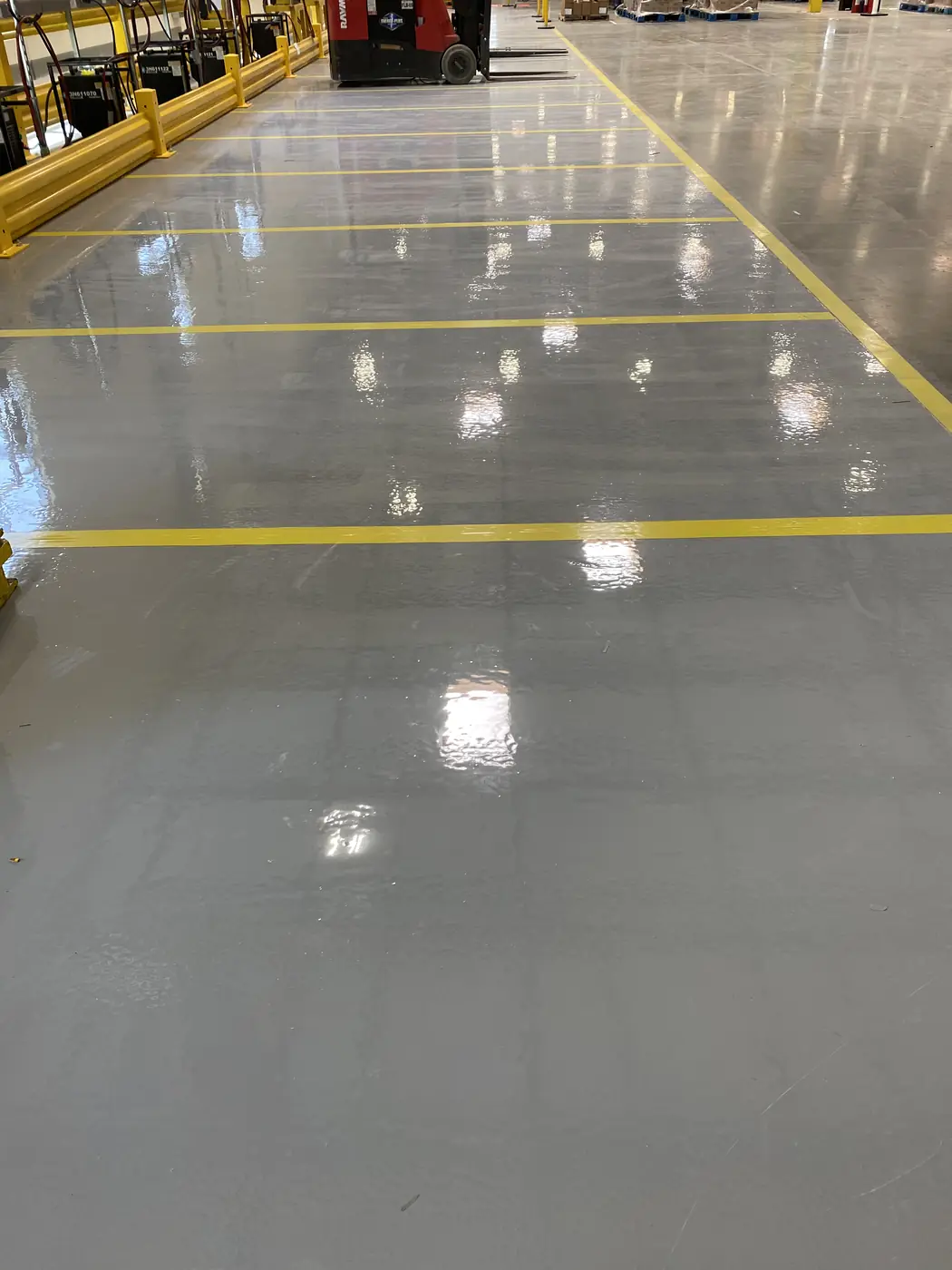
The same thing happens to garage floor coatings that were not bonded properly, which we covered in why epoxy garage floor kits peel. Indoors, a properly prepared industrial coating can handle it. Outdoors, under sun, sprinklers and ground moisture, a thin paint film cannot.
Stain goes in, not on
Stain works on a completely different principle. There is no film. The color goes into the surface of the concrete itself, either by reacting with the lime in the cement or by carrying pigment into the pores.
Because nothing is sitting on top, there is nothing for moisture to push off and nothing for a tire to grab. The slab can breathe exactly as it did before. Stained concrete weathers the way natural stone does. It does not peel, because there is no layer to peel.
Stained concrete is still sealed afterwards, and the sealer does take the sun and the traffic. The difference is what happens when that sealer wears. Worn sealer on stained concrete means the color underneath is still there and the driveway gets a fresh coat of sealer. Worn paint means bare concrete showing through and a stripping job before anything else can be done.
There are two kinds of stain, and on driveways the choice matters more than it does indoors. We explained the difference in acid stain vs water-based stain. Short version: older, weathered driveways usually take a water-based stain more reliably than an acid stain.
Stain does not have to look like a colored driveway
The common worry is that a stained driveway will look like a painted one, just a flat brown slab. It does not have to.
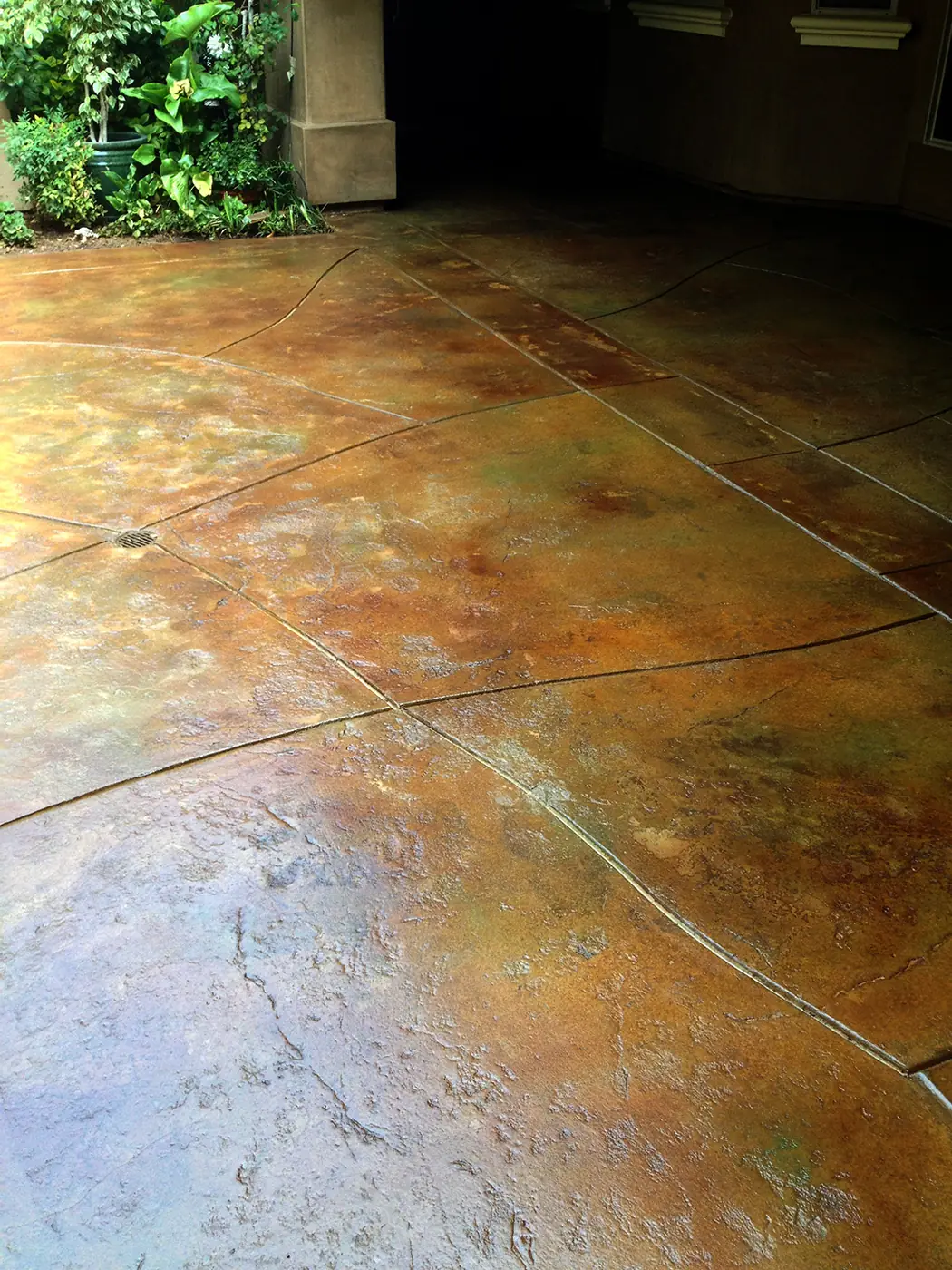
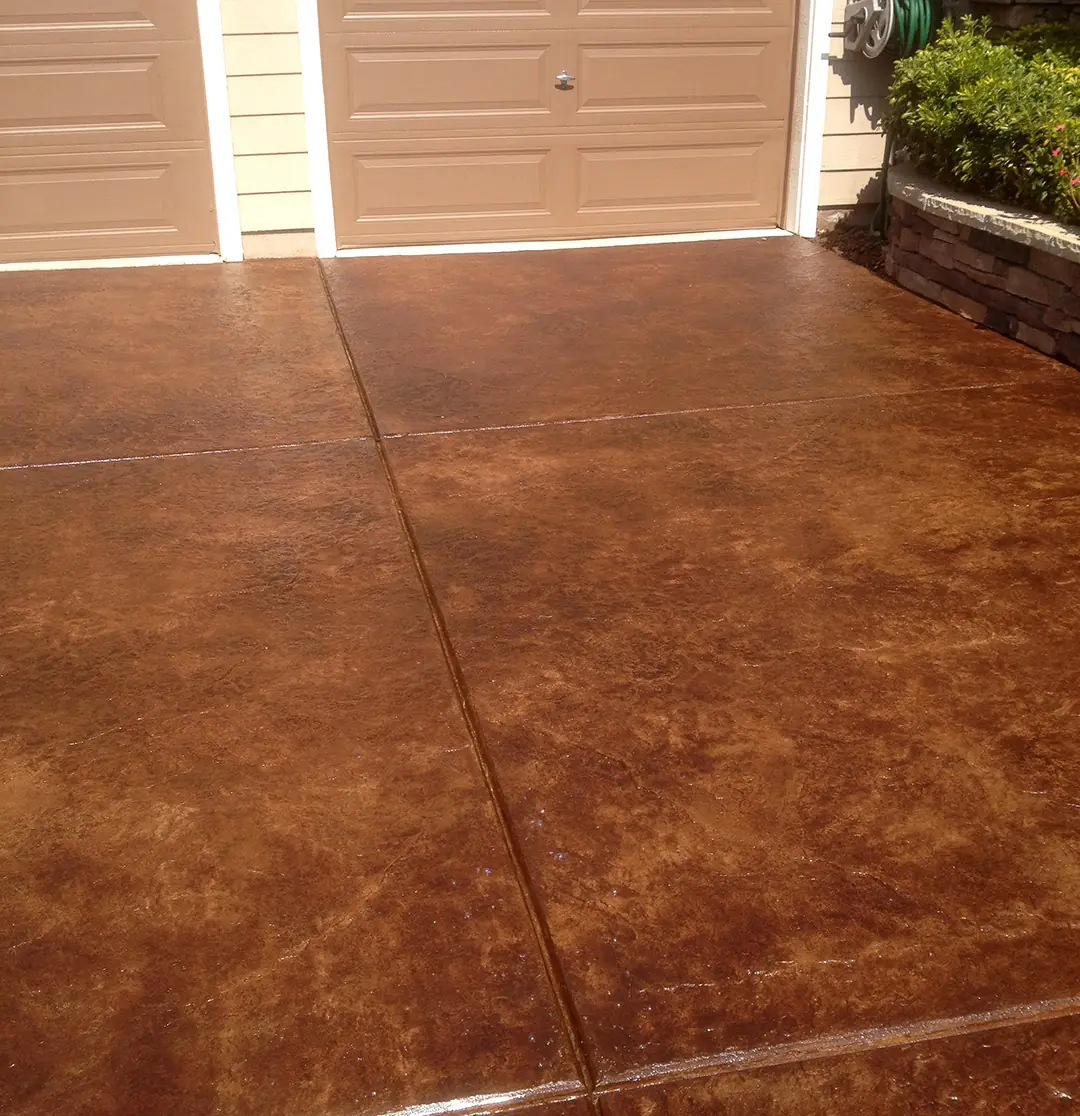
- Variegated color. Stain is translucent and naturally mottled, so it reads as stone rather than paint. The driveway in the photo above is a good example.
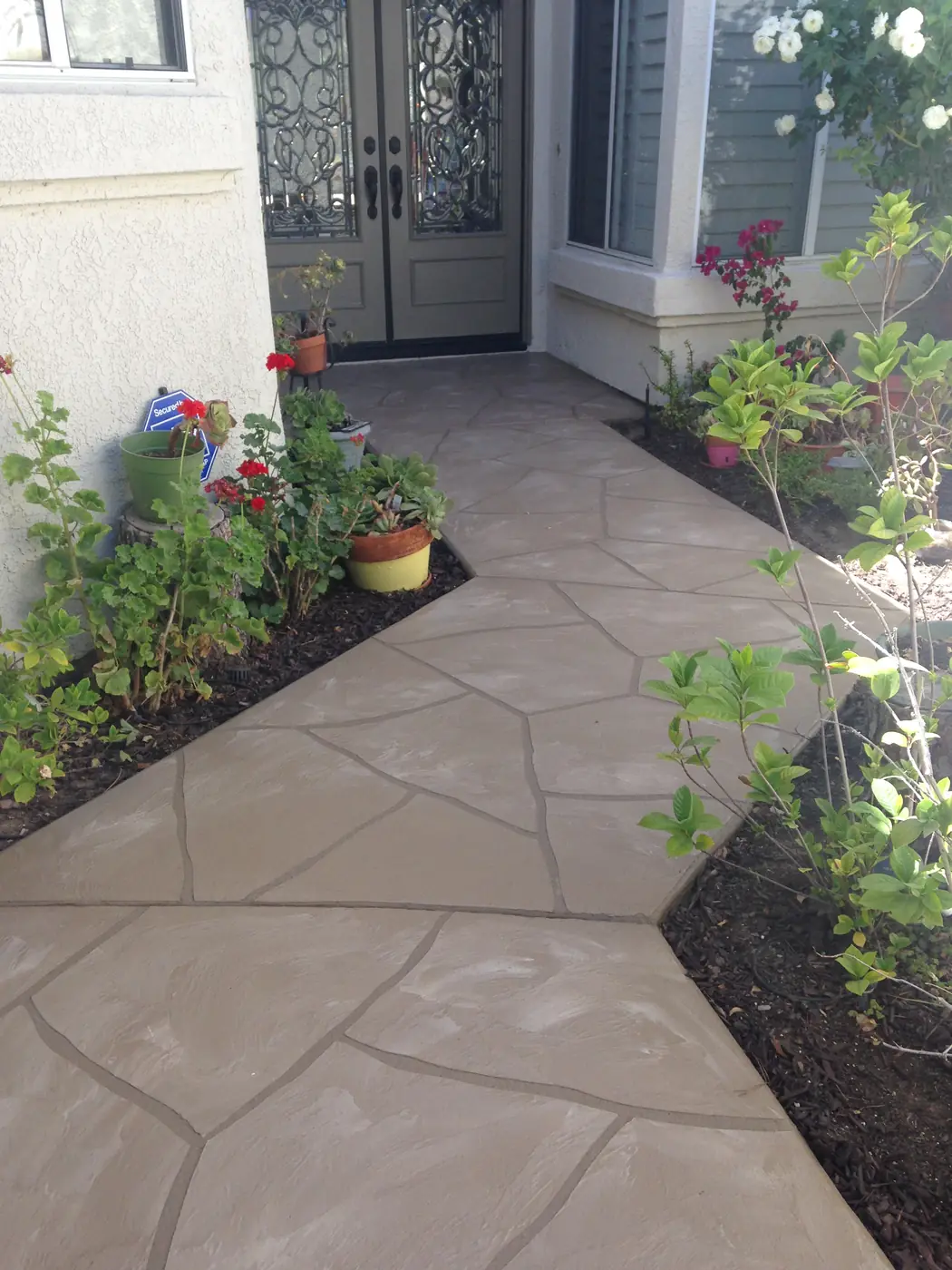
- Scored patterns. We can cut pattern lines into the slab before staining, in tile grids, diamonds or flagstone layouts, so the finished driveway looks laid rather than poured.
- Borders and bands. A contrasting border along the edges or bands across a long driveway break up the expanse and tie it to the house.
- Existing blotches absorbed. A variegated stain is very good at pulling old discoloration into the pattern, as long as the oil and rubber are dealt with first.
If your driveway is already painted
This is where a lot of homeowners get stuck. Stain cannot go over paint. It needs to reach bare concrete, and paint blocks it completely. Painting over the old paint just repeats the failure, and it usually fails faster because the new coat is bonded to a layer that is already letting go.
The old paint has to come off first, all of it, including what is still stuck well. That is mechanical work: grinding or blasting the surface back to clean, open concrete. Chemical strippers on a driveway tend to leave residue in the pores, which then shows through a stain as a blotch. Full concrete coating removal is a trade in itself and it is a big part of what we do.
Once the slab is back to bare concrete, it is usually in better shape than people expect, and it can be stained, sealed and scored like any other driveway.
When stain is not enough
Stain shows you everything underneath. If a driveway has large patches in different mixes, heavy spalling, deep pitting, or years of repairs that will never match, stain will not hide that, because stain is transparent. In that case a thin overlay gives a uniform new surface that can then be colored and patterned. And if sections have heaved or dropped, the slab is moving and neither stain nor an overlay will fix it. We will tell you which of those you are looking at when we see it.
What we recommend
For a sound exterior slab, whether it is a driveway, patio, walkway or steps, stain and seal it rather than painting it. If it is already painted, strip it properly first rather than painting over the top. If the surface is too damaged to stain well, overlay it. The details are on our exterior concrete staining page.
We have been preparing and finishing concrete since 1976, our own crews do every stage, and we cover Riverside, San Bernardino, San Diego, Orange and Los Angeles counties. Book a free on-site estimate and we will look at your driveway and tell you straight what it needs.