A home garage floor takes a car parked in the same spot and the occasional oil drip. A service bay takes that every hour of the working day: cars rolling in hot off the road, oil, transmission fluid, coolant and brake fluid on the floor, floor jacks and jack stands concentrating a car's weight on a few square inches, dropped tools, creepers, and a mop or squeegee at closing time. It is one of the hardest lives a concrete floor can have.
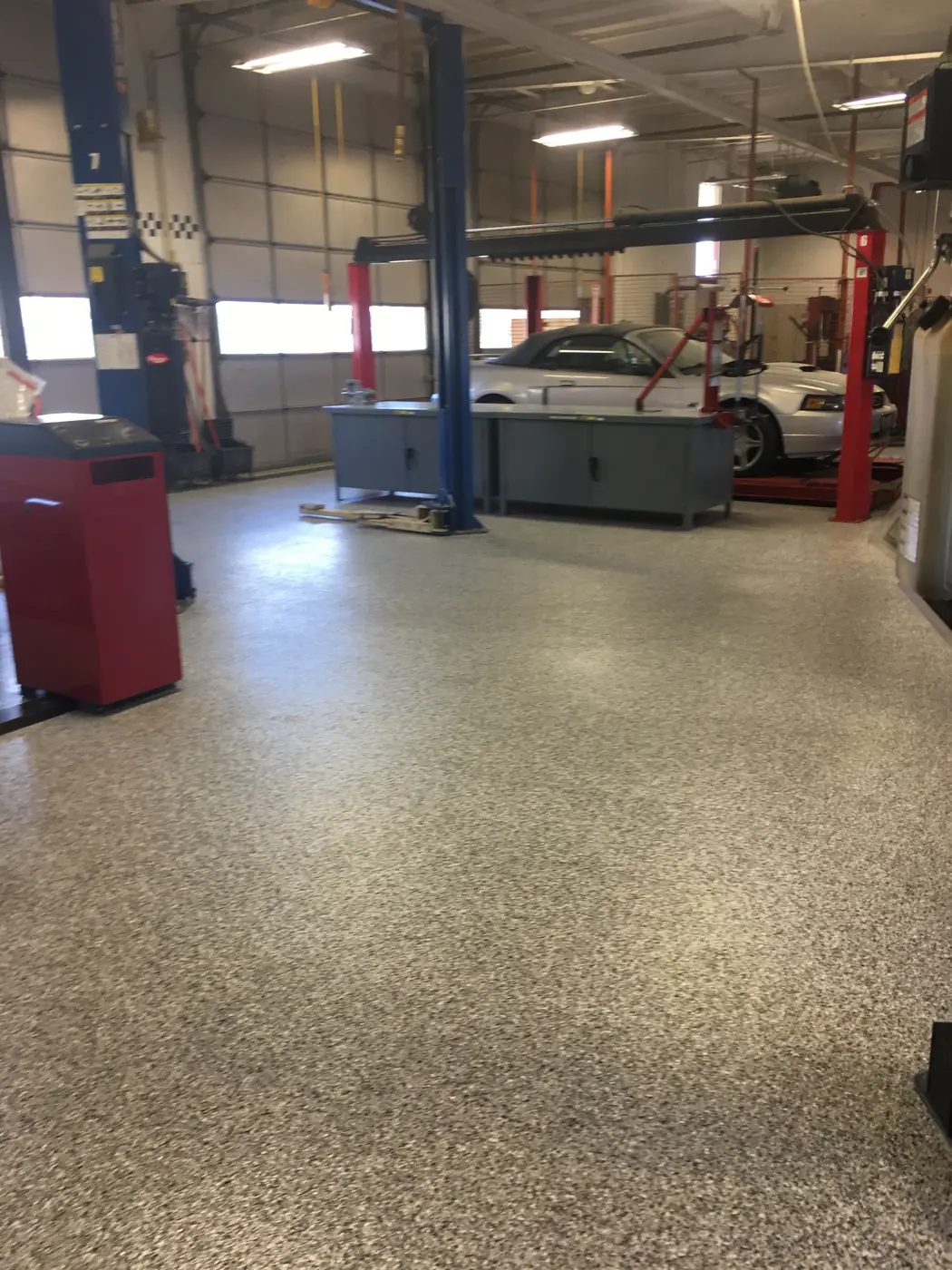
The flake floor in the photo above is a working shop, with lifts bolted through it and cars going up and down all day. That is the standard a shop floor has to be built to.
What happens to an uncoated shop floor
Bare concrete is porous. Every spill soaks in, and over years a shop slab turns dark, stained and permanently slick in the places that see the most fluid. It also dusts, as traffic wears the top of the slab and lifts fine concrete dust into the air, onto the cars and into the bays. A dark, stained floor makes a shop harder to light and harder to keep looking professional, and customers notice the floor in a way most owners do not.
Why paint and thin coatings fail in a shop
The usual first fix is floor paint or a thin roll-on coating. In a shop it rarely lasts. Hot tires lift it, jack stands punch through it, and the oil already in the slab stops it bonding in the first place. It goes in patches, worst exactly where the work happens, and then it has to be taken off before anything better can go down. Why that happens is covered in more detail in why epoxy garage floor kits peel, and it is the same problem at a bigger scale.
The prep is bigger in a shop
Everything that makes a coating last starts with the concrete underneath it, and a shop slab usually needs more work than a house garage:
- Years of oil. Oil sits in the top of the slab, and degreasing and mechanical grinding get most of it out. A floor that has been soaking up fluid for decades can have areas that keep bleeding back, and those need finding before the coating goes down, not after. Coating a floor with oil soaked into it goes through how that is judged
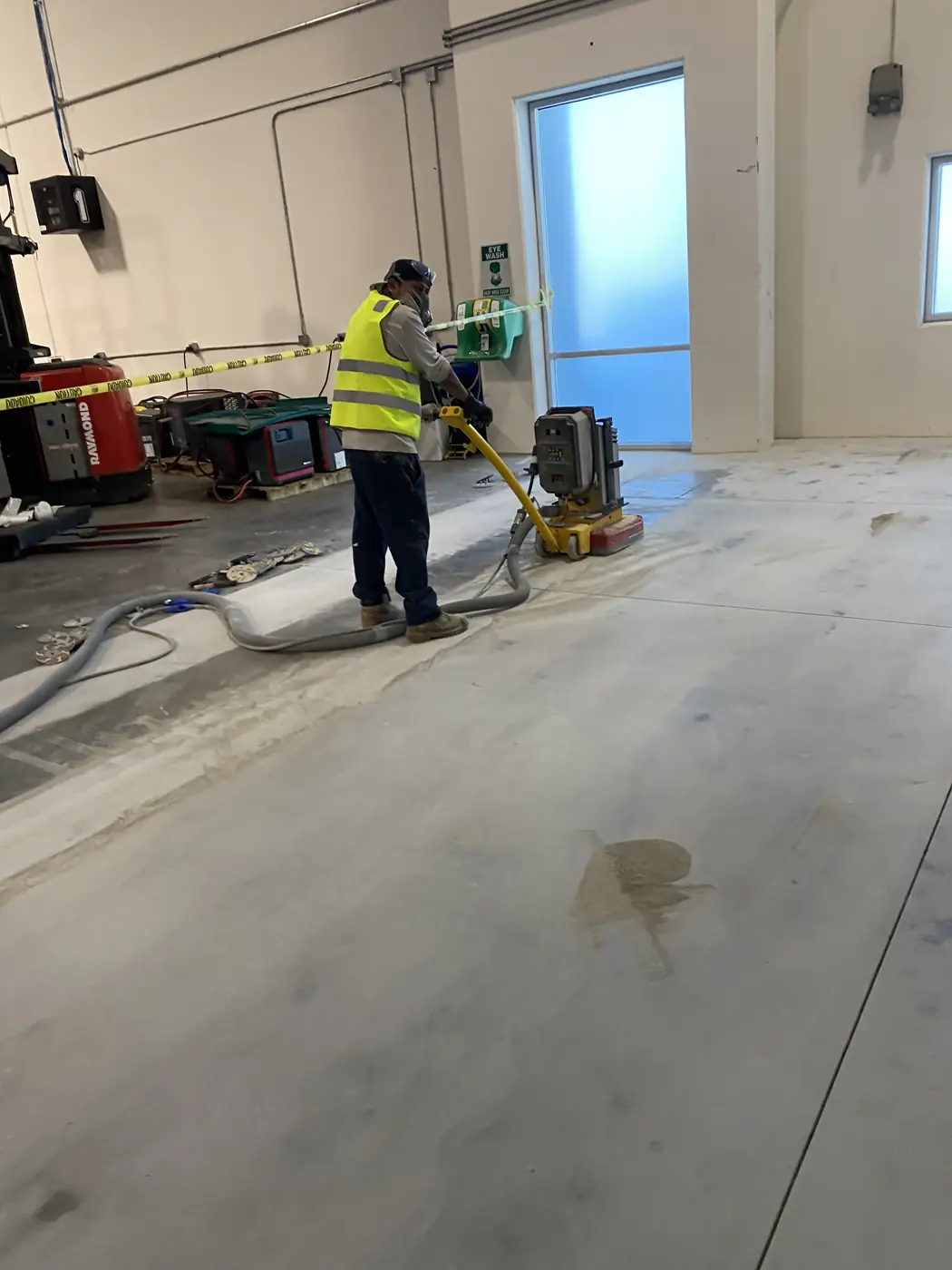
- Old coatings. Paint or a failed coating has to come off rather than be covered. Our own crews do that removal, and how old floor coatings are removed explains the methods
- Cracks and damage. Chipped joints, broken edges and cracks are chased and filled so the new floor has a sound surface everywhere
- Equipment. Lifts, alignment racks, tire machines and tool chests have to be moved or worked around. That gets planned at the estimate, along with which bays can be out of action and when
Specifying for what actually happens on the floor
There is no single shop system that suits every shop. A quick-lube bay, a collision shop and a fleet maintenance building see different fluids, different loads and different cleaning. So the first conversation is about the work: what gets spilled, where the jacks go down, what gets dropped, and how the floor is cleaned. The build and the topcoat come out of those answers, and a working shop gets a heavier build and a tougher topcoat than a garage that mostly stores a car.
It is also worth knowing that some shop fluids are harder on coatings than oil is. Brake fluid and strong solvents are the ones to mention, especially if they get left to sit. That is one more reason to describe the real work to whoever is specifying the floor rather than asking for a standard system.
Flake, color and grip
Most shops end up with a flake floor like the one above, for practical reasons:
- It hides the day. Dust, tire marks and small spills disappear into a flake blend far more than into a solid color
- It gives grip underfoot. The texture of the flake matters on a floor that is going to have fluid on it
- It brightens the bay. A light floor bounces the shop lighting around, which helps under cars and at the bench
A solid color with a clear coat looks sharper and suits a showroom or a detail bay where the floor is part of the presentation, but it shows more of the working day.
Lines, edges and drains
A shop floor is more than a coating:
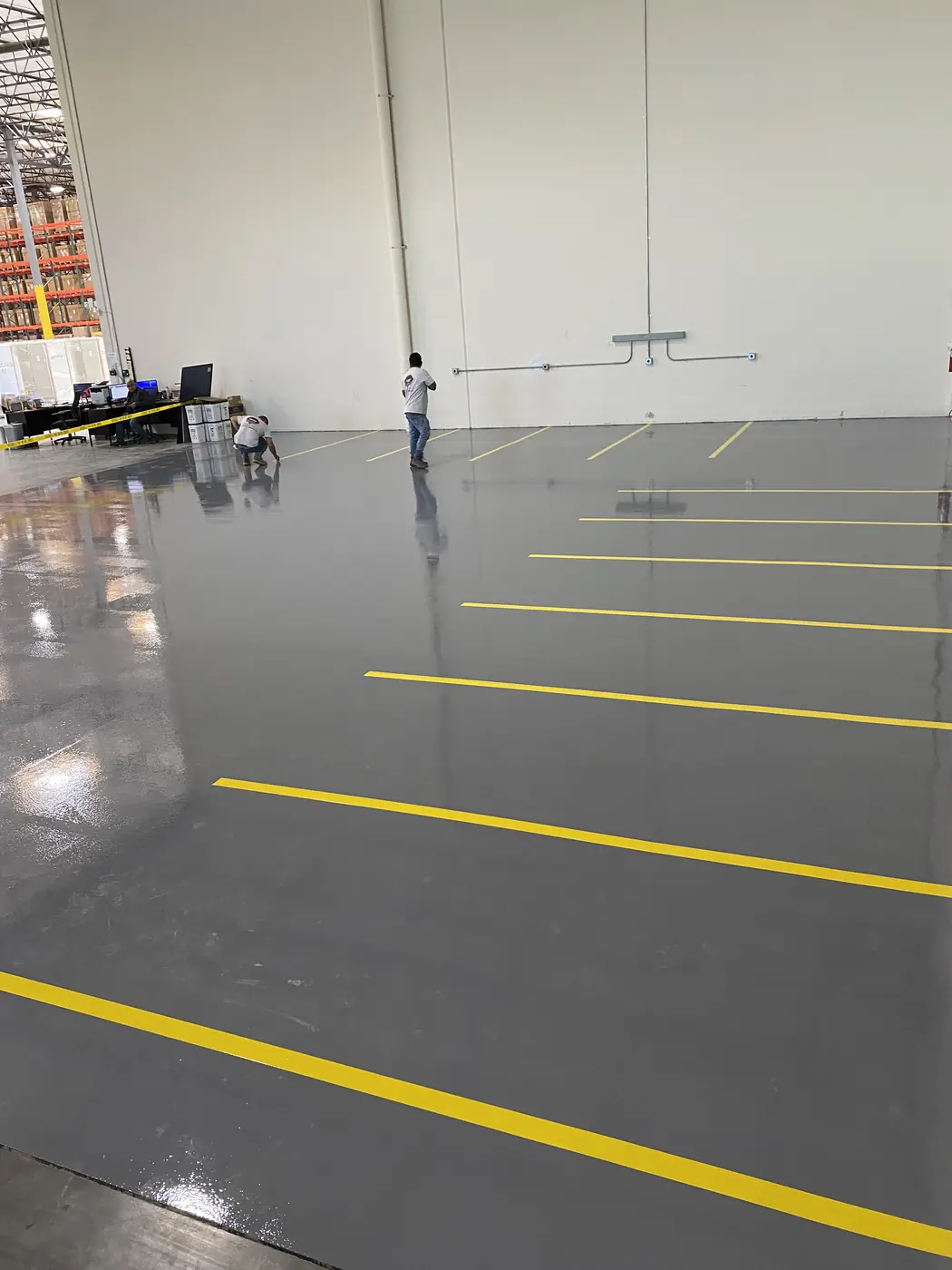
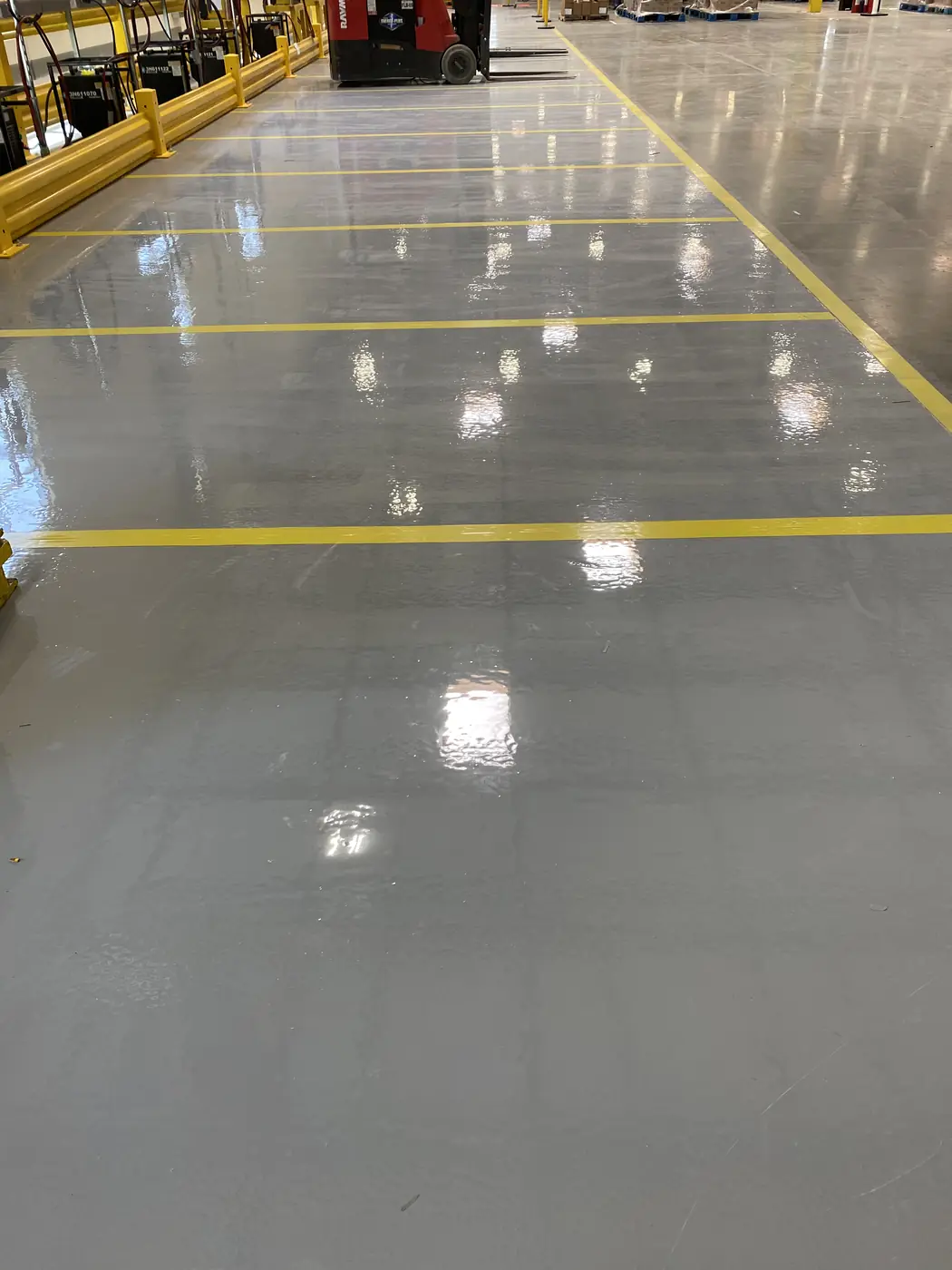
- Safety and bay lines for lift zones, walkways and no-go areas are laid in as part of the floor rather than painted on afterwards, so they last as long as the coating around them. How warehouse floor striping survives forklift traffic explains why that matters
- Coved edges, where the coating turns up the base of the wall, stop washdown water and fluids getting under the edge of the floor
- Drains and trench drains need the coating finished cleanly into them so water runs off rather than sitting
Keeping the shop open
Closing a shop for a floor is lost income, so the work is usually phased. Bays can be done in sections, in an agreed order, with nights and weekends where needed. It takes longer overall than an empty building and costs more, and we say that up front, but it is far cheaper than shutting the doors. You get real return-to-service dates for each section on the estimate. Foot traffic comes back well before vehicles and lifts, and those dates are worth keeping to.
Looking after it
A coated shop floor is easy to clean, which is half the point. Wipe up fluids rather than leaving them to sit, use floor dry and a squeegee rather than letting spills spread, and avoid harsh solvents for routine cleaning. How to clean and look after a coated floor covers the day-to-day.
Getting a shop floor priced
Shop floors are part of our epoxy floor coating and industrial floor coating work, and taking off old paint and failed coatings is covered on our coating removal page. What drives the number on a commercial floor is set out in commercial epoxy flooring cost per square foot. Book a free on-site estimate and Dave will look at the slab, the oil and the way your bays are used, and give you a plan that keeps the shop working.