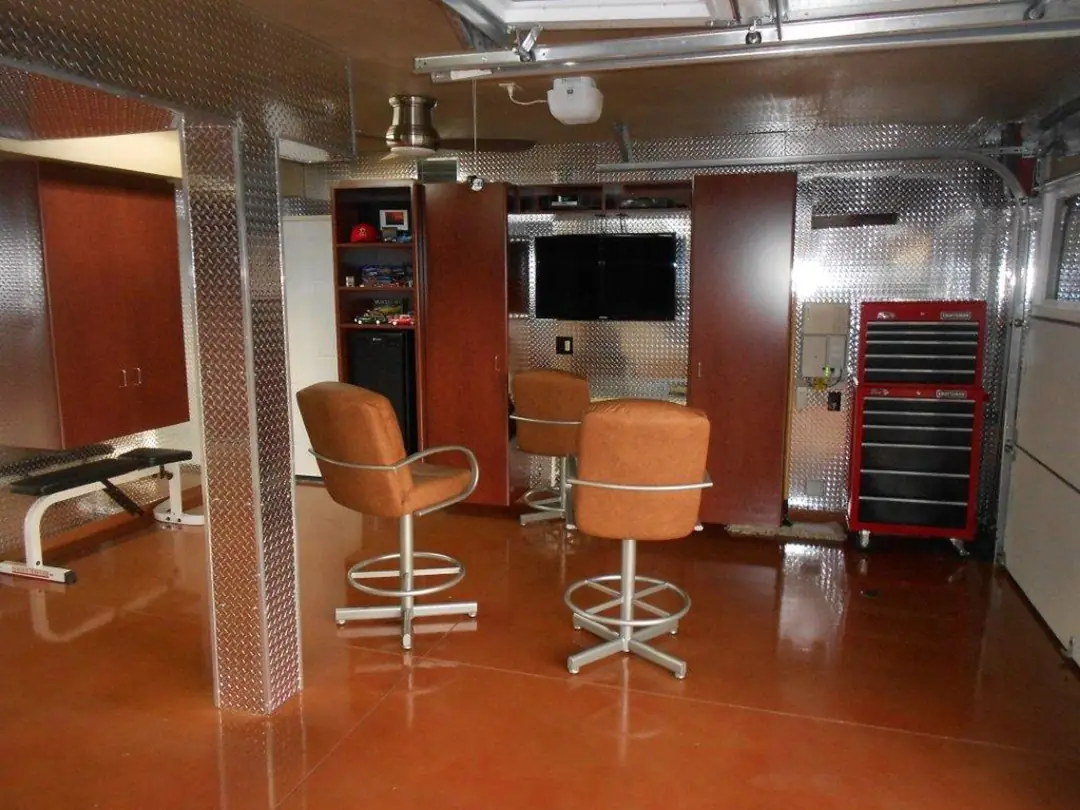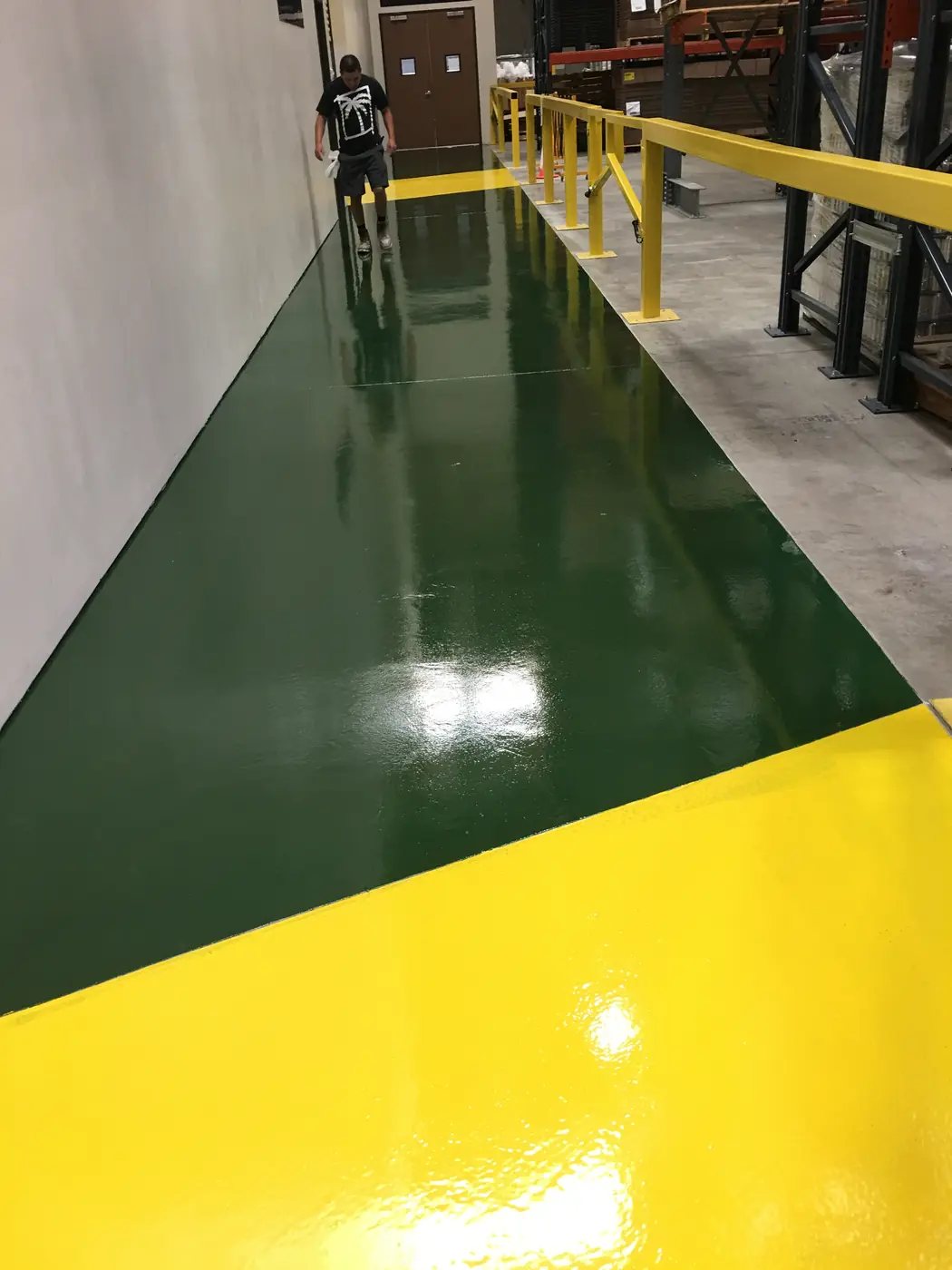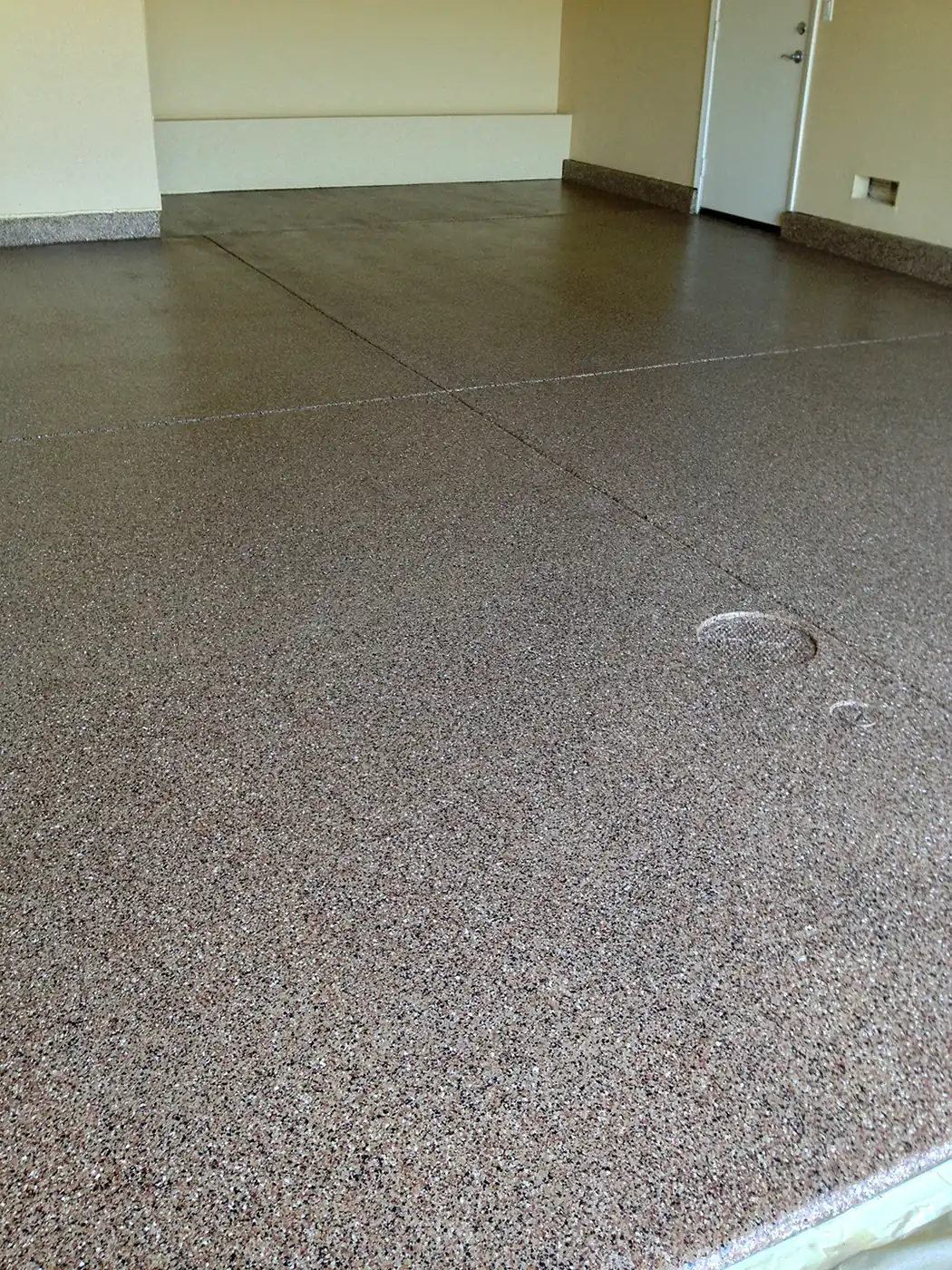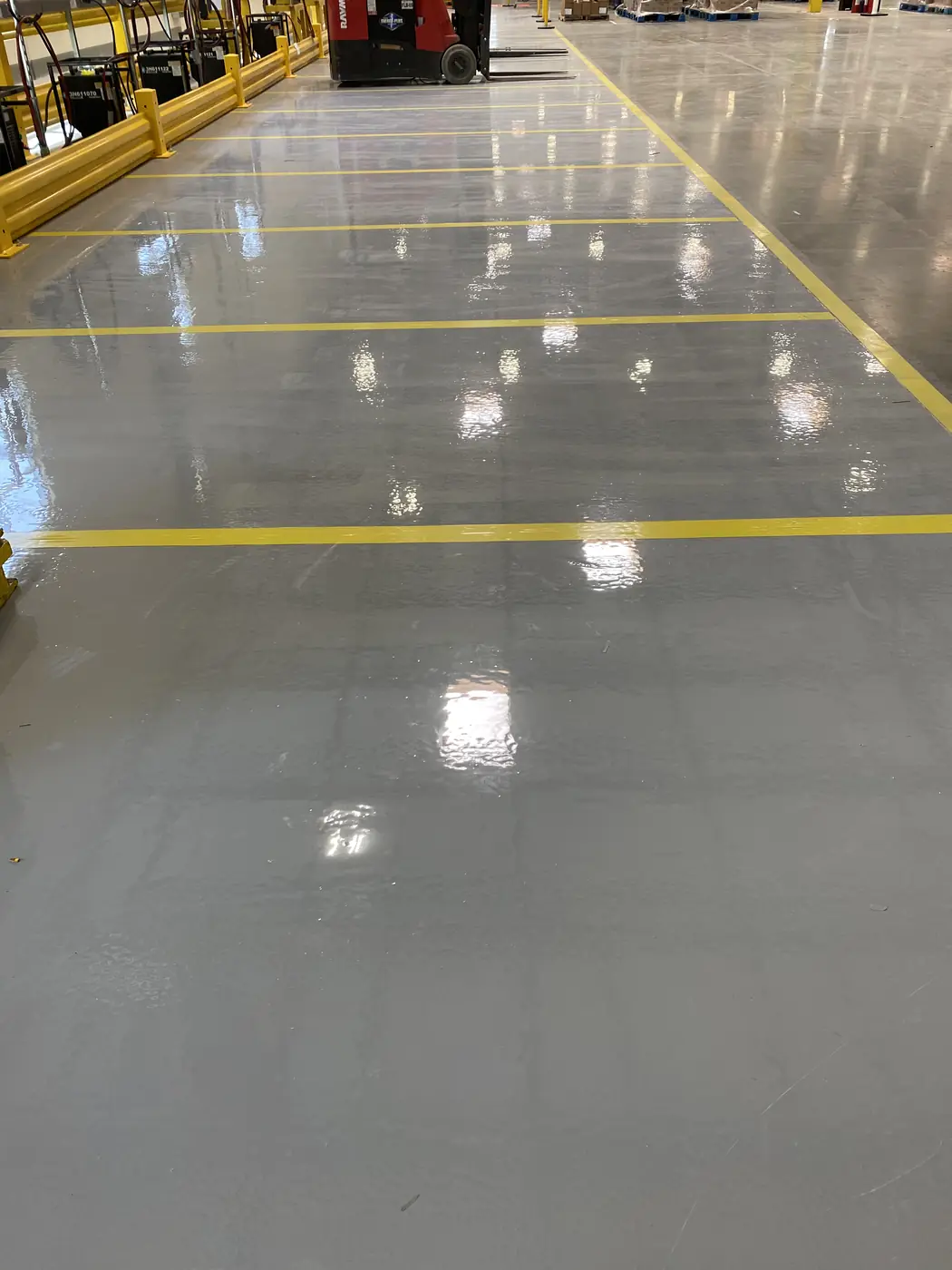
Oil is the one thing on a slab that stops a coating from bonding no matter how good the product is. Epoxy, polyaspartic and urethane all need to grip bare concrete. Oil gets there first, sits in the pores the coating needs, and leaves the new floor sitting on a greasy film instead of on the slab. It can look fine for months. Then it lets go, usually in the exact spot where the car was parked or the machine stood.
So the question on a garage or shop floor with years of drips on it is not really whether it can be coated. Most can. It is how deep the oil has gone, and what it takes to get it out.
Why oil is different from dirt
Dirt, dust and old tire marks sit on the surface. Grinding takes them off with the top skin of the slab and they are gone.
Oil soaks in. Concrete is porous, and motor oil, hydraulic fluid and cutting coolant are thin enough to wick down into it and spread sideways under the surface. A stain the size of a dinner plate on top can be wider underneath. On a machine shop floor that has had coolant running across it for thirty years, it can be most of the slab.
That is also why a degreaser on its own is not enough. It cleans what is on the surface and a little of what is just under it. What is deeper stays put, and as the coating cures, or as the slab warms up in the sun through an open garage door, it can work its way back up to the surface. That is called bleed-back, and it is what lifts a coating that looked perfect the week it went down. We went through how this catches out garage kits in why epoxy garage floor kits peel.
A quick test you can do yourself
Sprinkle a little water on clean concrete somewhere in the garage, then on the oil stain. On clean, uncoated concrete, water darkens the surface and soaks in within a minute or so. Where there is oil in the surface, it beads up or just sits there.
If it soaks in on the stain as well, the oil is mostly gone from the top and the stain is largely discoloration. If it beads, there is oil in the pores, and that is the area that needs work before any coating goes near it. It will not tell you how deep the oil goes. That is what the estimate is for.
Garage floors: usually routine
In most home garages this is ordinary work. The oil is from a car or two parked in the same places for years, and it is in the top of the slab. Degreasing and mechanical grinding take it out along with the sealed, dusty top layer that has to come off anyway. We grind every floor before coating, so the oil comes out as part of the same job rather than as an extra.
The garages that need more care are the ones that have been workshops: an engine rebuilt on the floor, a leaking project car left for years, a spot where somebody changed their own oil every three months. There, the oil can be deep enough that one pass does not finish it. That is exactly what we look for on the estimate, so the price you get is the price for your floor rather than for a clean one.
Shop and plant floors: plan for it
Machine shops, fabrication shops and older plants are a different scale of problem. Oil and coolant have run across the slab for decades, soaked into the joints, and pooled around press pits and under the machines. It is one of the most common reasons an industrial coating lifts early.
On these floors the process looks like this:
- Find out what has been on it. Motor oil, hydraulic fluid, water-based coolant and solvents behave differently. Tell us what the floor has seen, and where
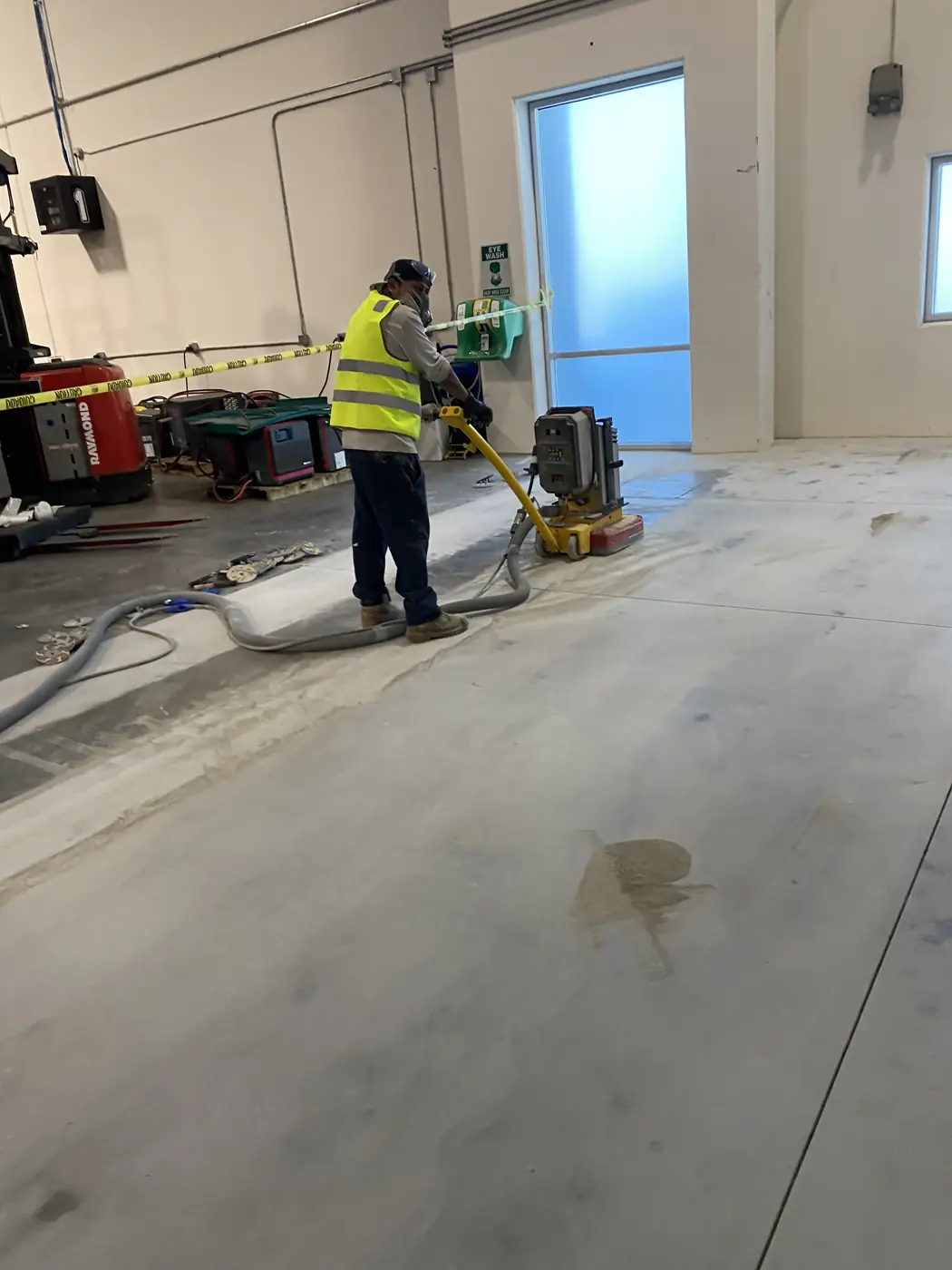
- Degrease and grind. Mechanical removal takes off the contaminated top of the slab and opens the surface. On most of the floor, this is enough
- Check what comes back. Heavily soaked areas are worth checking again after grinding, because oil that was deep in the slab can still be working its way up
- Treat the worst areas separately. Pits, machine footprints and joint lines often need more work than the open floor, and they are handled one area at a time
There are primers sold for oil-contaminated concrete. They can help with what is left after proper cleaning, but they have limits, and they are not a substitute for getting the oil out. A primer over a slab that is still actively bleeding oil is the same bond problem in a more expensive can.
When the oil will not come out
Now and then a section of slab has taken on so much oil for so long that it keeps bleeding however much is removed. It is uncommon, and it is almost always in a spot you could point to: the pit, the old compressor corner, the bay where the hydraulic press leaked for twenty years.
There are honest options for those areas:
- Cut the worst section out and patch it. New concrete in a small area, then coated with the rest of the floor. The patch will be a separate piece of slab, but under the coating it reads as one floor
- Accept a compromise. Leave an area uncoated, or give it a different finish, where the equipment stays put and nobody will see it anyway
- Change the plan for the whole floor. If the contamination is general rather than local, it can change what makes sense on that slab entirely
What is not an option is coating over it and hoping. We would rather tell you about the press pit at the estimate than come back to a coating lifting over it six months later.
Will polishing hide it instead?
No. Polishing has no film to hide anything under, so oil that has soaked into the slab can show through a polished floor as a dark shadow. It is the same problem, just visible rather than peeling. More on that in can your existing concrete be polished.
What it means for the price
Oil is one of the main reasons two quotes for the same floor can be far apart. A quote that treats an oil-soaked shop floor like a clean one is either going to find the problem halfway through the job or leave it under the coating. The things that move a commercial quote are covered in commercial epoxy flooring cost per square foot, and for home garages in garage floor coating cost in the Inland Empire.
Getting your floor looked at
We have been preparing concrete for coatings since 1976, and dealing with oil is a routine part of that work. Our own crews do the degreasing, the grinding and the coating, and nothing is subcontracted. If the floor has an old coating on it as well, taking that off is work we do ourselves too.
The details are on our garage floor coatings and industrial floor coatings pages. Book a free on-site estimate and we will look at the stains, tell you whether they are on the slab or in it, and tell you plainly if any part of the floor needs a different answer.