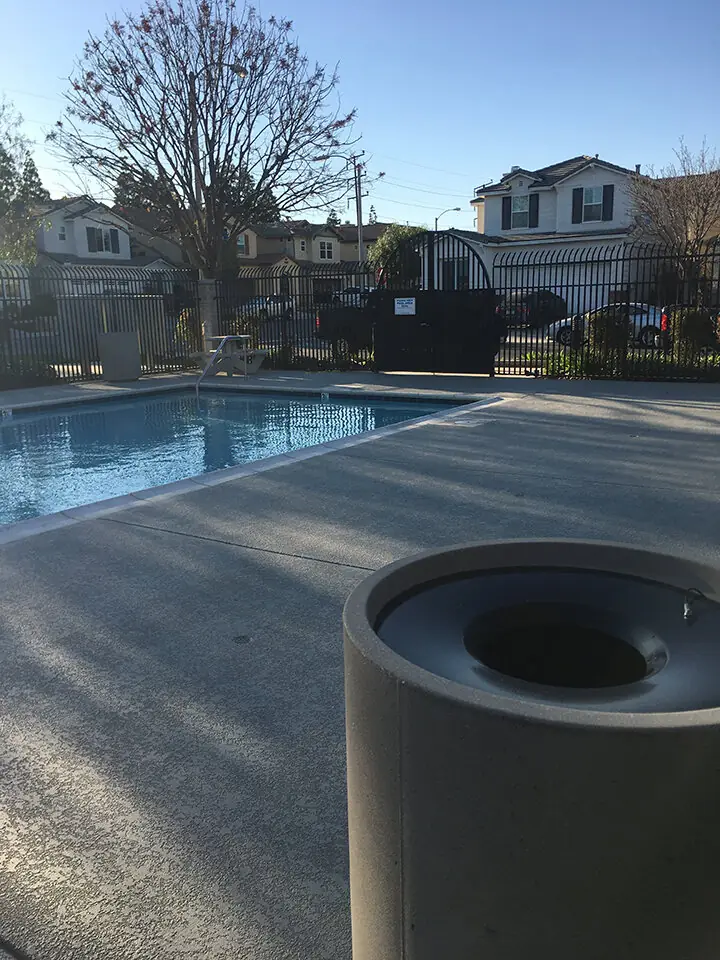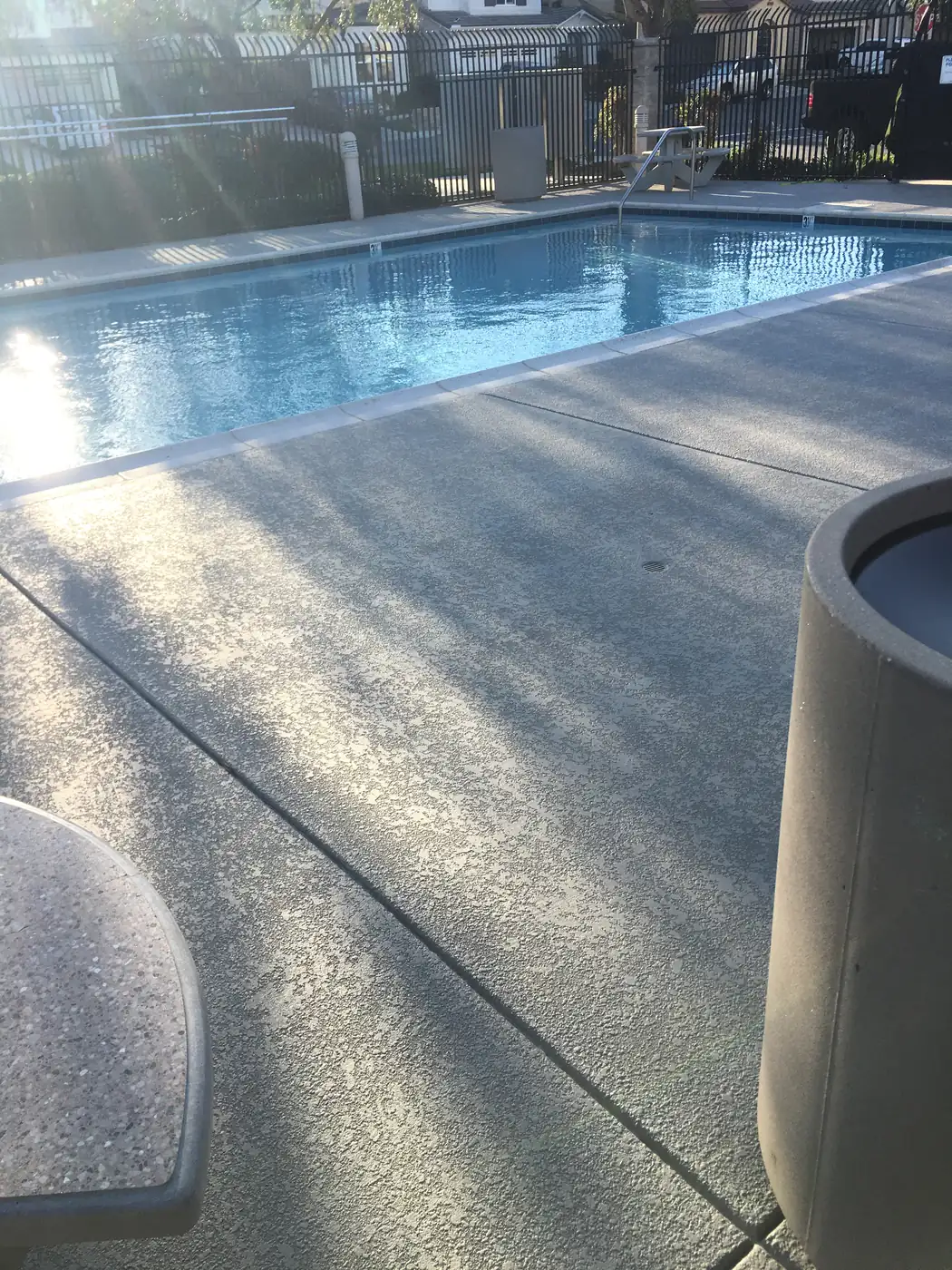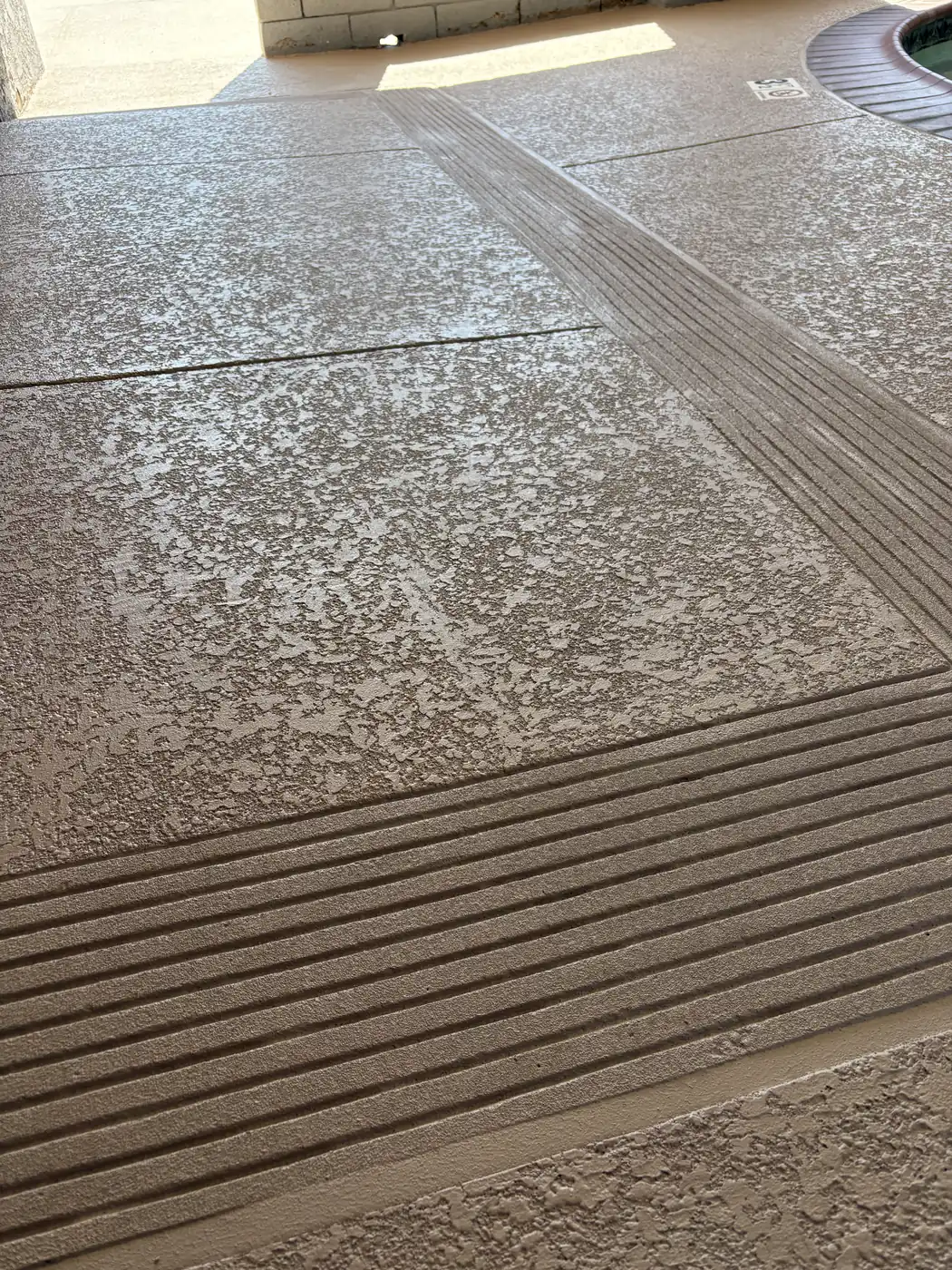
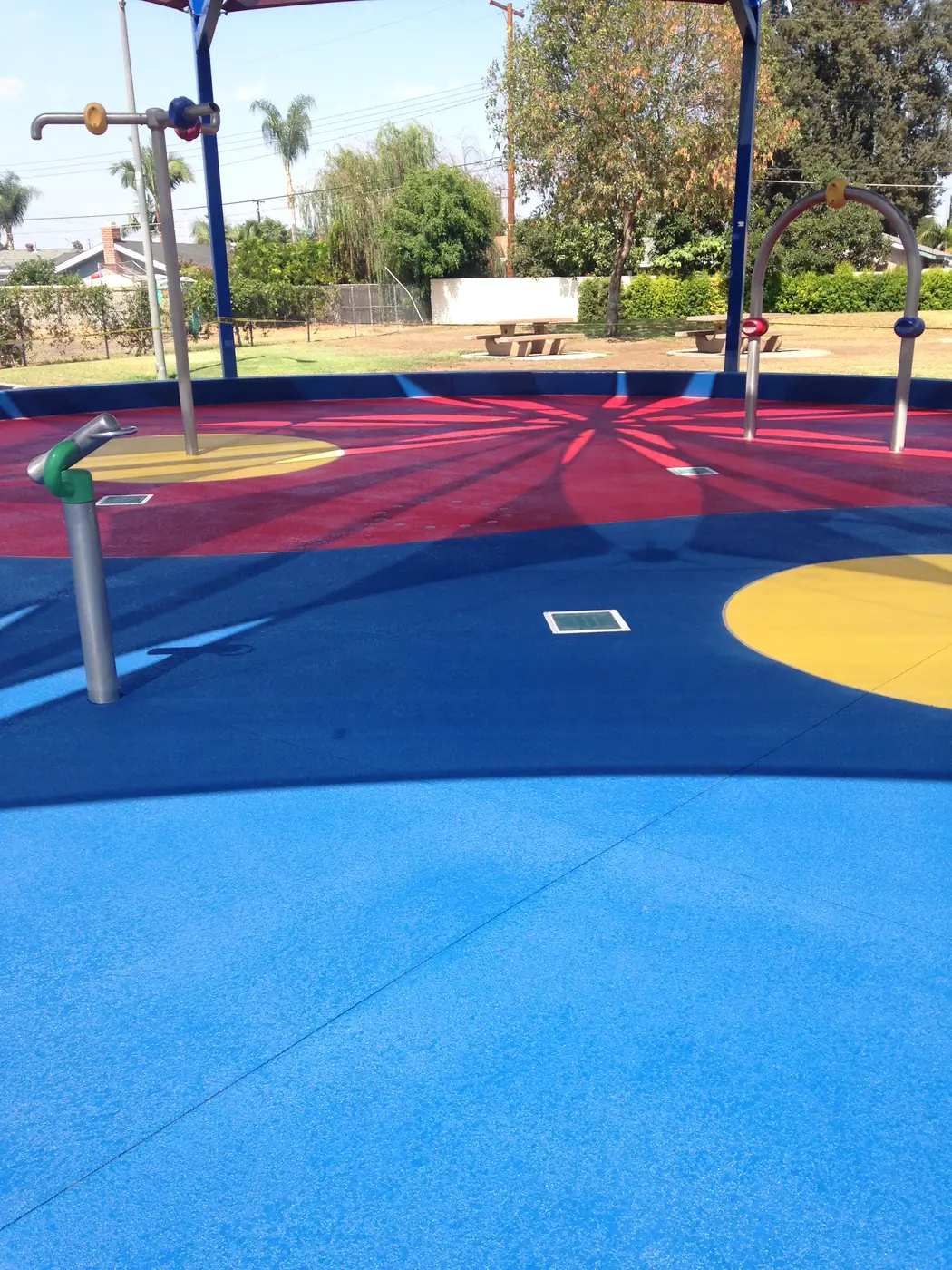
A splash pad has about the hardest life of any concrete on a property. It is wet every day it is open, it sits in full sun through an inland summer, the water running across it is treated, and the people on it are mostly small children running barefoot. The bright color that made it look new fades, the texture wears smooth where the traffic is heaviest, and the pad that used to be the best thing in the park starts to look like the oldest.
The good news is that the concrete underneath is usually fine. What has worn out is the surface, and the surface can be replaced without breaking out the slab or touching the plumbing. Schools, parks, community pools and HOAs make up a large part of our pool deck work, splash pads included. This guide is for whoever is planning the job: the facilities manager, the parks department or the board.
What wears out on a splash pad
Most tired splash pads show the same handful of problems.
- Faded color. Pigment fades under sun, and inland sun is relentless. The blues and reds go chalky first
- Worn texture. The paths children run most, between the features and toward the exit, wear smooth. Smooth and wet is slippery, which is the problem that matters most
- Peeling or flaking. An older coating that is lifting in patches, often around drains and at the edges of color blocks where water sits
- Cracks. Mostly shrinkage cracks with both sides still level, which are routine. A crack with a height difference across it is a different conversation
- Staining. Hard water and mineral deposits, rust from fixtures, and the general grime of a surface that is wet all summer
Any of these can be dealt with in a resurfacing. The walk-through is where you find out which of them you have, and how much of the old surface has to come off.
Start with a walk-through
Before anyone talks about colors and patterns, walk the pad with someone who has seen a lot of them. The questions that decide the job are practical ones.
- Is the existing coating still bonded, or is it lifting, hollow-sounding or flaking in places?
- Where are the cracks, and are both sides level?
- Are the drains, nozzles and play posts sound, and is anything about to be replaced?
- Where does water sit after the pad is turned off?
That last question matters more than it sounds. Ponding water is where coatings fail first and where algae and mineral deposits build up. A resurfacing can improve the surface, but it cannot change the fall of the slab much, so the places where water sits should be known before the job starts rather than discovered afterwards.
Fixing the slab before the color goes on
Everything the walk-through finds is dealt with before any new coating goes down. Loose or failing old coating is removed back to sound material. Cracks are chased out, cleaned and filled. The whole pad is prepared so the new surface bonds to concrete rather than to mineral scale and old sealer.
This is the part of the job nobody sees once the colors are on, and it is where bids differ most. A coating laid over a poorly prepared pad can look identical on opening day and be peeling at the drains by the next season. Whether particular cracks are likely to come back through the new surface depends on whether they are still moving, and will the cracks come back through a new coating explains how to tell.
Fixtures, drains and nozzles
The play features, spray nozzles and drain grates stay where they are. The new surface is worked up to them and finished cleanly around each one, which is a large part of what makes splash pad work slower than an open deck of the same size.
If any fixture is going to be replaced or moved, do it before the resurfacing, not after. Cutting into a new surface to reach plumbing leaves a patch that never quite matches. It is worth asking whoever maintains the water side of the pad whether anything is due.
Grip comes first
On a splash pad, slip resistance is the specification, not an extra. The surface is wet the whole time it is in use and the users are running. The texture in the coating is what gives it grip, and on a splash pad it generally wants to be more aggressive than a backyard pool deck, while still being comfortable for bare feet and possible to clean.
Worn texture is also the most common reason a pad needs resurfacing before anything else is wrong with it. If the pad has started to feel slick underfoot when wet, that is the point to plan the work. Is a coated concrete floor slippery covers how grip is built into a coating more generally.
Color and layout
The color is what people notice, and splash pads are where color work gets ambitious: blocks of primary colors, swirls, circles around the features, quadrants meeting at a point. A few things to think about when choosing it:
- Clean lines between colors. Each block has to be laid out and finished so it meets the next one sharply. This is the skill that separates a pad that looks designed from one that looks painted. We have done enough splash pads that the layout and color separation are routine
- Heat. Dark colors run hotter in full sun than light ones. That matters less on a pad that is wet while it is open, but the pad is also walked on dry, before the water comes on and after it goes off. Keeping the darkest colors to smaller areas helps. More on heat in pool deck too hot to walk on
- Fading. Some pigments hold up under sun better than others, and the color coat should be chosen for exterior exposure. A pad that looks bright in May should still look like itself in September
- Matching what is around it. If the pad sits inside a pool deck, the deck and the pad can be done in one job, so the surround and the pad are planned together. Our HOA and apartment pool deck guide covers the deck side
Scheduling around the season
A splash pad is only open part of the year, which makes timing easier than for most commercial work. The off-season is the obvious window: no lost play days, no families at the fence asking when it will reopen.
The trade-off is weather. Cold, damp days slow the cure and rain moves the schedule, so a job planned for the cooler months needs some slack in it. If the work has to happen during the season, keep the closure as short as possible by having everything decided before the crew arrives: colors, layout, fixture work, and who is signing off. We give you a date the pad can take foot traffic and a date it can go back into full use, so notices can be written once and correctly.
A splash pad that is open to the public is generally regulated by the county's environmental health program, the same as a public pool. Whoever holds the permit should check whether the county needs to be told about the work or wants to see the pad before it reopens. That is the operator's call to make, and it is far better made before the pad closes than after.
Getting bids you can compare
Schools, parks and HOAs usually need several bids. Ask every bidder the same questions so the bids can actually be compared:
- How is the pad prepared, and with what equipment?
- How much of the existing surface is coming off?
- How are cracks treated?
- How is the surface finished around nozzles, drains and posts?
- What system goes down, how many coats, and what texture?
- Who does the work: their own crew or a subcontractor?
- What is the warranty, and what does it cover?
For reference, our own crews do all of our preparation and installation, and our coatings carry five years on material and one year on labor. What moves the price on deck work is covered in pool deck resurfacing cost.
Getting the pad looked at
We have been resurfacing concrete in Southern California since 1976, with free on-site estimates across Riverside, San Diego, Orange, Los Angeles and San Bernardino counties. The system we use is described on our pool deck and patio coatings page, and there are splash pads for parks, schools and community pools in our gallery. Book a free on-site estimate and we will walk the pad with you and tell you plainly what it needs and what it does not.