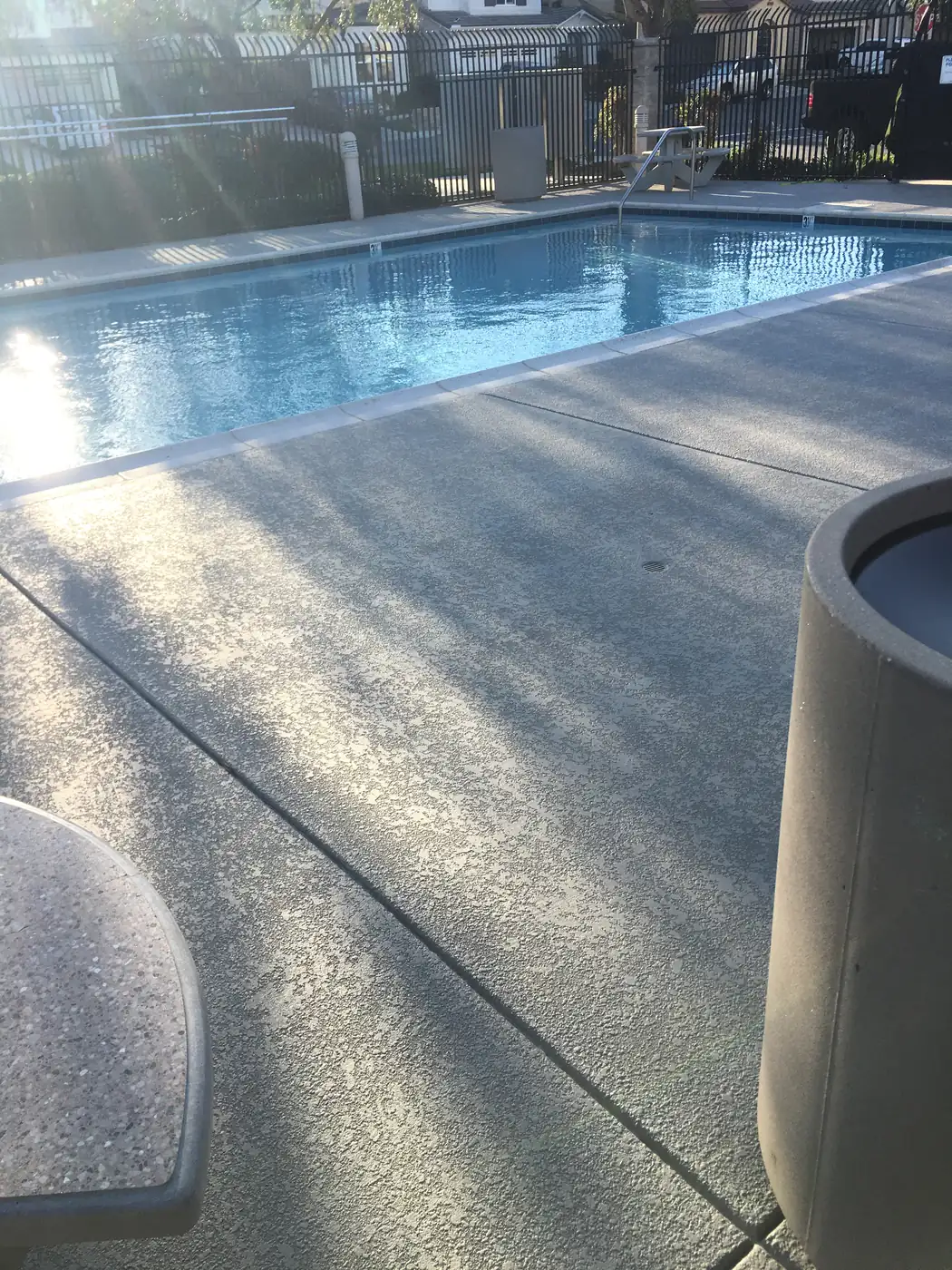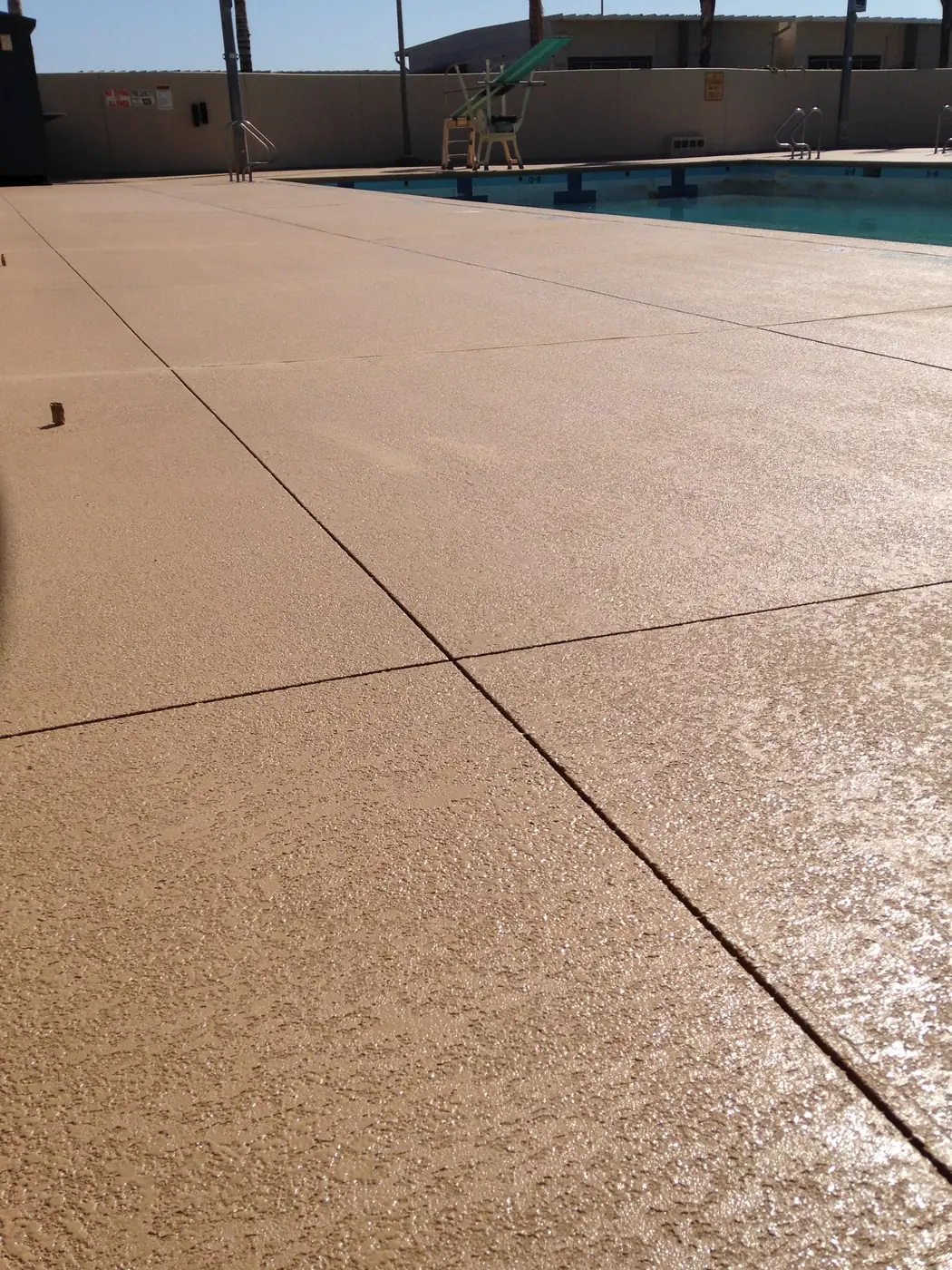
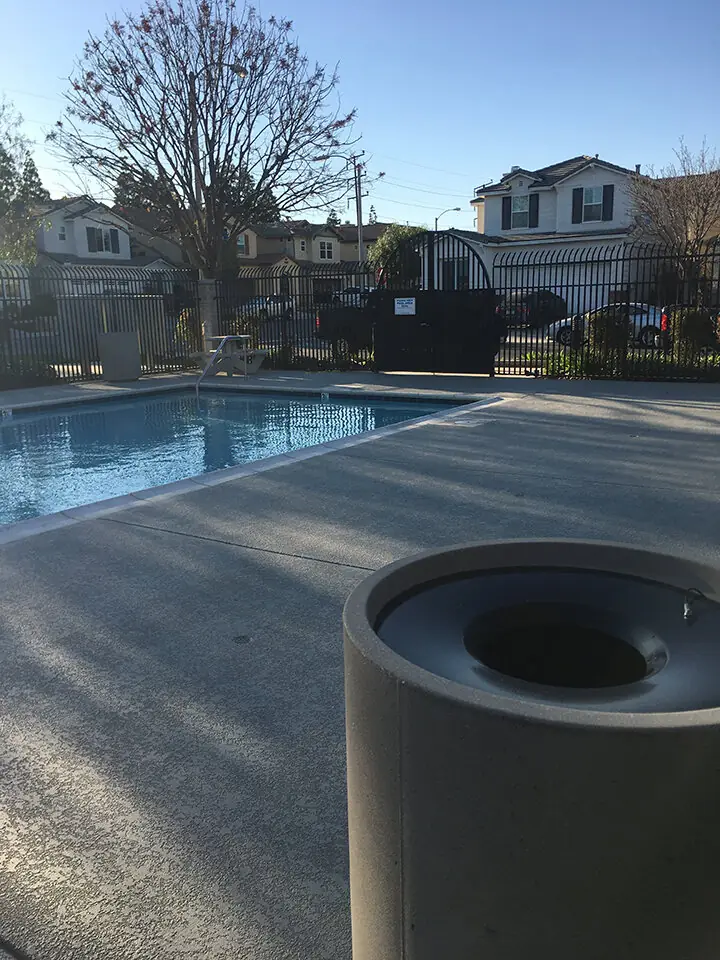
A community pool deck has a harder life than a backyard one. More people walk on it, chairs and loungers get dragged across it every day of the season, and the people using it range from toddlers to residents in their eighties. When it starts to look tired, the board or the property manager is usually the one fielding the complaints: the stubbed toe on a raised joint, the deck too hot to cross barefoot, the stains that no pressure washer shifts.
Apartment complexes, HOAs, schools and parks make up a large part of our pool deck work. This guide is the planning side of it: what to look at, what to decide, and how to get bids you can actually compare.
Start with a walk-through
Before anyone talks about color, walk the deck with somebody who has seen a lot of them. The things that decide the job are rarely the things that bother residents most.
- Trip edges. A section of slab that has lifted or dropped at a joint is a trip hazard and a liability. It is also a different problem from cracking, because it means something underneath is moving
- Cracks. Most deck cracks are shrinkage and heat cracks with both sides still level. Those are routine. Cracks with a height difference across them are the ones to point out
- The old surface. An existing cool deck that is worn but still bonded is a good base. One that is flaking, hollow-sounding or peeling in patches has to come off in those areas first
- Drains and coping. Where the deck meets the drains and the pool edge is where water sits and finishes fail first
The honest answer on almost every community deck we look at is that the slab is fine and the surface is worn. Tearing a pool deck out means running heavy equipment around the pool and the coping, and it is very rarely necessary. The comparison is set out in resurfacing vs replacing concrete.
What gets fixed before the coating
Everything the walk-through finds is dealt with before anything new goes down. Cracks are chased out, cleaned and filled. Loose or failing old coating is removed back to sound material. The whole deck is prepared so the new finish bonds to it rather than to dirt, sunscreen and old sealer.
This part of the job is invisible once the deck is finished, which is exactly why it is where bids differ most. A coating laid over an unprepared deck can look identical on handover day and start failing by the next summer.
Choosing texture and color for everyone who uses it
On a family pool the owners pick what they like. On a community deck the finish has to work for everybody, and that changes the decisions.
Color. Light colors stay far cooler underfoot than dark ones, and on a deck that sits in full sun through an inland summer this matters more than anything else about the finish. A dark gray that looks sharp in a brochure can be too hot to cross in August. The heat side is covered in pool deck too hot to walk on.
Texture. The texture is there for grip when wet as much as for looks. A community deck generally wants more of it than a backyard, because the users include running children and older residents, and the deck is wet most of the day. Steps, ramps and entries into the water can take grooved non-slip treads and edges on top of the deck texture.
Borders and bands. A contrasting band along the coping or around the deck edge breaks up a large area and marks the edge of the walkway. It is one of the easiest ways to make a big deck look designed rather than just coated.
Depth markers, signs and inspections
Whatever is on the deck now in the way of depth markers, no-diving markings and similar lettering has to be back on the finished deck, and it should be listed in the scope rather than assumed. A community pool is also typically under the county's environmental health program, so whoever holds the pool's permit should check whether the county needs to know about the work or wants to see the deck before it reopens. That is the owner's call to make, but it is far better made before the pool is closed than after.
Scheduling around the season
The deck belongs to residents for most of the year, so timing is usually the hardest part of the decision.
- Off-season is easiest. Cooler months mean no lost swimming time and fewer complaints. The trade-off is that cold, damp weather slows the cure, and rain days move the schedule
- Phasing is normal. On a large deck, or one with a separate spa or splash pad, the work can be split so part of the area stays open while the rest is done
- Plan for the cure. A finished deck takes foot traffic well before it takes furniture being dragged back across it. We give you both dates for your job, so notices to residents can be written once and correctly
- Tell residents early. Closure dates, which gate to avoid and when the furniture goes back are worth sending out before the crew arrives, not the morning they do
Splash pads, spas and rock features
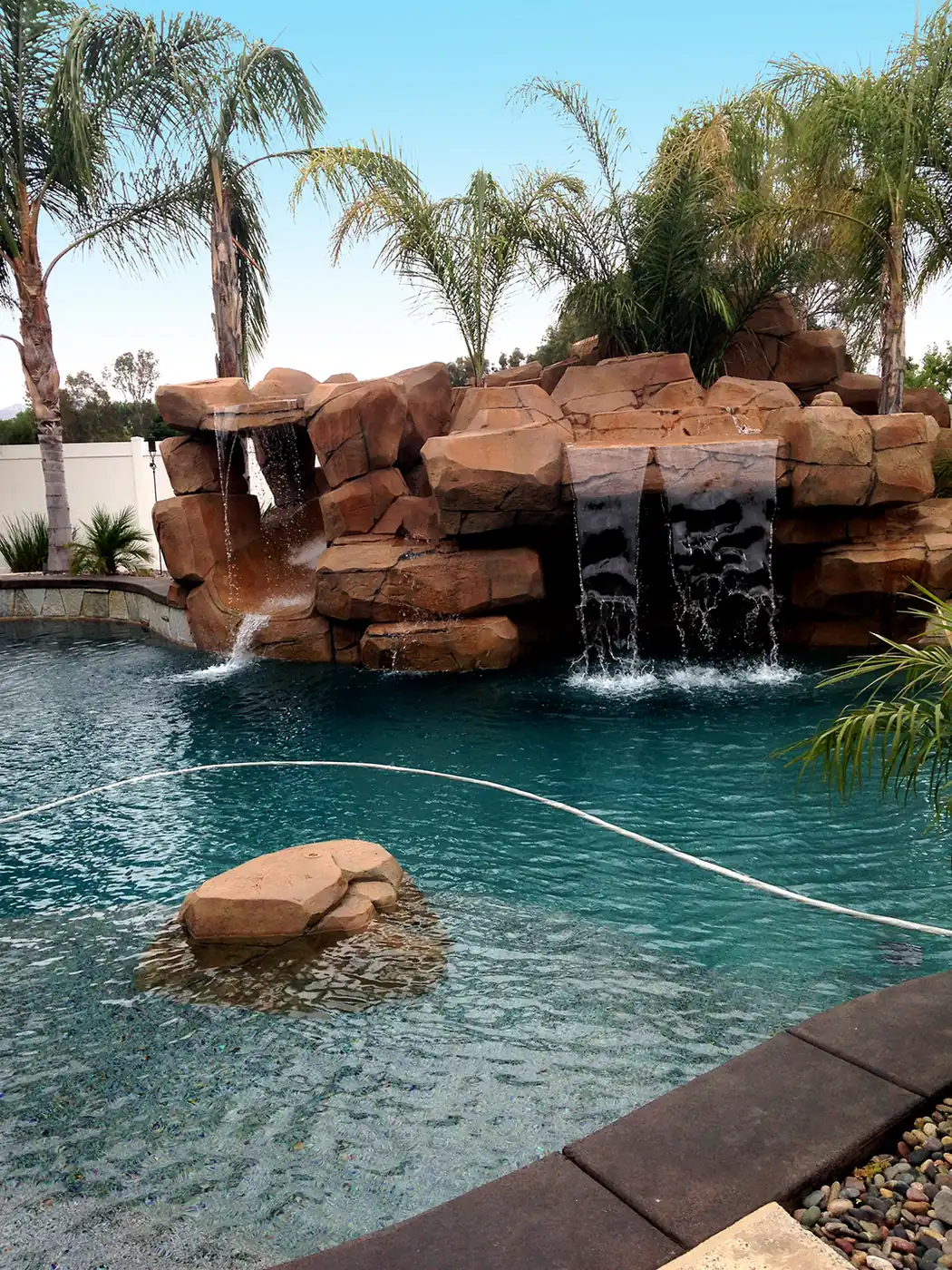
Splash pads use the same kind of textured coating but laid out in blocks and shapes of color that have to meet cleanly. We have done enough of them, for parks, schools and community pools, that the layout and color separation are routine. If there is artificial rock or a waterfall on the deck, it will look shabby next to a new surface, and doing it while the crew is on site means the color can be matched directly. More on that in restoring faded faux rock.
Getting bids you can compare
Boards usually want several bids, and that is reasonable. The trouble is that pool deck bids are often written so differently that they cannot be compared. Ask every bidder the same questions:
- How is the deck prepared, and with what equipment?
- How are cracks treated, and which cracks, if any, do they think will come back?
- Is any of the existing surface being removed, and how much?
- What system is going down, what texture, and how many coats?
- Who does the work: their own crew or a subcontractor?
- What is the warranty, and what does it actually cover?
For reference, our own crews do all of our preparation and installation, and our coatings carry five years on material and one year on labor. Pricing is covered in pool deck resurfacing cost.
Getting the deck looked at
We have been resurfacing concrete in Southern California since 1976, with free on-site estimates across Riverside, San Diego, Orange, Los Angeles and San Bernardino counties. The system is described on our pool deck and patio coatings page, and there are community decks and splash pads in our gallery. Book a free on-site estimate, bring the calendar, and we will walk the deck with you and tell you plainly what it needs and what it does not.