Steps are usually the first concrete on a property to look tired. Every visitor walks on them, in the same few places. Water sits on the treads after rain and sprinklers. The front edges take knocks from shoes, dollies and furniture going in and out. On a business, the entry steps are the first thing a customer sees.
The good news is that worn steps rarely need tearing out. Most can be resurfaced, stained or overlaid like any other concrete. This guide covers what wears out, what can be fixed, what cannot, and how to make the finished steps safe as well as good-looking.
What goes wrong with concrete steps
- Chipped and broken nosings. The front edge of each tread takes the most impact, so corners chip and edges crumble first
- Worn treads. A path wears into the middle of each step, leaving it rougher, lower or stained compared with the edges
- Spalling. The surface flakes away, often where water sits or where the concrete was weak at the top. It is common in the High Desert, where freeze-thaw and salt do the damage; spalling in Victorville, Apple Valley and Hesperia covers why
- Peeling paint. Painted steps peel, usually from the nosings and the busiest treads first. Why painted concrete peels explains why paint fails on outdoor concrete
- Cracks. Shrinkage cracks across treads and risers, and cracks where the steps meet the landing or the walkway
- Stains and mismatches. Rust, efflorescence, old patches that never matched, or steps that no longer suit a walkway or landing that has been redone
What can be fixed and what cannot
Usually fixable. Chipped nosings, worn and stained treads, spalled surfaces, peeling paint and ordinary cracking. Cracks are chased out, cleaned and filled, and damaged areas repaired, before a new surface goes over the top, the same as on any slab we resurface.
A different conversation. Steps that have settled, tilted or pulled away from the house, steps that rock or sound hollow, and cracks that keep opening are signs of movement, not just a tired surface. A new finish over a moving structure fails with it. Resurfacing vs replacing concrete covers how to tell the difference. If your steps have genuinely failed, we will tell you that rather than sell you a finish that will not last. In fifty years, that has been the exception, not the rule.
Ways to refinish steps
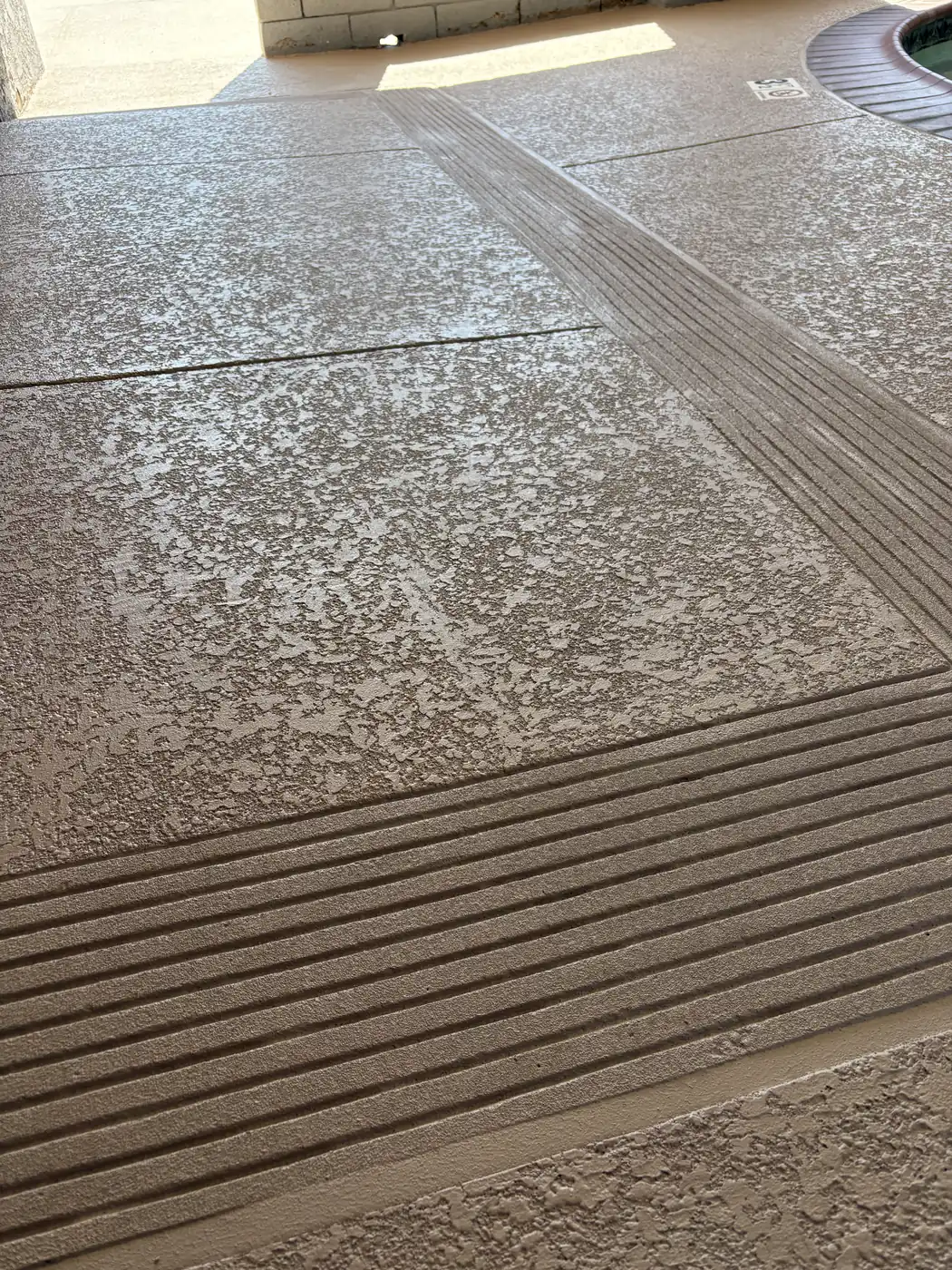
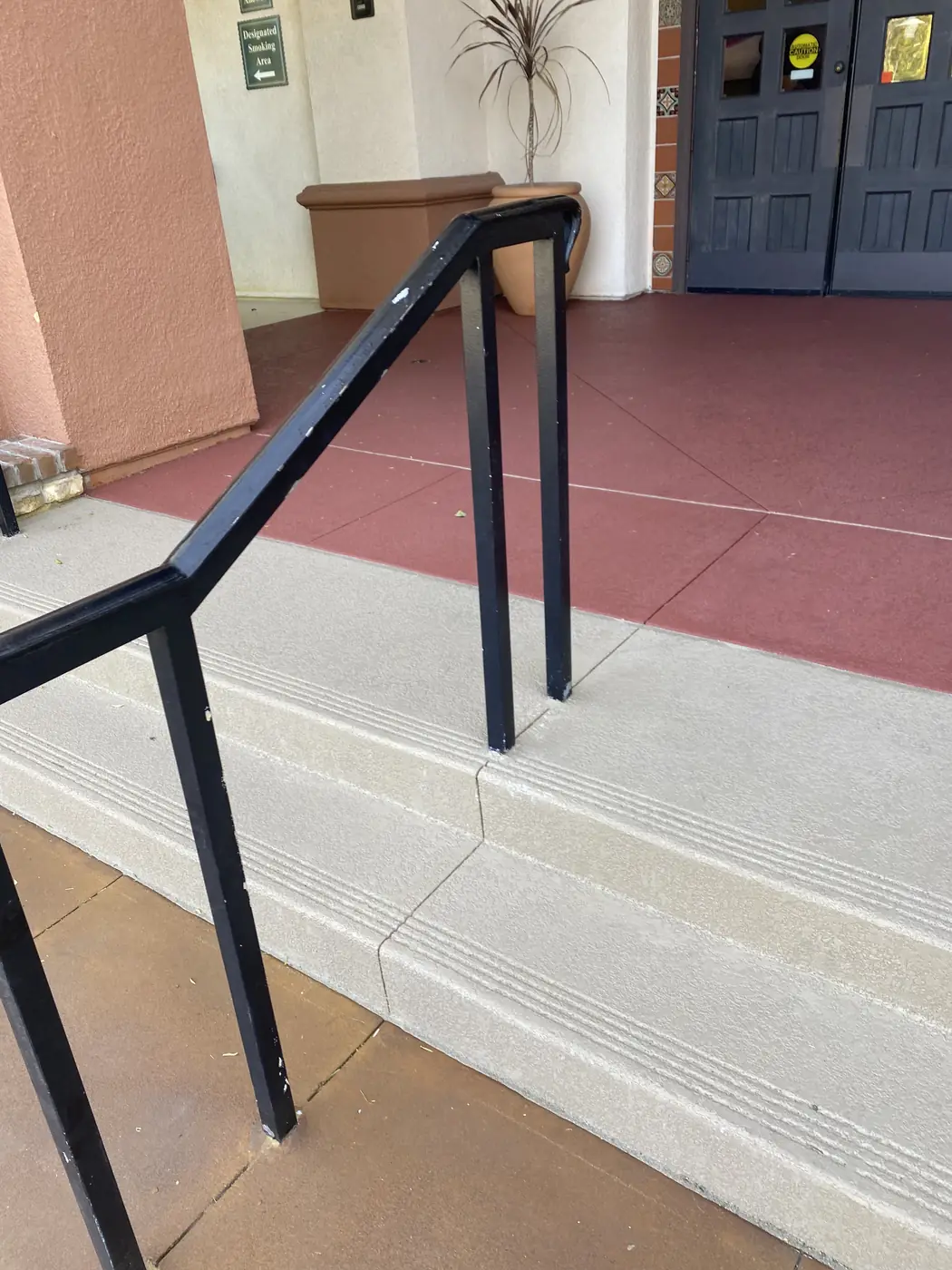
Resurfacing. A new cementitious wearing surface bonded over the existing steps, with damaged edges repaired and the treads given a fresh texture. The steps in the photo above were resurfaced in cream with grooves cut across the treads near each edge, meeting a red scored landing at the top. Details like that are what make a set of steps read as finished rather than patched.
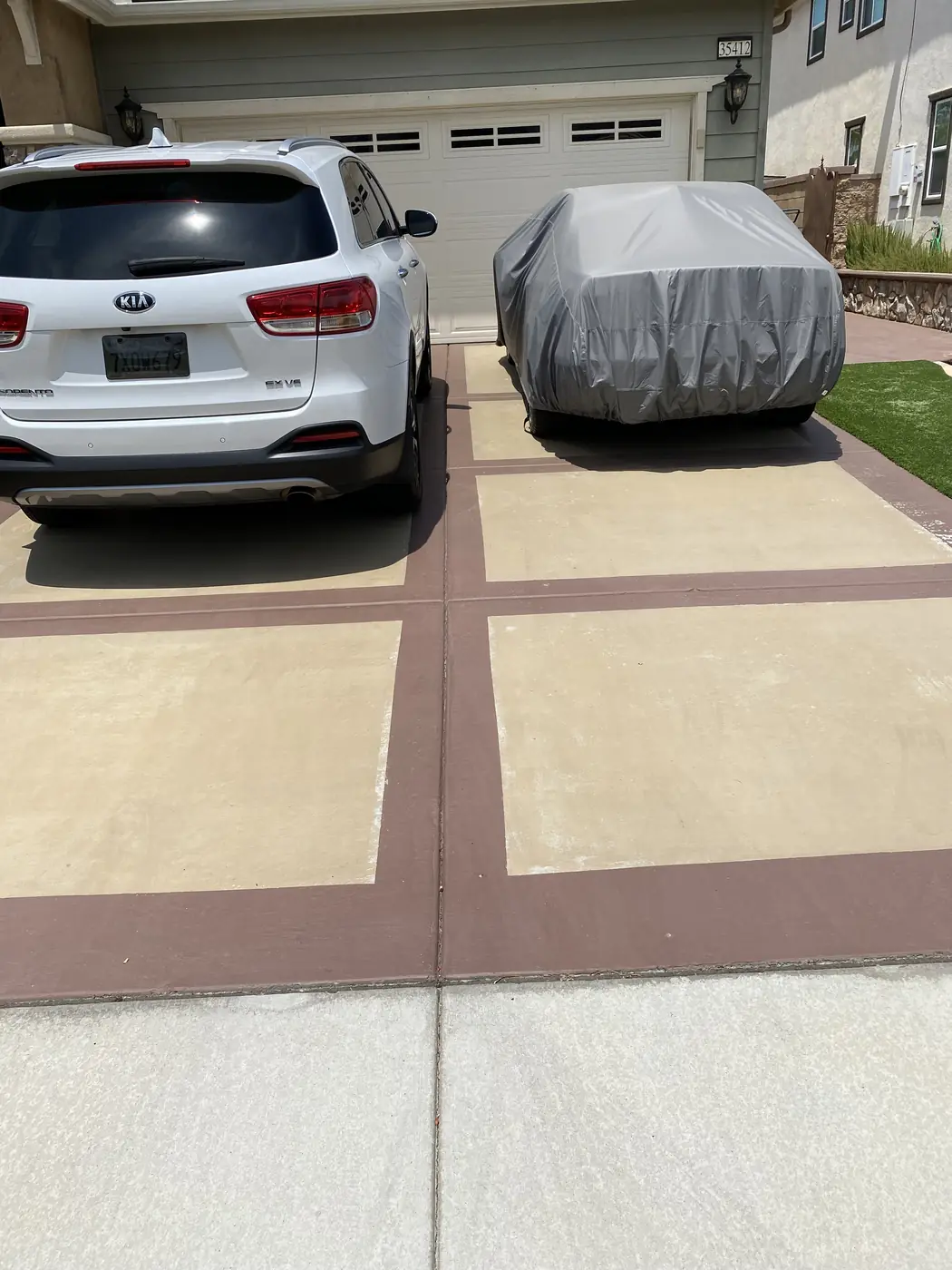
Stain and seal. Where the concrete itself is sound and the problem is the color, stain soaks into the concrete instead of forming a film that peels. Steps can be stained to match a patio or walkway, and stain can carry a wood-plank or stone look. Exterior concrete staining covers it, and acid stain vs water-based stain explains the two kinds.
Decorative overlay. A thin overlay with a knock-down texture or a flagstone, tile or stone pattern applied over the existing steps. It suits steps with more surface damage, or when the steps are being done along with a patio or entry in the same pattern. Our microtopping and overlays page covers the patterns.
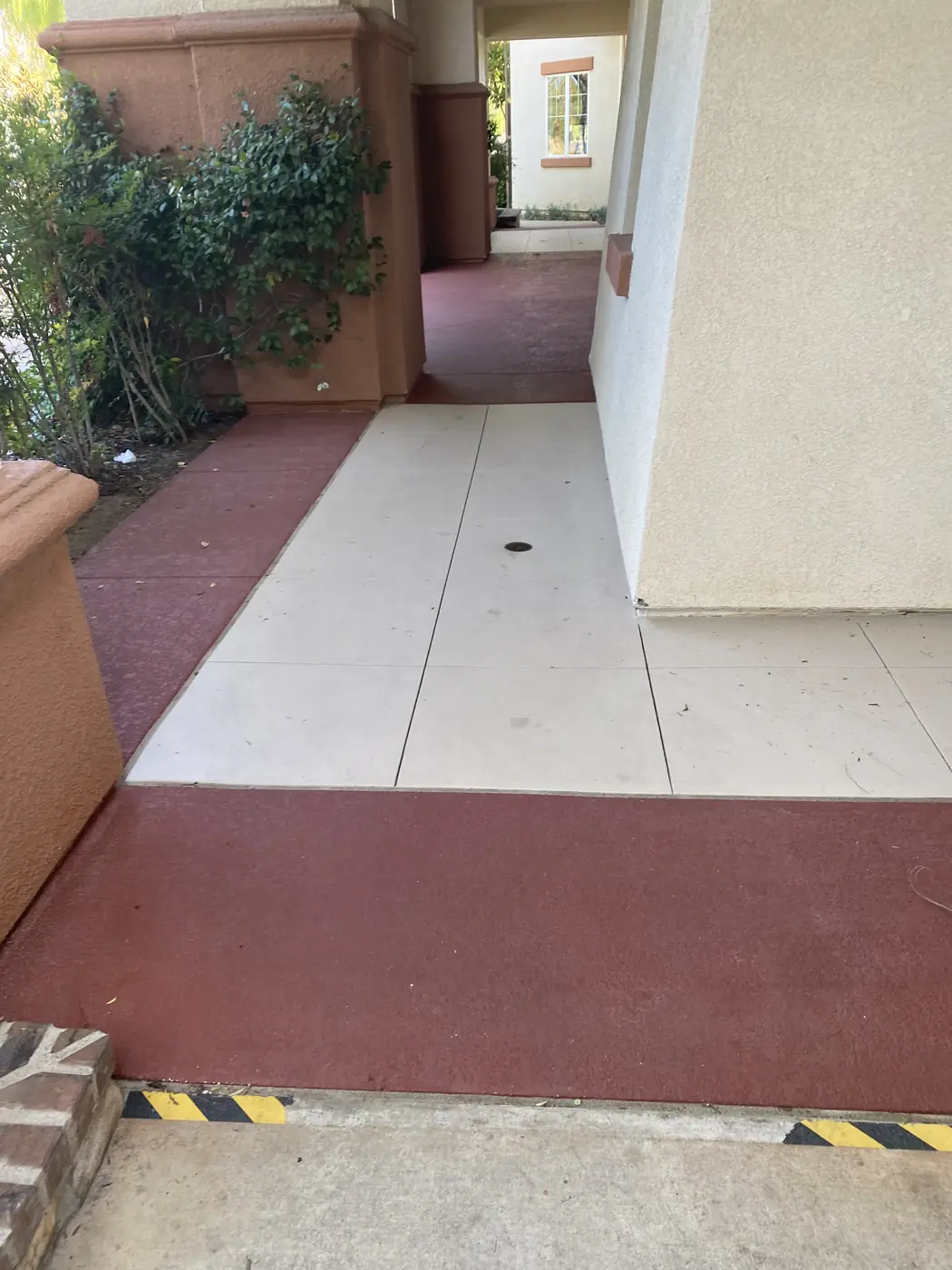
Doing them with the walkway. Steps rarely stand alone. They lead to a landing, a porch, a walkway or a pool deck. Refinishing them at the same time means one color and texture chosen together, and no line where new meets old.
Making steps safer, not just better-looking
A step that looks new and is slippery is a step backwards. Grip should be part of the plan from the start.
- Texture on the treads. A broom finish, knock-down texture or textured overlay gives better footing than a smooth surface
- Grooved treads. Grooves cut across the tread near the edge, like the ones in the photo above, give the foot something to catch on exactly where it lands
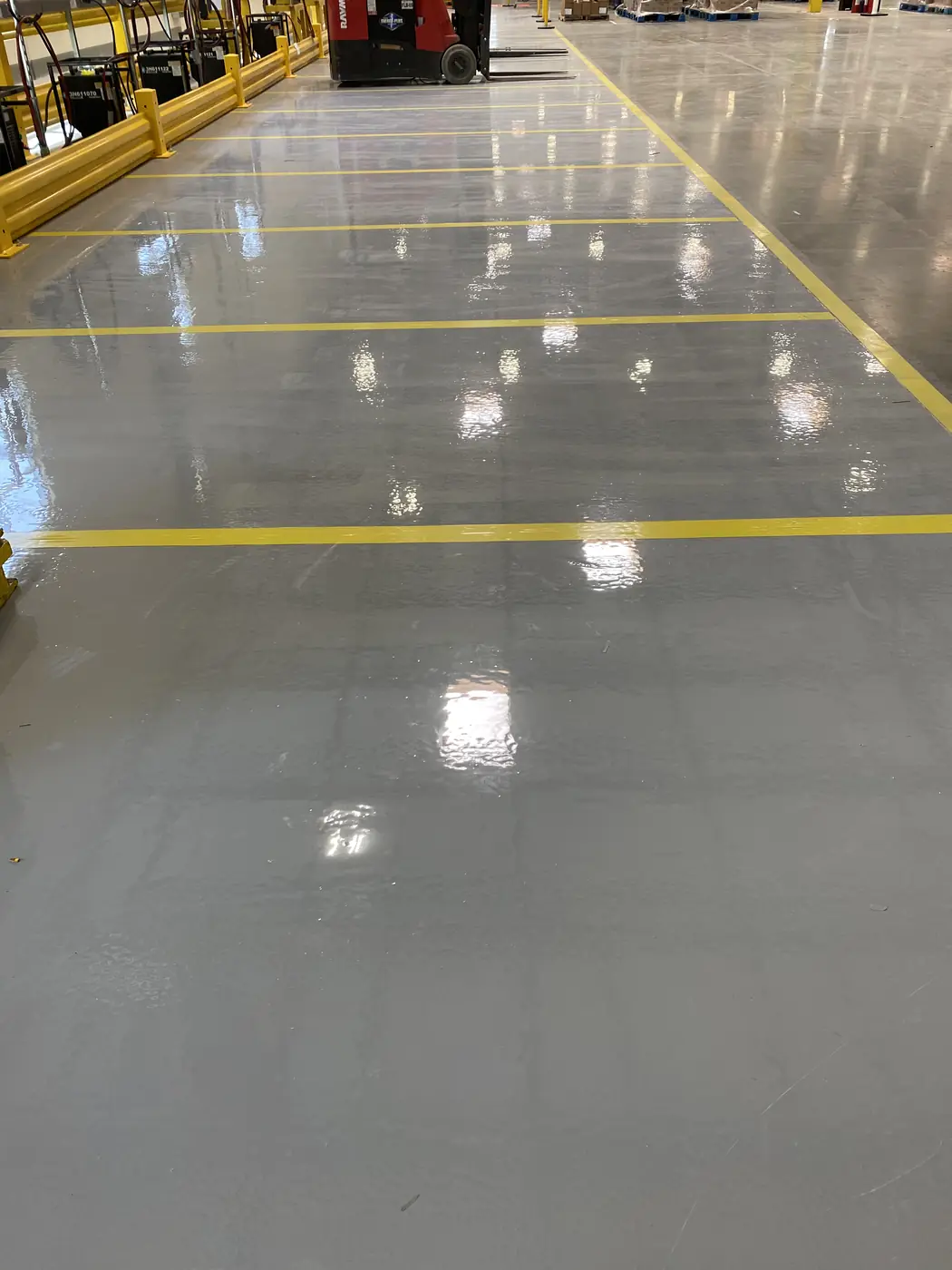
- Care with sealers. A high-gloss sealer on a smooth step can be slick when wet. On treads, a lower sheen or a sealer with grip added is the safer choice. Are coated floors slippery goes into how grip is built into a finish
- Visible edges. A nosing that stands out from the tread, through a change in color or texture, is easier to see, especially for older visitors and at dusk
- Ask about the railings. Working the finish around existing handrail posts is common. If a rail has to come off, agree beforehand who reinstates it and how it is fixed back down
Commercial entries
On a shop, office, church or HOA building, the entry has to stay usable. Steps can usually be done in sections, or around a second entrance, so the building stays open. If an entrance must remain open throughout, say so at the estimate so the work is phased that way from the start.
How long before you can use them
That depends on the system and the weather, and you should get real dates for your job rather than a brochure figure. Foot traffic comes back before anything heavier, and cool, damp weather slows the cure. Coating concrete in fall and winter covers how the cooler months change things. If the steps are the only way into the house, plan around that with your contractor before the start date.
Getting your steps looked at
We have been restoring concrete in Southern California since 1976, with our own crews doing the preparation and the finish, and the work is backed by five years on material and one year on labor. More detail is on our concrete resurfacing page, and will cracks come back through a new surface explains what happens to the cracks. Book a free on-site estimate and we will look at your steps and tell you straight what they need.