Plenty of people decide in October that the patio, the pool deck or the garage floor has to be done, and then wonder whether it is too late in the year. In most of Southern California it is not. Concrete gets coated, stained and resurfaced here right through the cooler months. What changes is the schedule, not whether the work can be done.
This guide covers what cold, damp weather actually does to a coating job, which jobs it affects most, and how to plan one between now and spring.
Why temperature matters at all
Coatings, stains and overlays all cure by a chemical reaction, and the speed of that reaction depends on temperature. The temperature that counts is the slab's, not the air's, and a slab in the shade on a November morning can be a good deal colder than the forecast suggests.
When the slab is cold, three things happen:
- The cure slows. Each coat takes longer before the next one can go on, and the floor takes longer before it can take traffic
- Some products will not cure properly at all below their minimum temperature. Most systems want the slab above roughly 50°F. Below that, a coating can stay soft, cure cloudy or fail to bond
- The return-to-service dates move. A floor that would take cars back on one schedule in summer will need longer in January
None of this is a reason to avoid the cooler months. It is a reason to schedule around the warmer part of the day, to pick a system rated for the conditions where needed, and to build a little slack into the dates.
Dew, damp and rain
For outside work, moisture is usually a bigger problem than the cold.
Dew. On clear, cool nights a slab can be wet with dew by morning even when it has not rained. Coating over a damp surface traps moisture under the film. Outdoor work in the cooler months tends to start once the surface has dried and finish before the evening dew comes down.
Rain. No exterior coating goes down in the rain, and a fresh coating needs to be protected from rain until it has cured enough to take it. Rain days move the schedule; that is just how outside work goes in winter.
Drying out afterwards. Concrete holds water. After a proper storm, a slab needs time to dry before it can be coated, even once the surface looks dry. Coating too soon is how moisture ends up trapped under a coating.
Sealers. Sealed concrete that turns milky white is often a sealer that met moisture before or soon after it went on, and cool, damp nights are a common trigger. Why sealed concrete turns white explains what happens and how it is fixed.
Which jobs it affects most
Garage floors. The least affected. A garage is sheltered from rain and dew, and keeping the door closed while the coating cures helps hold the temperature. A garage slab can still be cold, so the cure takes longer in winter and the date the car goes back in moves accordingly. Our garage floors are diamond-ground before coating whatever the season, and we give you the actual dates for your floor and the weather that week. Polyaspartic vs epoxy covers how the two main systems behave with temperature.
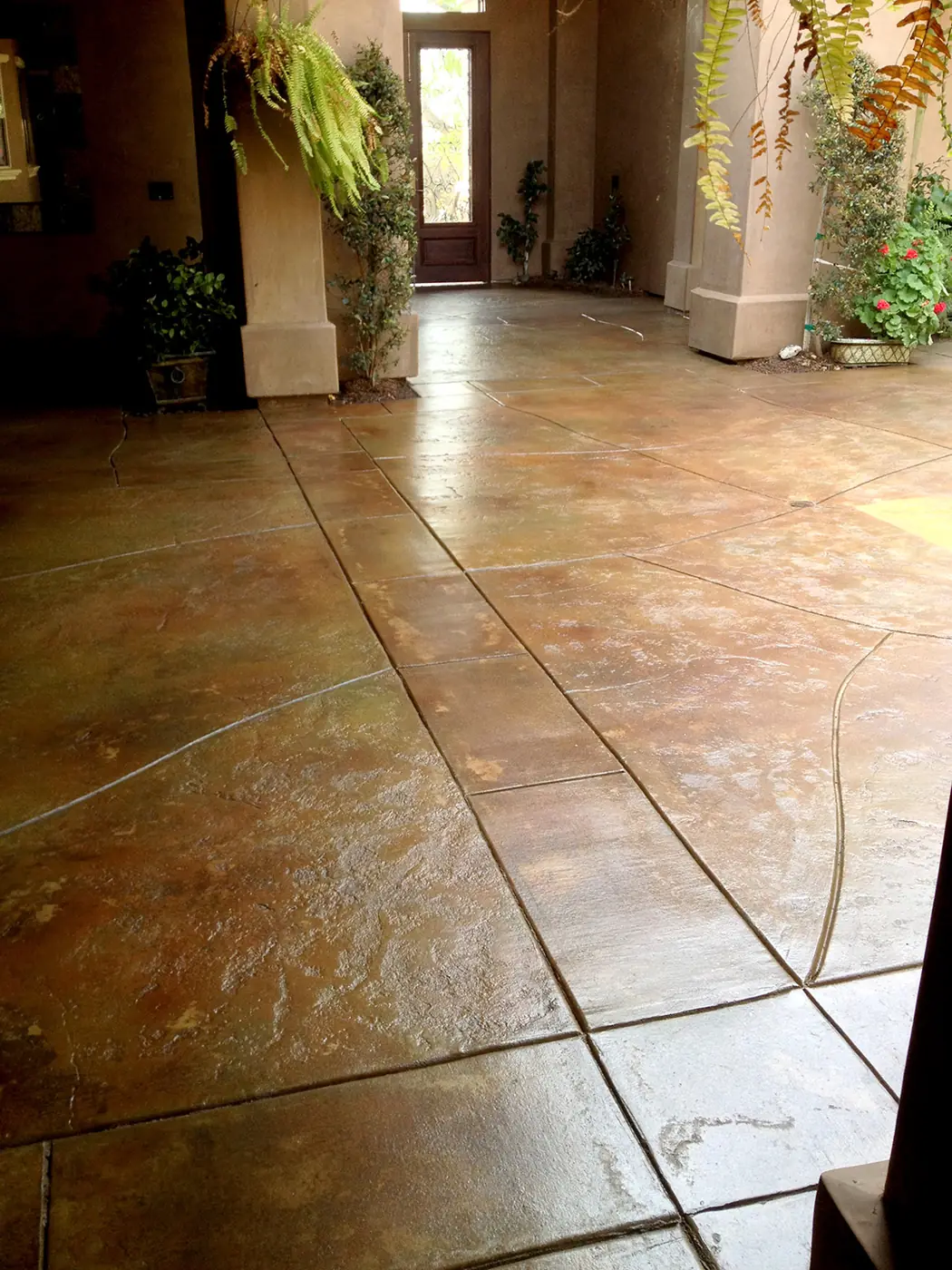
Interior floors. Staining, coating or polishing an interior slab is largely indifferent to the weather outside, as long as the building is reasonably warm.
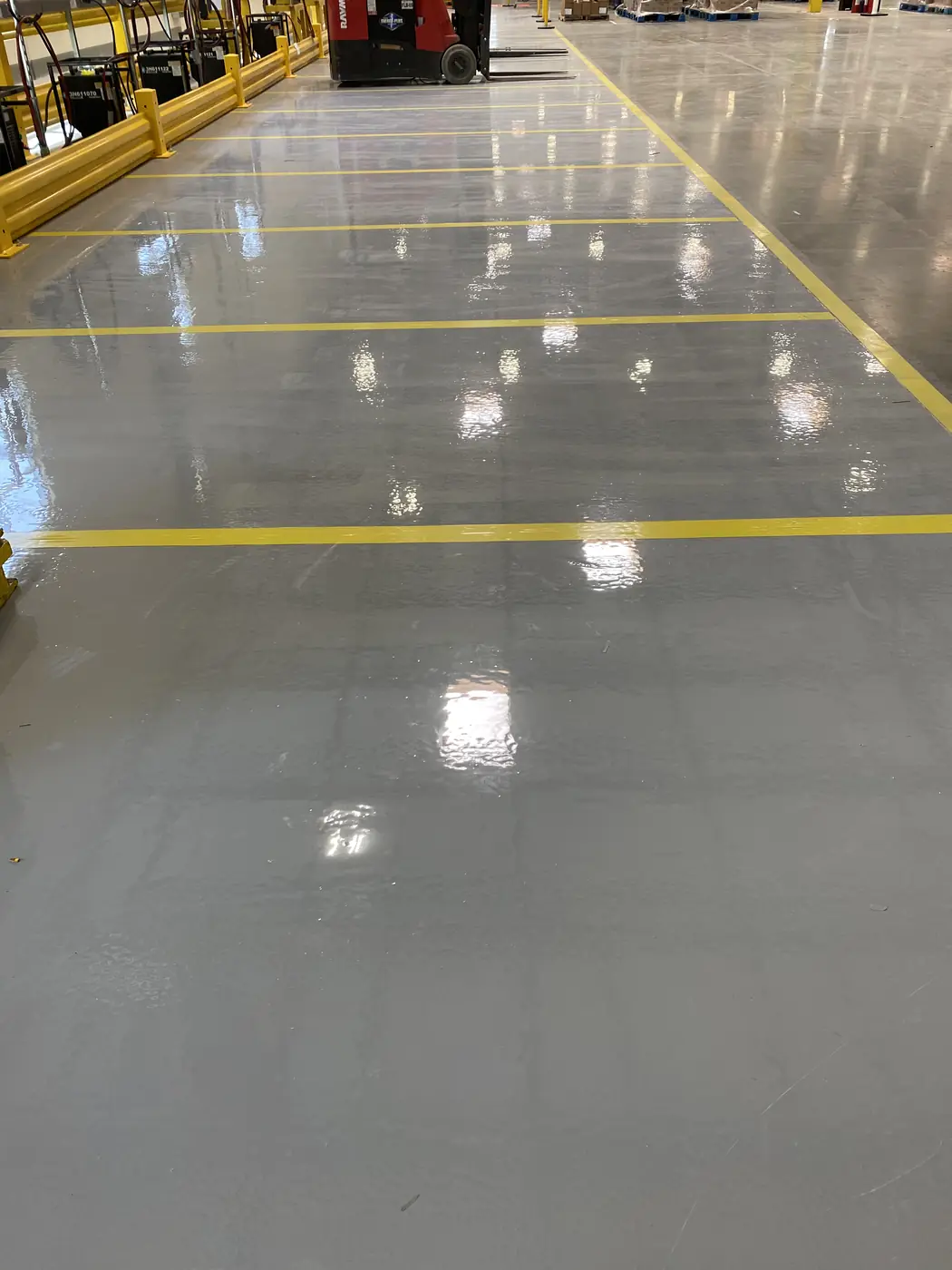
Commercial and industrial floors. Indoors, mostly unaffected. A warehouse with the roller doors open on a cold morning is a different matter, so doors and heating are part of the planning.
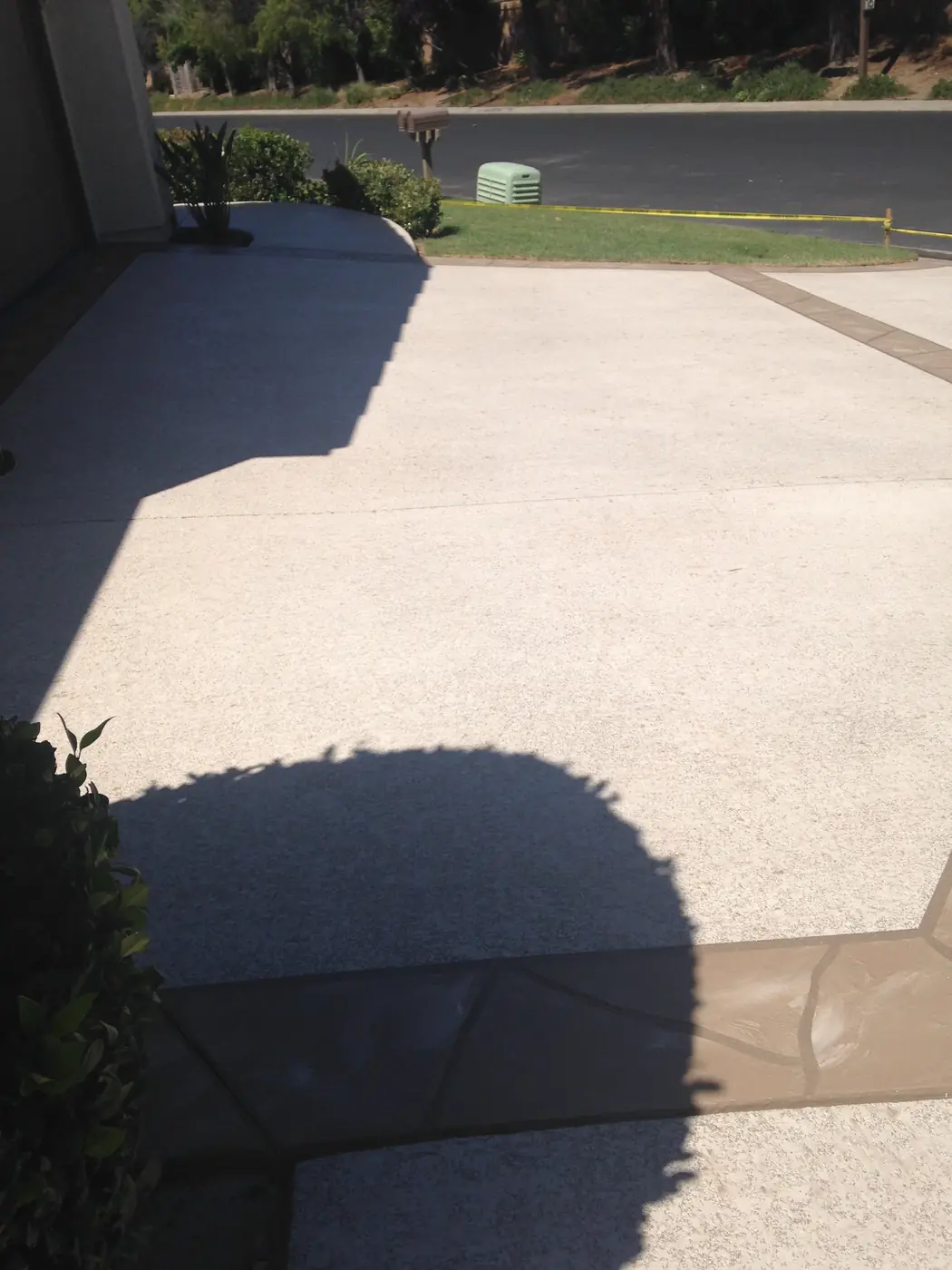
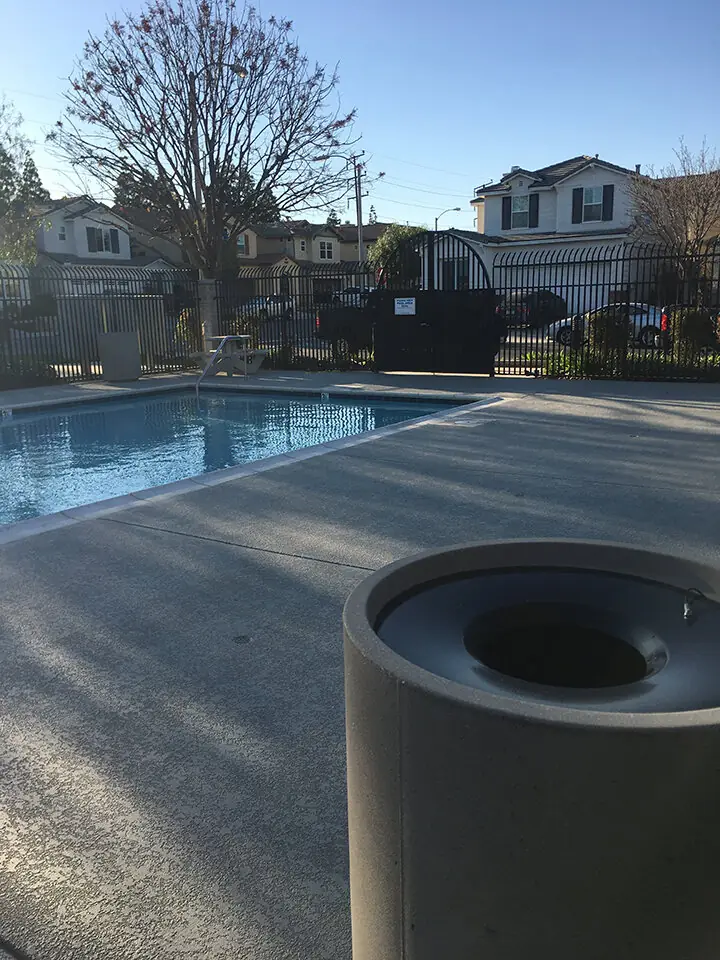
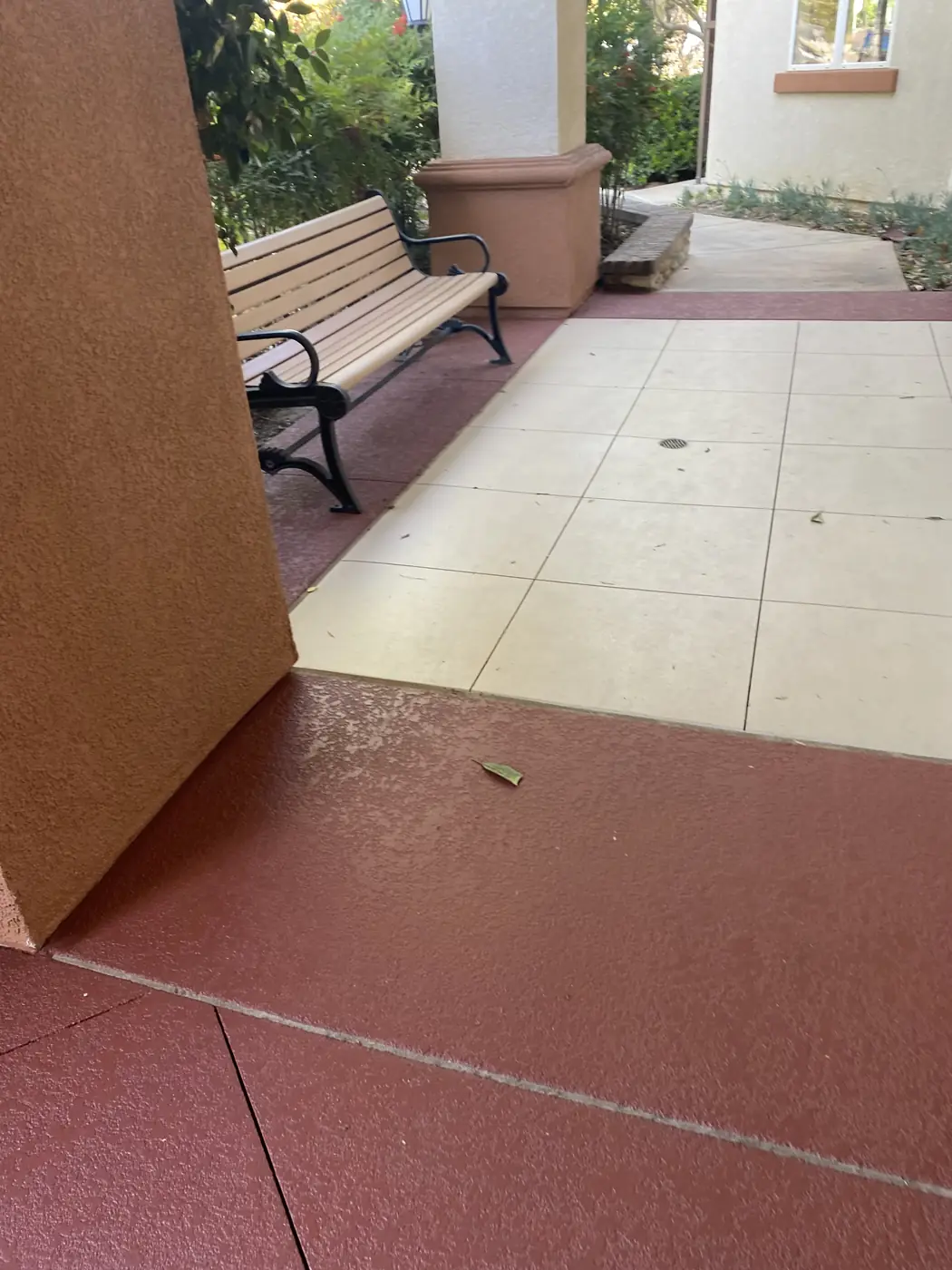
Pool decks, patios and walkways. Fully exposed to dew, rain and cold, so these need the most scheduling care. The upside is that cool weather is the best time to do a pool deck: nobody is swimming, and there are no lost summer weekends. The HOA and apartment pool deck guide and the splash pad guide both cover off-season scheduling.
Driveways. Exposed like a patio, and you also need somewhere else to park while it cures. Plan for the work to take longer than it would in summer.
The High Desert is different
Victorville, Hesperia and Apple Valley get real winters. Overnight frost is common and some winter days never warm the slab to the point a standard system needs. We schedule High Desert winter work for the warmer part of the day, or use a system rated for lower temperatures, and we do not coat in the cold and hope. Freeze-thaw is also what breaks up High Desert concrete in the first place, which is why we covered it on its own in why High Desert concrete crumbles. If a slab there is already starting to spall, getting it sealed or coated before the worst of the winter is worth doing.
What the cooler months are good for
It is not all compromise. Hot weather causes its own problems.
- Longer working time. Coatings set faster on a hot slab, and some, polyaspartic in particular, can be hard to apply well in summer heat. A cooler slab gives more time to get the finish right
- No baking-hot slab. In July a slab in full sun can be too hot to coat at midday. That is not an issue in December
- Better timing for outdoor spaces. Pool decks and patios done in winter are ready for spring, rather than being out of use in the middle of summer
Planning a job between now and spring
- Expect the dates to have slack in them. A rain day or a cold snap moves things. A contractor who promises fixed dates for outside work in January without mentioning the weather is guessing
- Ask about return to service separately. Foot traffic, furniture, vehicles and pool use are different dates, and all of them stretch in cold weather
- Get the preparation questions answered at the estimate. Old coatings, cracks and moisture are the same problems in winter as in summer. Questions to ask a concrete coating contractor has the list
- Do not wait for spring if the concrete is getting worse. Cracks, spalling and failing coatings get worse through a wet winter, not better
Getting it looked at
We have been preparing and coating concrete in Southern California since 1976, in every season and from the coast to the High Desert. Our own crews do the preparation and the installation, and every job carries five years on material and one year on labor. Our concrete resurfacing and pool deck coatings pages show what we do outside. Book a free on-site estimate and we will tell you what the job needs and when it can realistically be done.