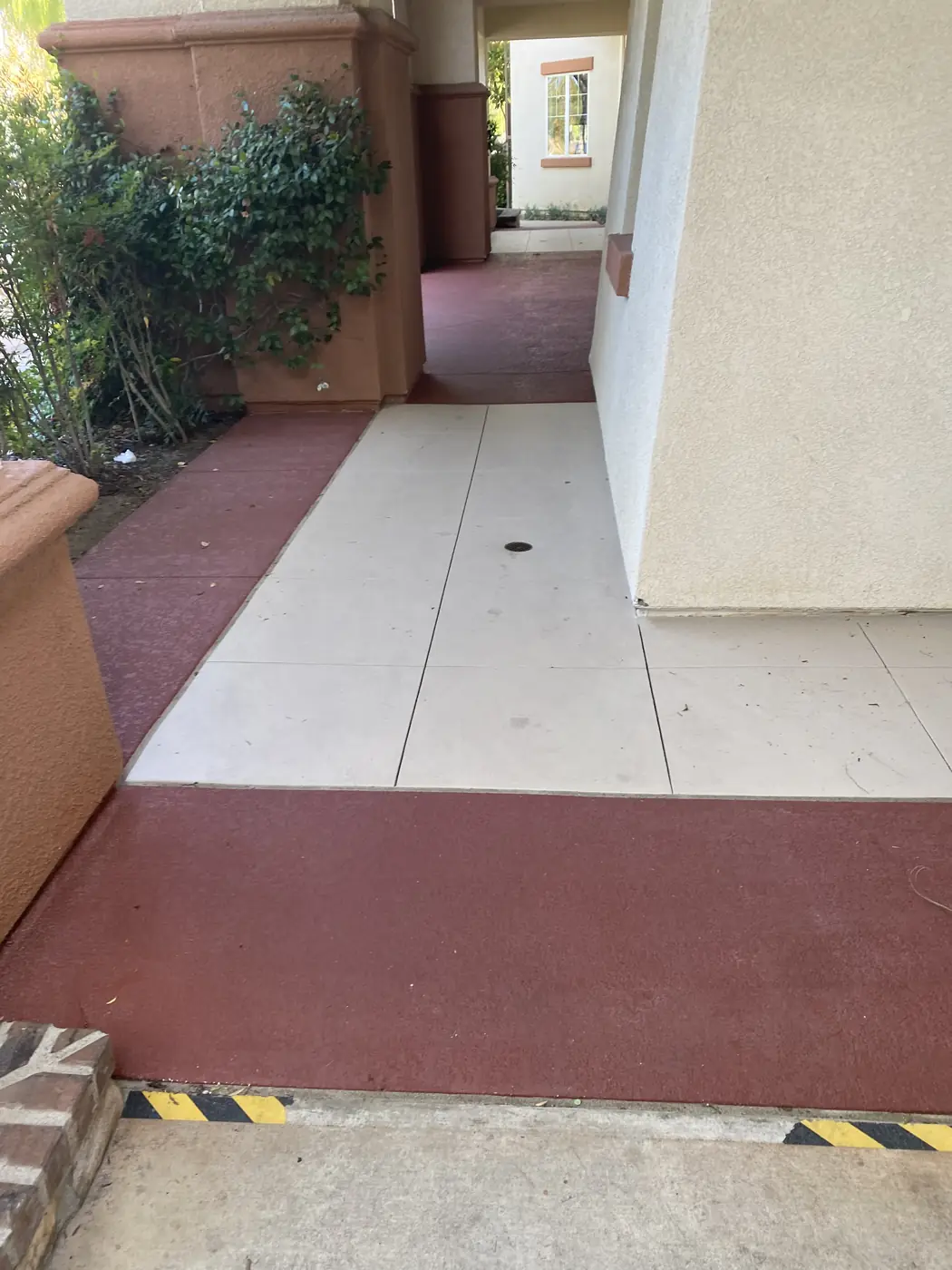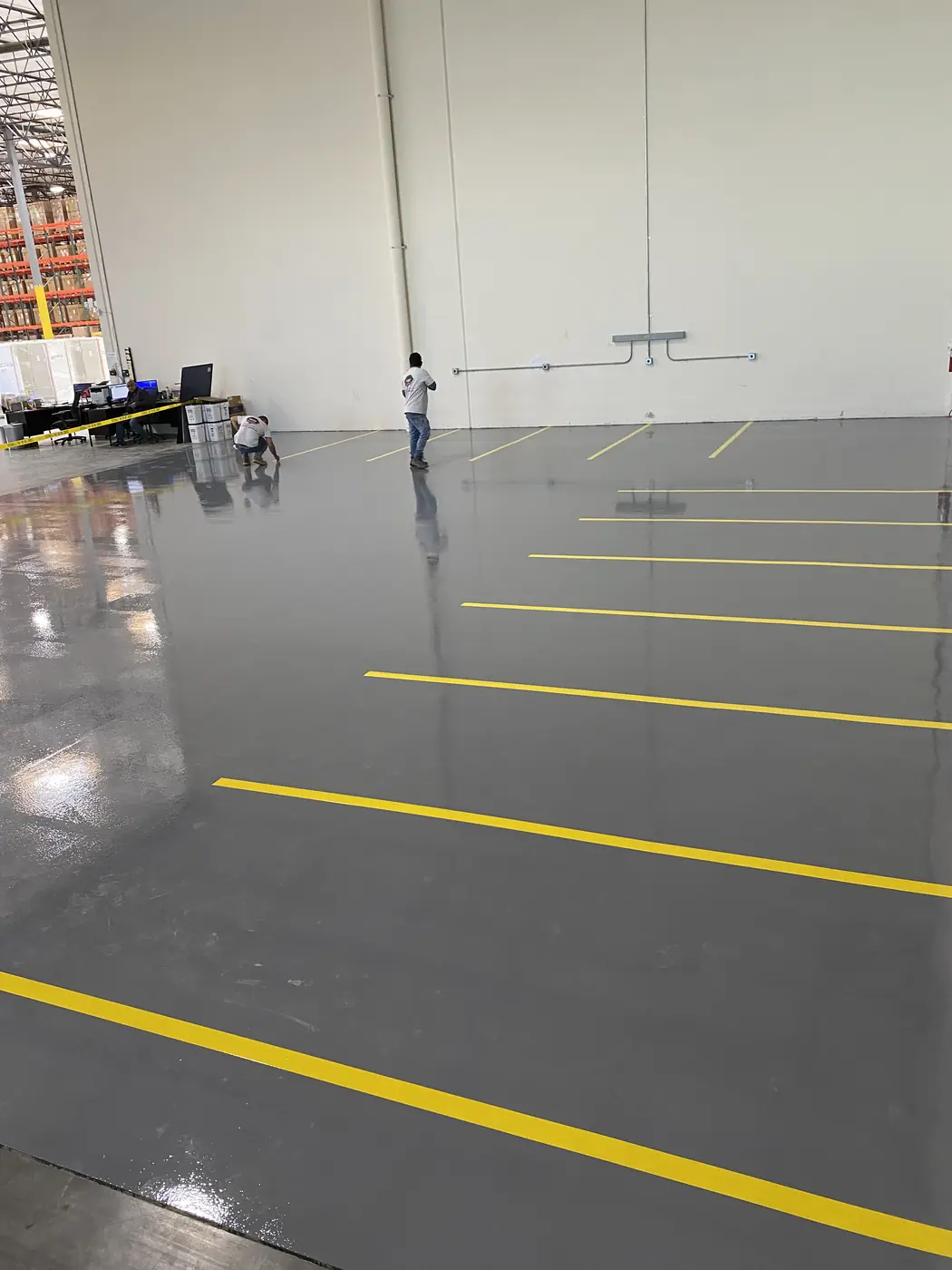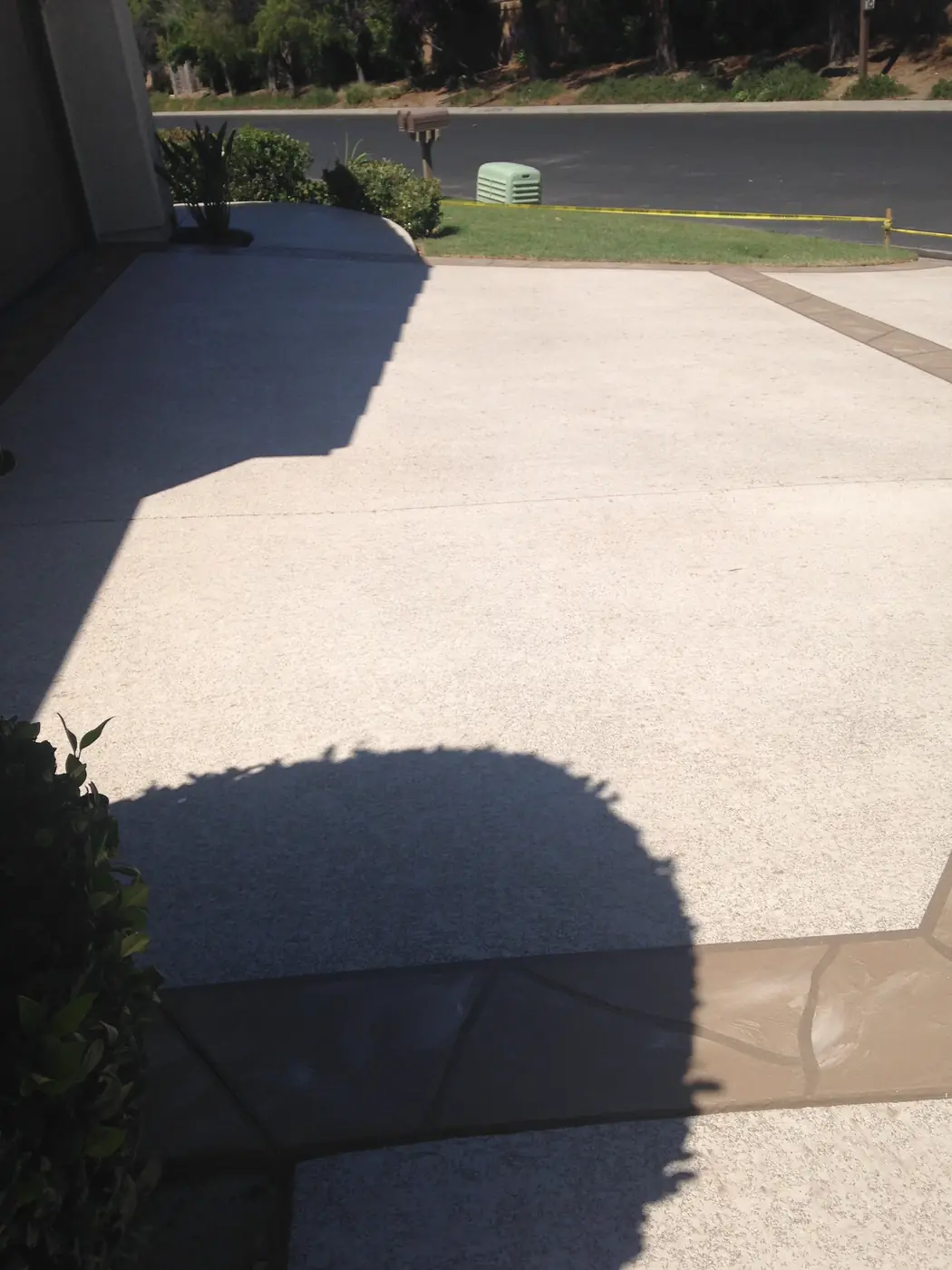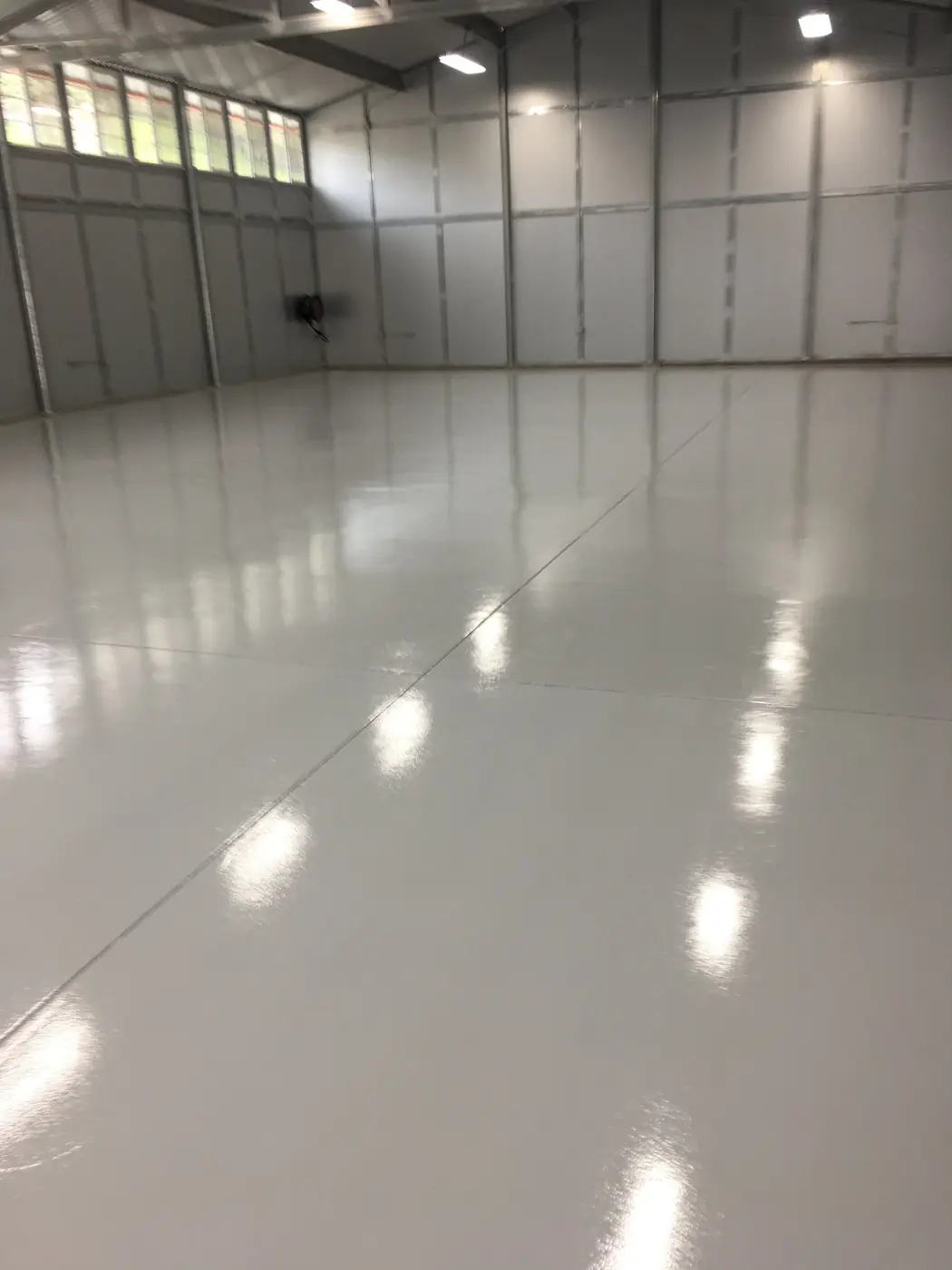
This is where our company started. David Paul Foster Company began in tennis court resurfacing in 1976, and the preparation skills we learned on courts are the same ones we now use on warehouse floors and pool decks. We have resurfaced thousands of courts.
So this article comes from the original trade.
How courts are normally maintained
An acrylic hard court is a concrete or asphalt slab with an acrylic system built on top of it: a resurfacer, several color coats, and line paint. Under normal use a court gets recoated every four to eight years depending on climate and traffic — the old surface is cleaned, cracks are addressed, and new color goes on.
That works. It works several times. It does not work forever.
The point where recoating stops working
Every recoat adds thickness. After enough cycles the accumulated acrylic is several millimeters thick, and the failure mode changes. Instead of the surface simply wearing, the whole built-up system starts to separate from the slab underneath.
The signs:
- Blistering or bubbling across areas rather than at one spot. The system is lifting off the substrate
- Delamination at cracks — the coating peeling back from the edges of a crack rather than just splitting along it
- A hollow sound when you tap areas of the surface. That is a void between the coating and the slab
- Sheets rather than flakes coming away when a piece finally lifts
- Recoats not lasting — the last one failed in two years when previous ones lasted six
If you are seeing those, another color coat is money spent on a surface that is already letting go. The new layer bonds to the old layer, and the old layer is the thing that is failing.
What stripping involves
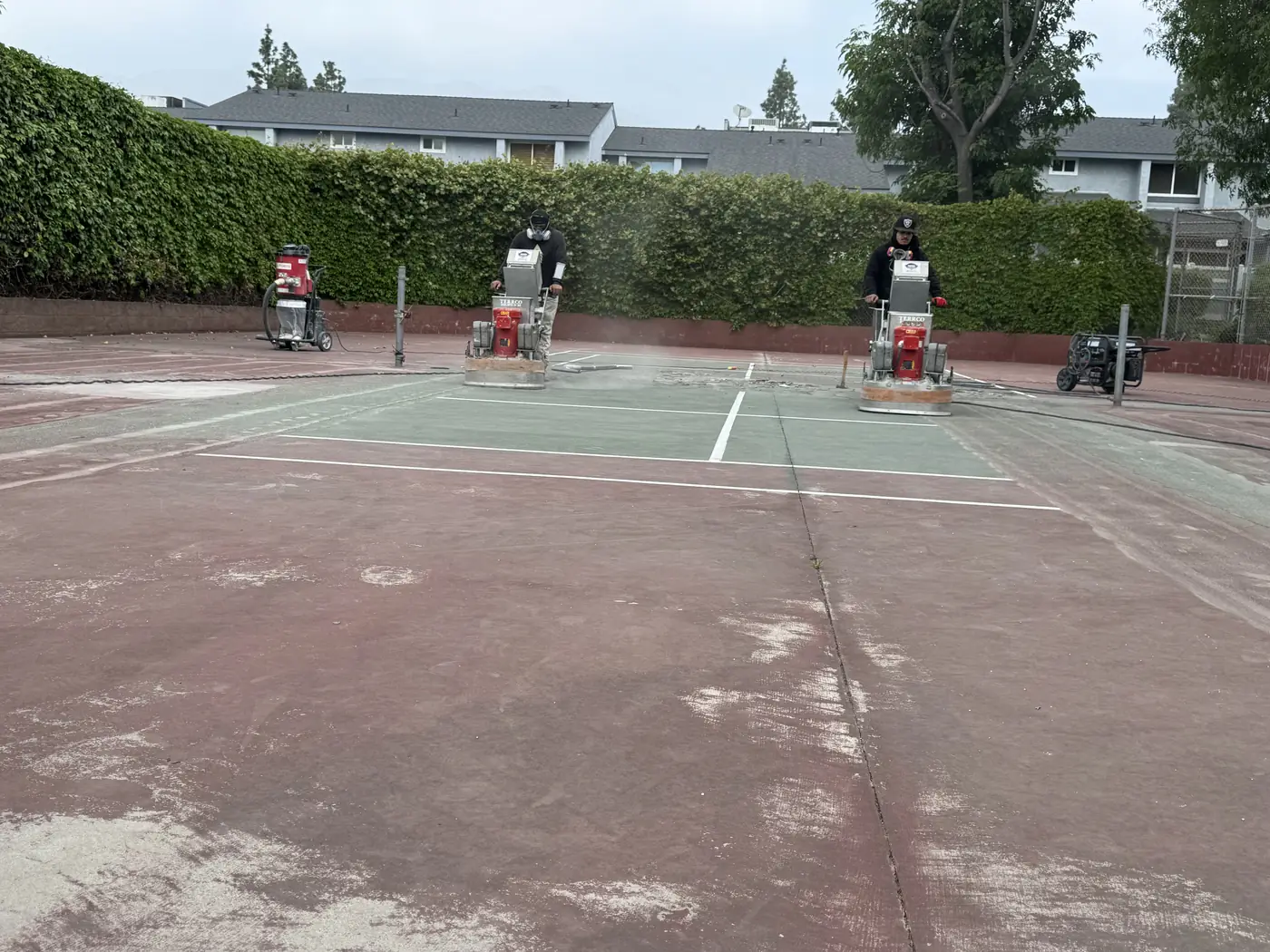
Taking a court back to sound substrate is mechanical work — grinding and shot blasting rather than chemicals alone. The aim is to remove the accumulated acrylic entirely and leave a clean, profiled surface for the new system to key into.
It is dusty, it is heavy equipment, and it is exactly the work most court surfacing contractors subcontract because they do not own the machinery. We do own it, and we do this work both on our own projects and for other contractors — see concrete coating removal.
Once it is back to substrate:
- Cracks are properly addressed rather than bridged
- Low spots and birdbaths are levelled — a court that ponds water will fail again
- The surface is profiled for the new system
- Color coating and lines go on, either by us or by your surfacing specialist
Pickleball conversions
A great deal of what gets asked for now is converting tennis courts to pickleball, or overlaying pickleball lines onto existing tennis courts.
If the existing surface is sound, additional lines are straightforward. If it is not — and a lot of the courts being converted are exactly the tired ones described above — then the conversion is the right moment to strip and start again. Adding a second set of lines to a delaminating surface is a wasted spend, and doing it properly at conversion time costs less than doing it twice.
We handle the preparation and removal side. Layout and color coating is often done by a court surfacing specialist and we work alongside them regularly. We will be clear about which parts we are doing rather than implying we do all of it.
Who we work for
Municipal parks departments, schools and colleges, clubs, and HOAs across Riverside, San Bernardino, San Diego, Orange and Los Angeles counties. Court work runs on budget cycles and seasonal windows, and we are used to both.
The connection to everything else we do
Preparation is preparation. A court that fails because a coating was built over a surface that was already letting go is the same failure as a garage floor coated over a failing kit, or a patio coated over thirty-year-old paint. We wrote about the residential version of that in why epoxy garage floor kits peel.
The rule does not change with the surface: a coating is only ever as good as what it is bonded to.
If you have a court that is due, or one where the last recoat did not last, get in touch for a free on-site assessment and we will tell you honestly whether it needs stripping or whether it has another recoat left in it.