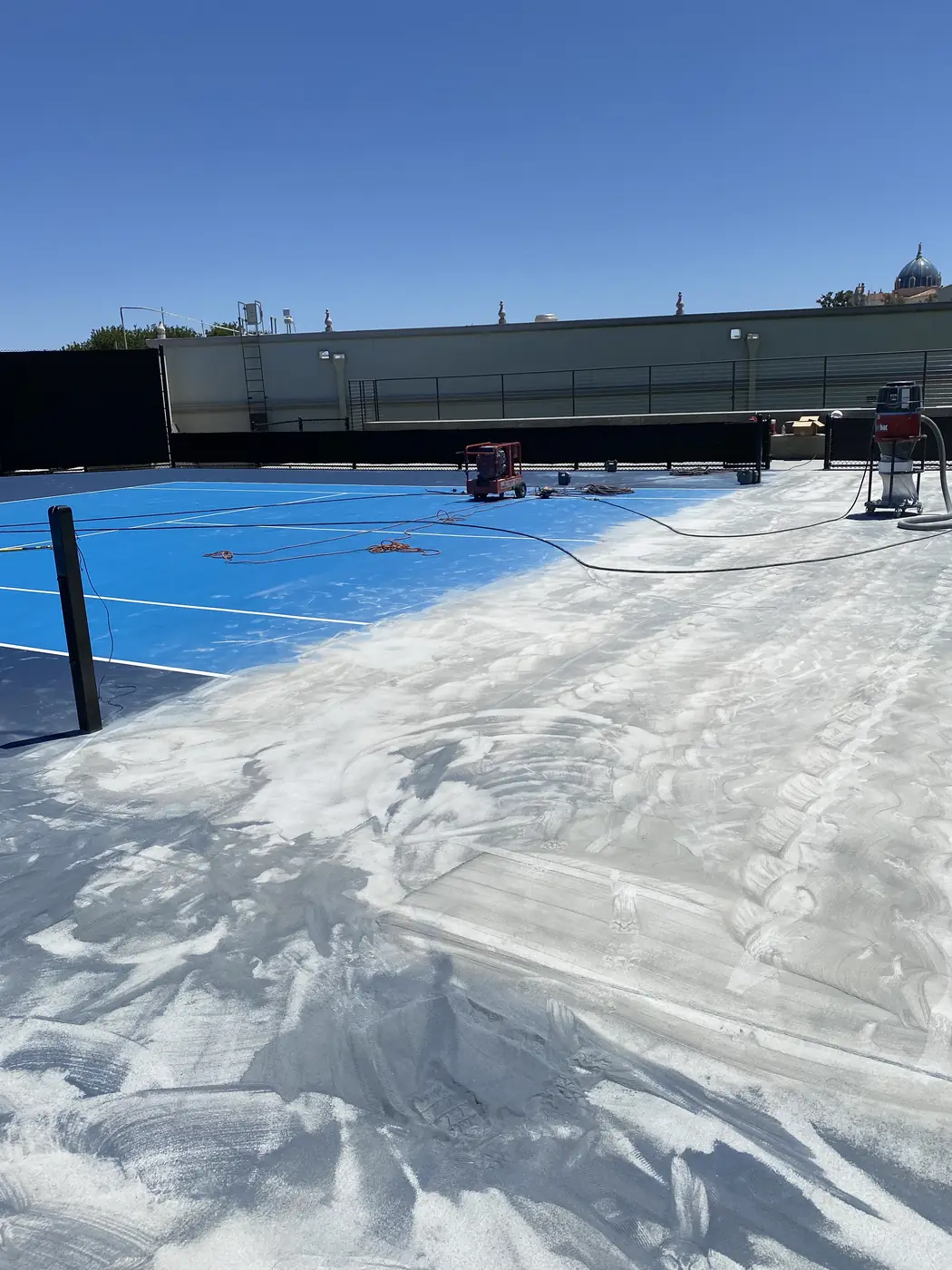
If you install floor coatings, polished concrete, tile or court surfaces, sooner or later you take on a job where the old system has to come off first. Some contractors strip it themselves. Plenty would rather not: the equipment is expensive, the work is slow and dusty, and a crew tied up grinding for a week is a crew not installing.
Subcontracting the removal is common, and it works well when the scope is clear. This guide is for the contractor on the other end of that call: what to send for a quote, what to agree before anyone starts, and what you should get back.
Why contractors hand off the strip
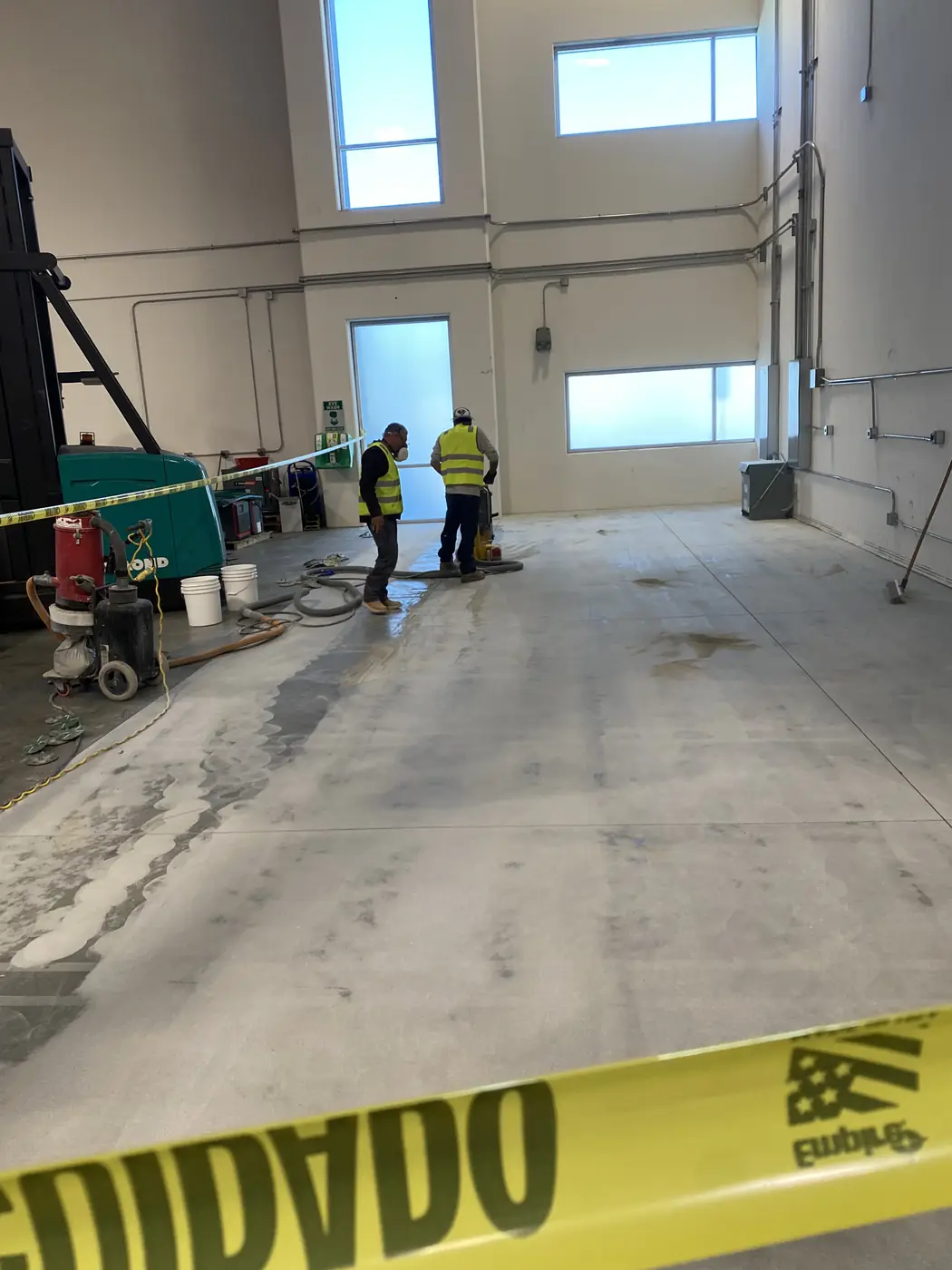
The machinery. Taking a coating off concrete properly takes heavy grinders, shot blasters or scarifiers, the right tooling for each, and dust extraction big enough to keep up. Most installers own some of that, sized for prep on a clean slab. Fewer own enough of it for a floor carrying years of epoxy, a court with decades of acrylic build, or a warehouse with mastic under the old tile.
Crew time. A strip that runs long eats into the schedule for the work you actually make your margin on. Handing it to a crew that does nothing else that week keeps your people installing.
The risk sits in the prep. A finish fails months later if the slab under it was not opened up and cleaned properly. If you are putting your name on the finish, you want the prep done by someone who treats it as the job, not as the chore before the job.
For us, this is a long-standing part of the business. About half of our coating removal work is preparation for our own floors. The other half is for other contractors. We take the old system off, leave the slab profiled to the spec they need, and they lay their own finish over it. We are not competing for the finish work.
What to send for a quote
The more of this you can give up front, the closer the first number will be to the final one.
- Area and layout. Square footage, number of rooms or courts, and anything that breaks the floor up: columns, racking, drains, equipment that stays
- What is on the floor, if you know. Epoxy, urethane, paint, sealer, acrylic court surfacing, carpet glue, thinset, mastic. If nobody knows, say so. That is common on a building that has changed hands
- How many layers. A floor that has been recoated several times, or a court that has had a color coat every few years for decades, is a very different job from a single coat
- What is going on next. Your system and the surface profile it calls for. Most manufacturers state a required profile on the datasheet, often as a CSP number. Send that, not just "ready for epoxy"
- Occupied or empty. Whether the building stays open, and what the tenants or staff need: quiet hours, clear exits, no dust in adjacent rooms
- Access and timing. Gate and door widths, where equipment can be staged, and the window you actually have
- Photos. Wide shots and close-ups of the worst areas, plus any spots where the coating is already lifting
The test patch
When the coating is unknown, or when there is more of it than anyone expected, we test a small area first to see how it comes off before committing to a method across the whole floor. The wrong approach on an unknown coating wastes a day and can damage the slab. On our jobs that test is part of the estimate, not an extra.
It is also the best moment to settle expectations on both sides. You see what the slab looks like with the coating off, and we both know what the method and the pace will be.
Agree the scope in writing
Most friction between a removal contractor and an installer comes from a gap nobody wrote down. Settle these before the start date:
The finished profile. What texture the slab is left at, matched to your system. Too smooth and your coating has nothing to grip. Too aggressive and you are filling a rough surface with material you did not price for.
Cracks, joints and damage. Once the old system is off, cracks, spalls and old patches that were hidden underneath become visible. Agree who repairs them, who fills joints, and how anything unexpected gets priced, before they turn up.
Edges and corners. Large machines do the field. Edges against walls, columns and fixed equipment need smaller tools and more time. Make sure the quote covers the whole floor you need clean, not just the open area.
Debris and cleanup. Who collects and removes the ground-off material, and how clean the slab is left. "Ready for coating" should mean the same thing to both of you.
Unknowns that stop the job. Old black mastic, in particular. Black cutback adhesive from older buildings can contain asbestos and has to be tested before anyone grinds, blasts or scarifies it. If it tests positive, a licensed abatement contractor handles it before any floor preparation starts. Find out before the crews are booked, not on the morning.
Occupied buildings
Interior removal in an occupied building is a dust-control problem more than a grinding problem. We run vacuum-assisted equipment and containment for occupied spaces. It changes the schedule and the price, so if the building stays open, tell us at the quote stage and we will scope it that way.
Phasing is normal. Sections or rooms are stripped in an agreed order and handed over as they are done, so your install can follow behind rather than waiting for the whole floor. If your schedule depends on that sequence, put it in the scope.
Courts are their own job
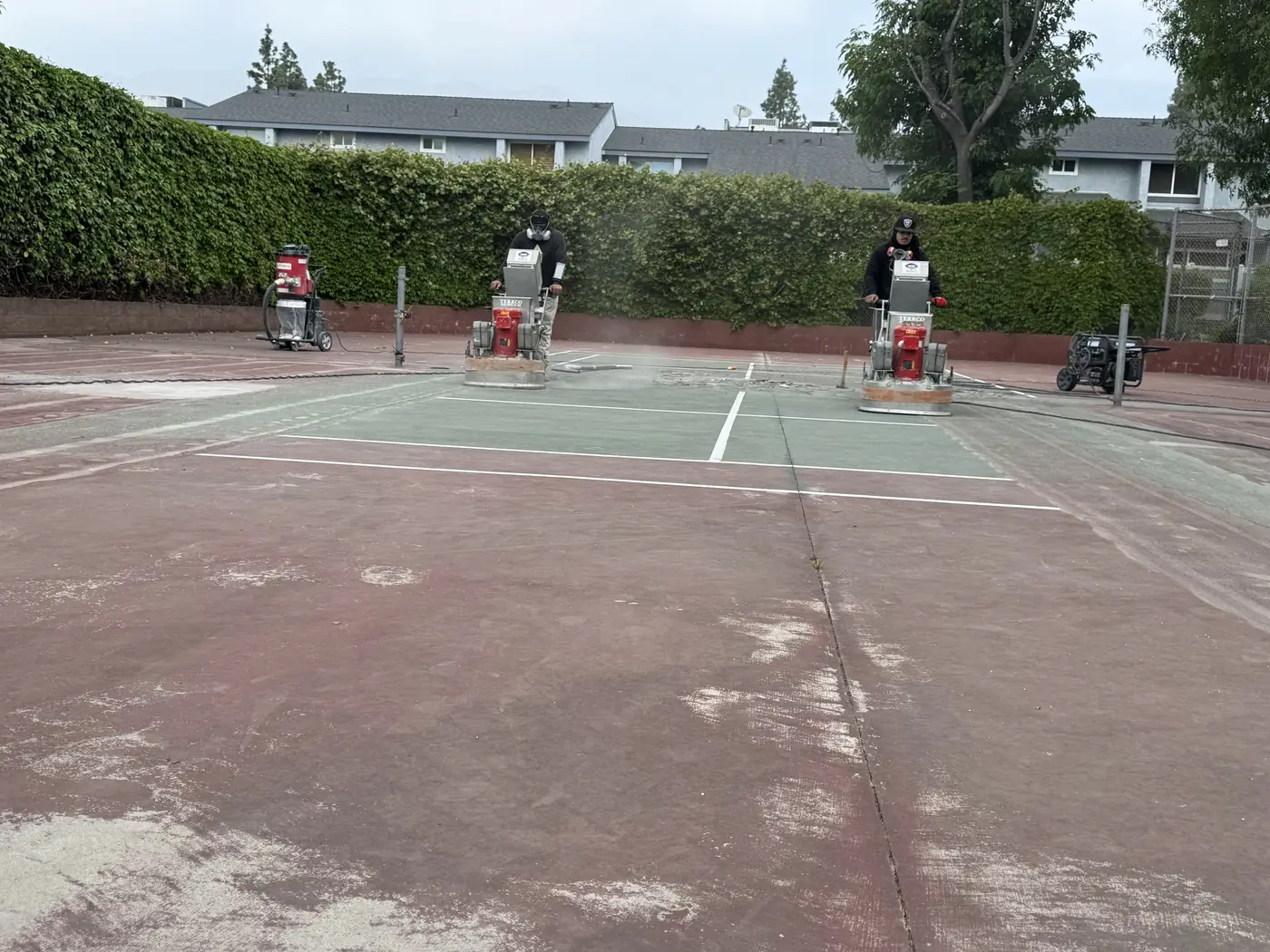
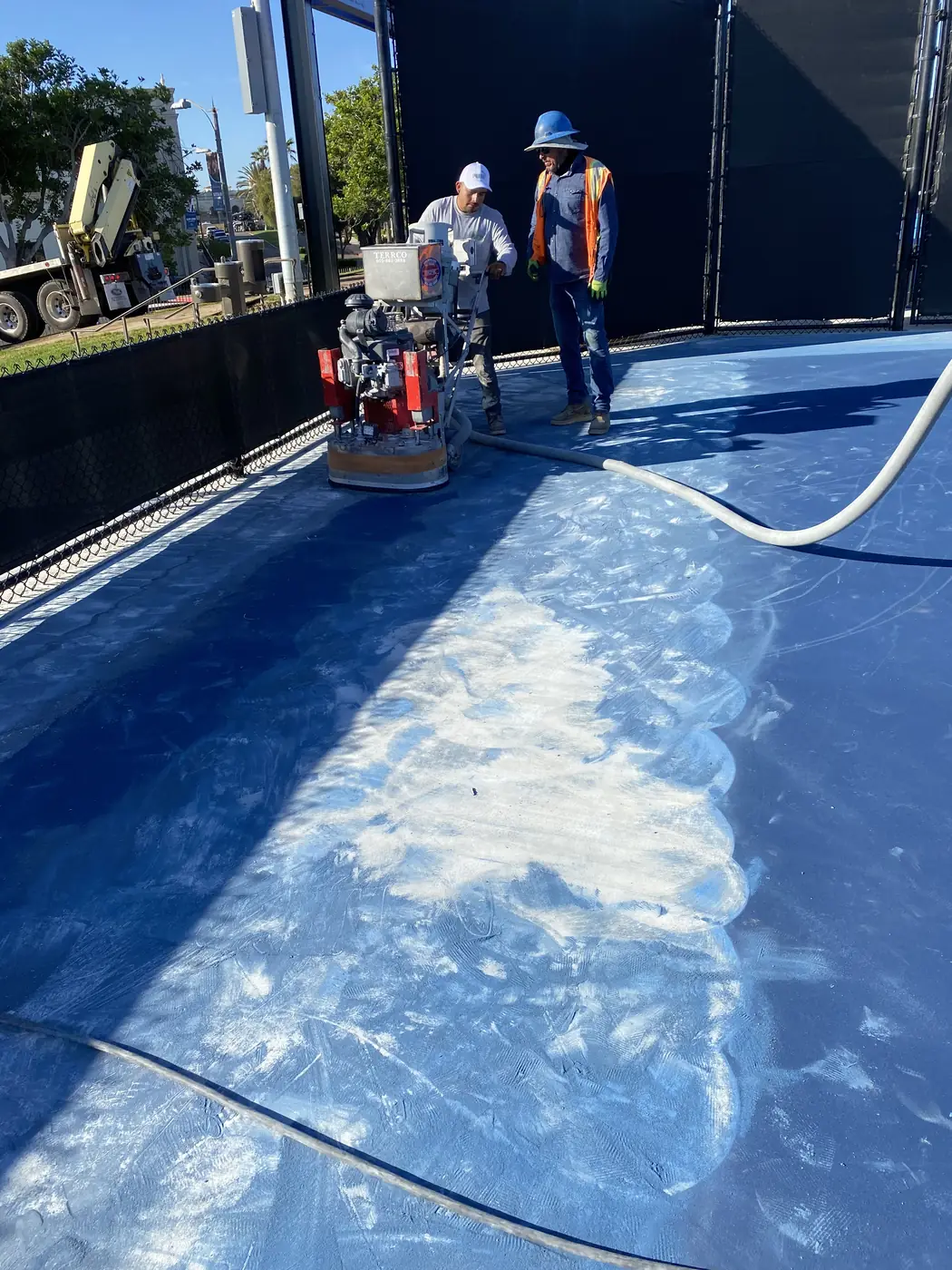
Court resurfacing contractors regularly bring us in. Tennis, pickleball, basketball and multi-use courts get recoated every few years, and every cycle adds thickness. Eventually the build-up cracks, blisters and holds water, and another color coat on top only repeats the problem on a thicker base. At that point it has to come back to the slab. We covered how to tell in when a tennis court needs stripping.
A few things are particular to courts:
- The season sets the window. Schools, clubs, HOAs and parks have dates the court cannot be out of action. Give us the real window and we will tell you honestly whether the work fits in it
- The slab gets seen for the first time. Cracks in the concrete itself become visible once the build-up is off. Often that is the first time anyone has seen the real condition of the court, and it is far better to see it then than through a new color coat
- Conversions. Restriping for pickleball over an old tennis surface often runs into the same build-up problem. Converting a tennis court to pickleball goes into that
We do not sell court resurfacing. We strip courts and hand back sound, bare concrete with a profile suitable for a new surfacing system. That is the whole of our part, which is why surfacing contractors are comfortable bringing us in. More is on our court coating removal page.
What you should get back
At handover, the slab should be:
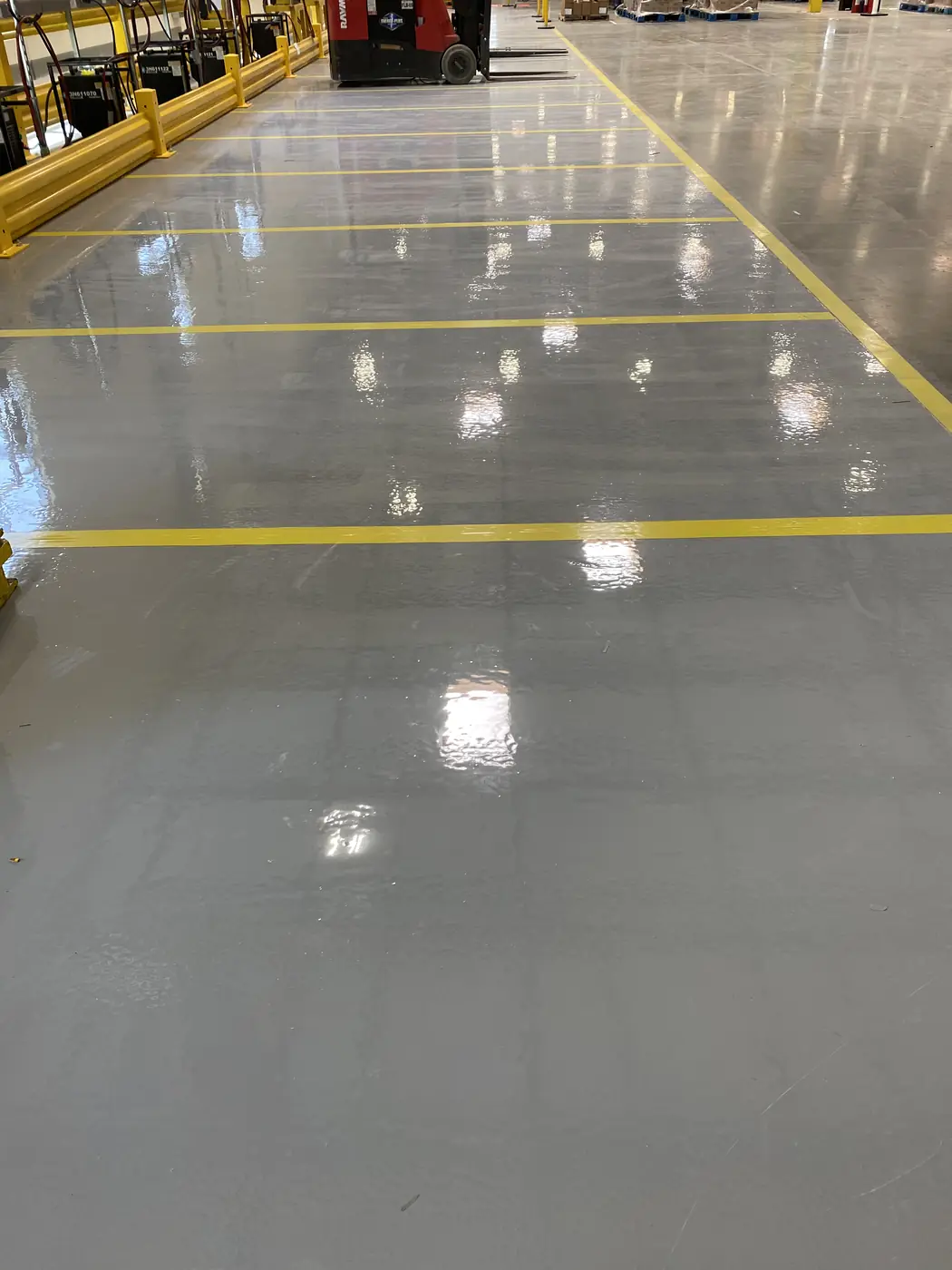
- Back to sound concrete, with the old system off across the agreed area, edges included
- Profiled to the spec you gave
- Clean of the ground-off material, as agreed
- With anything that is not sound already reported to you
That last point matters. If what is under the old coating is not sound, you should hear about it the day it is found, not after your finish has gone down over it.
Between the strip and your install
A freshly profiled slab is at its most receptive, to your primer and to everything else. Keep traffic off it as far as you can, keep other trades from tracking dirt or spilling on it, and plan your install to follow soon after. If there is a gap, agree who protects the floor in the meantime.
Getting a removal quote
We have been preparing and stripping concrete in Southern California since 1976, with our own equipment and our own crews, across Riverside, San Bernardino, San Diego, Orange and Los Angeles counties. How old coatings come off concrete explains the methods in more detail. Ask for a quote and send us the floor, what is on it and what is going on next, and we will tell you plainly what it takes.