A polished concrete floor does not have to be one plain color from wall to wall. Logos, arrows, borders, team graphics and court lines can all be built into the floor itself, so they wear with the concrete instead of sitting on top of it like a decal or a painted line.
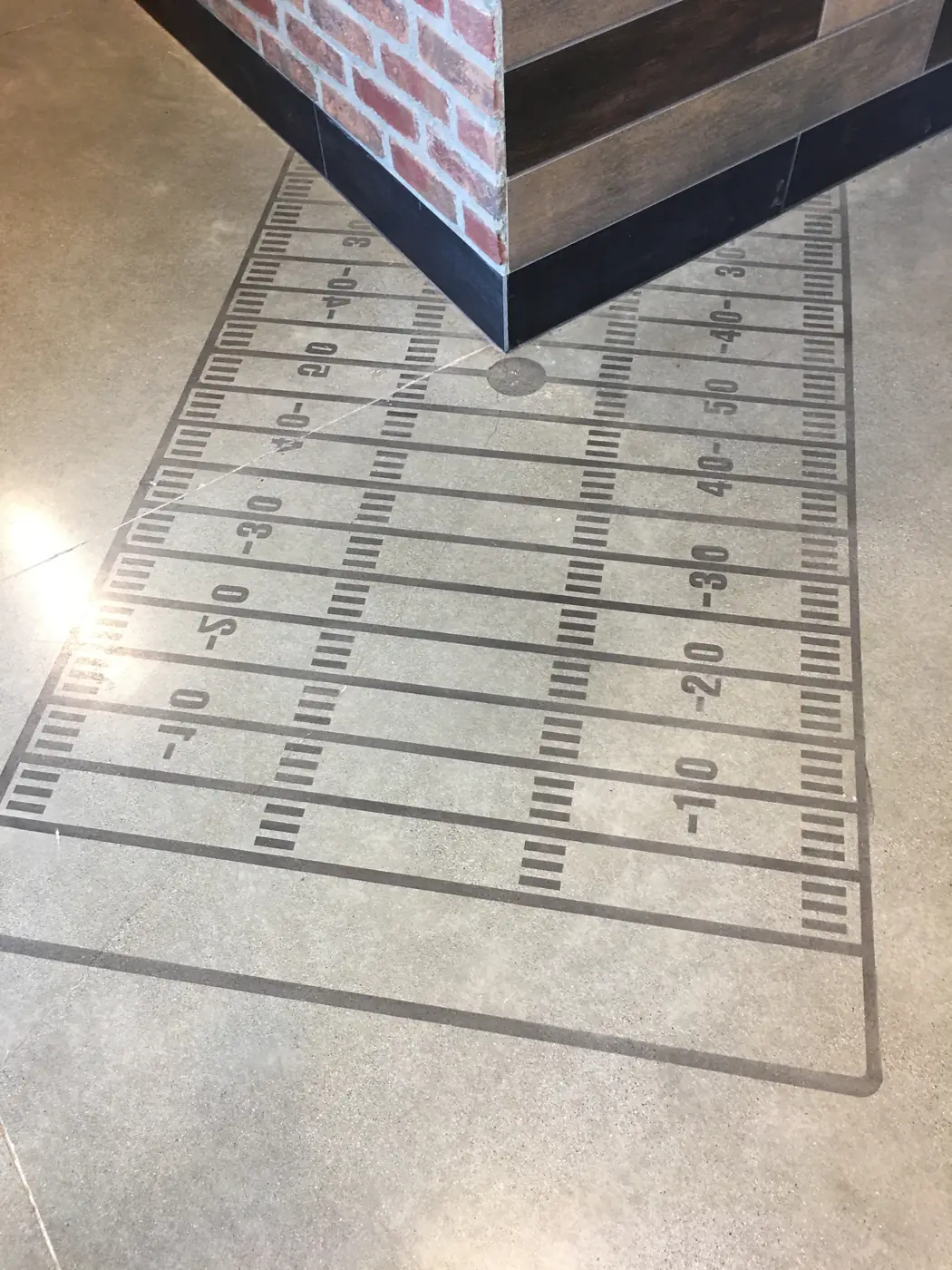
The floor in the photo above is one of ours: a football field, yard lines and numbers included, set into a polished floor beside a counter. This guide covers how graphics like that are made, what designs suit them, and what to plan before the floor is ground.
Where graphics in a polished floor make sense
- Schools and cafeterias. Mascots, team colors, a field or court diagram under the seating
- Gyms and multi-purpose halls. Court markings cut into the floor rather than painted on
- Retail and convenience stores. Directional arrows, entrance graphics and brand colors
- Lobbies and offices. A logo at the entrance, or a band of color that leads visitors through the space
- Showrooms and restaurants. Borders, color breaks and patterns that zone a large open floor
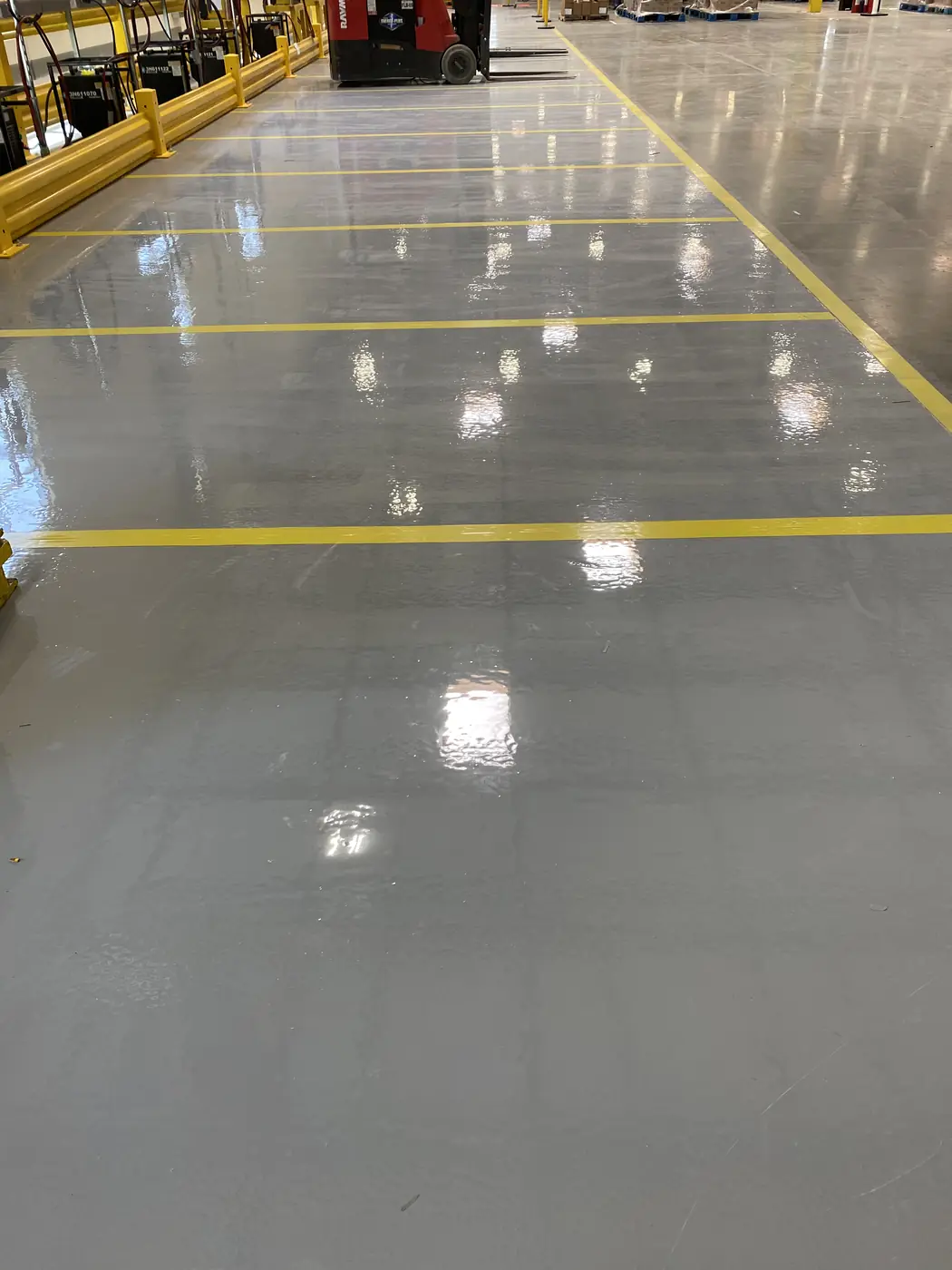
The common thread is a floor that takes a lot of traffic and is meant to last. A graphic built into a polished slab does not peel up at the edges or get scuffed off by the doors.
How a graphic gets into the floor
Polishing means grinding the slab with progressively finer diamond tooling and densifying it, so the finish is the concrete itself rather than a film on top. Graphics are built into that same process. The details vary by design and by contractor, but the usual steps are:
Laying out the design. The artwork is scaled and transferred to the floor, often with a stencil or a full-size layout marked out on the slab.
Saw-cutting the outlines. A shallow saw cut traces the edge of each shape. The cut gives a crisp line and acts as a boundary that stops one color bleeding into the next.
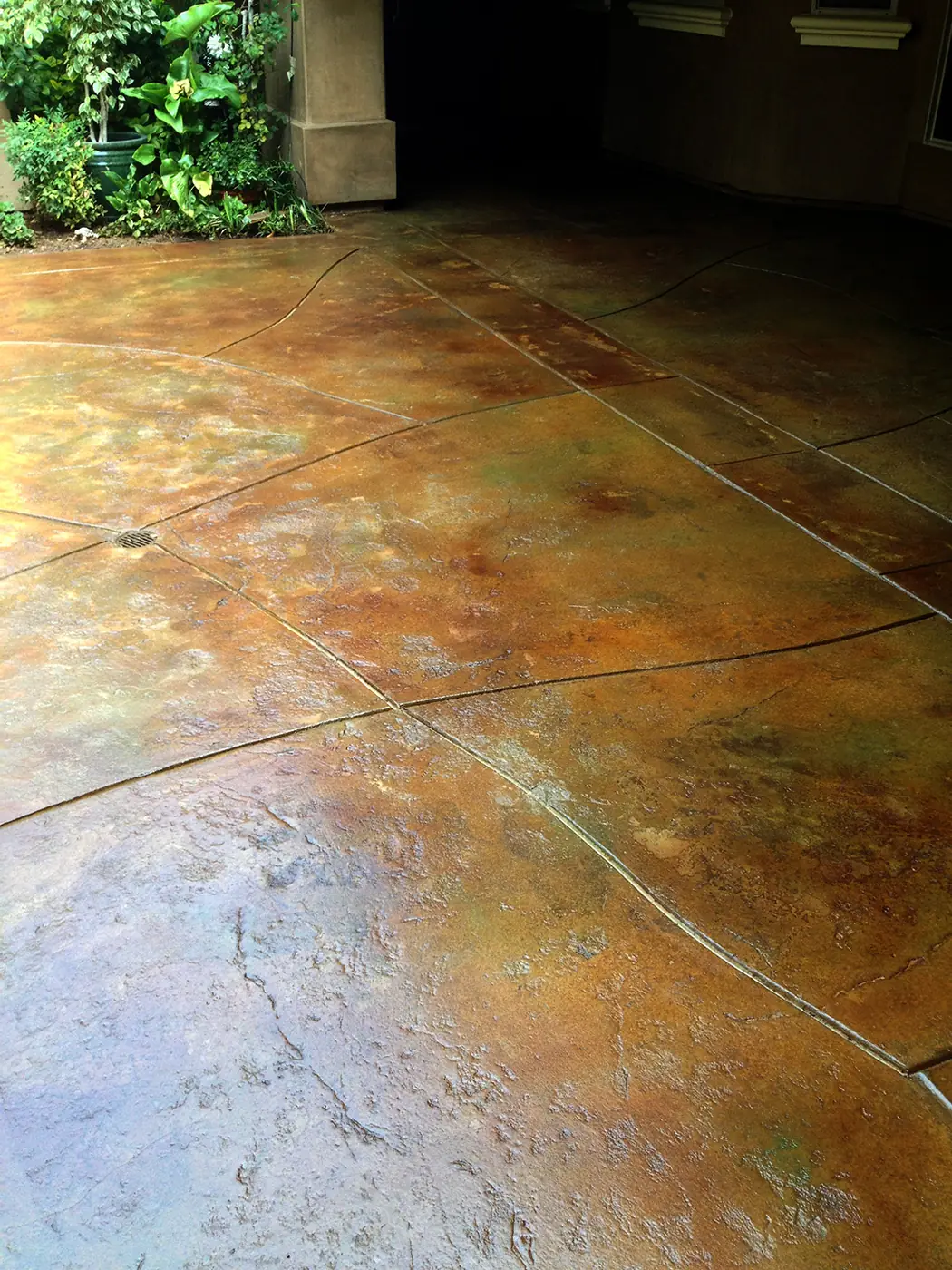
Coloring. Dyes or stains go into the concrete inside the outlines, one color at a time. Because the color soaks into the surface rather than forming a layer, it shows the texture and aggregate of the slab through it. That is why a graphic in polished concrete looks like part of the floor, not something laid on it.
Finishing with the floor. The final grinding and polishing passes, the densifier and any guard or sealer go over the whole floor, graphic included, so the graphic ends up at the same gloss as everything around it.
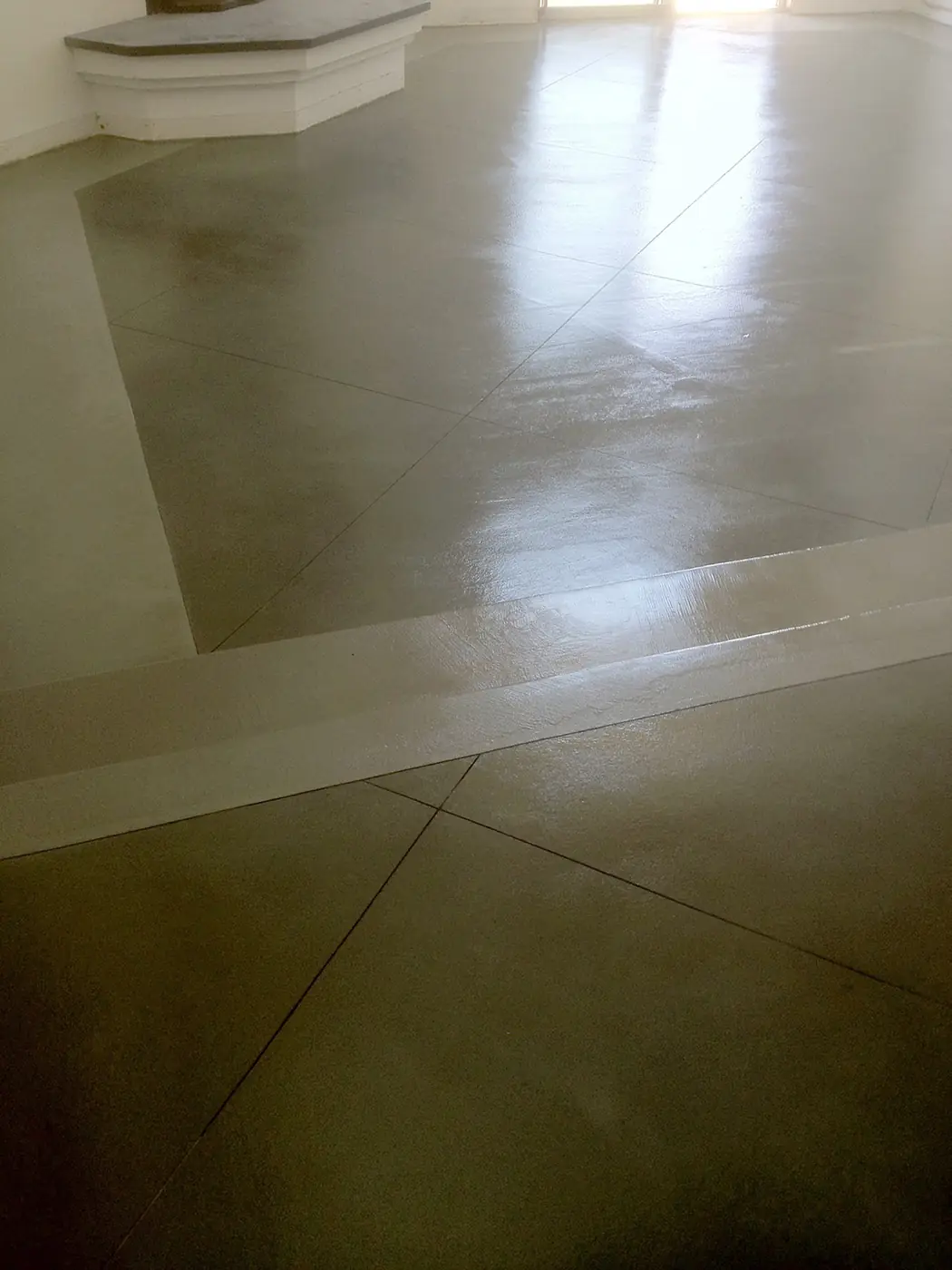
Color does not have to come as a graphic. Large fields of color, sweeping curves between two shades, or a band leading down a corridor work the same way: where the slab is dyed before the final passes, the color is locked into the concrete rather than sitting on it.
What makes a design work
Bold shapes over fine detail. Saw-cut outlines and dyed fields reproduce strong shapes very well: arrows, letters, numbers, stripes, geometric logos. Very fine lines, small text and photographic gradients do not translate well into concrete. If your logo has a simplified version, start from that.
Fewer colors, more contrast. Each color is a separate step. Two or three strong colors against the natural gray of the slab usually read better from across a room than six close shades.
The slab is part of the palette. Dye on concrete is translucent. The same color looks different on a dark slab than on a pale one, and it varies a little across a single floor. That variation is part of the look. If you need an exact brand color match every time, ask to see a sample on your own slab first.
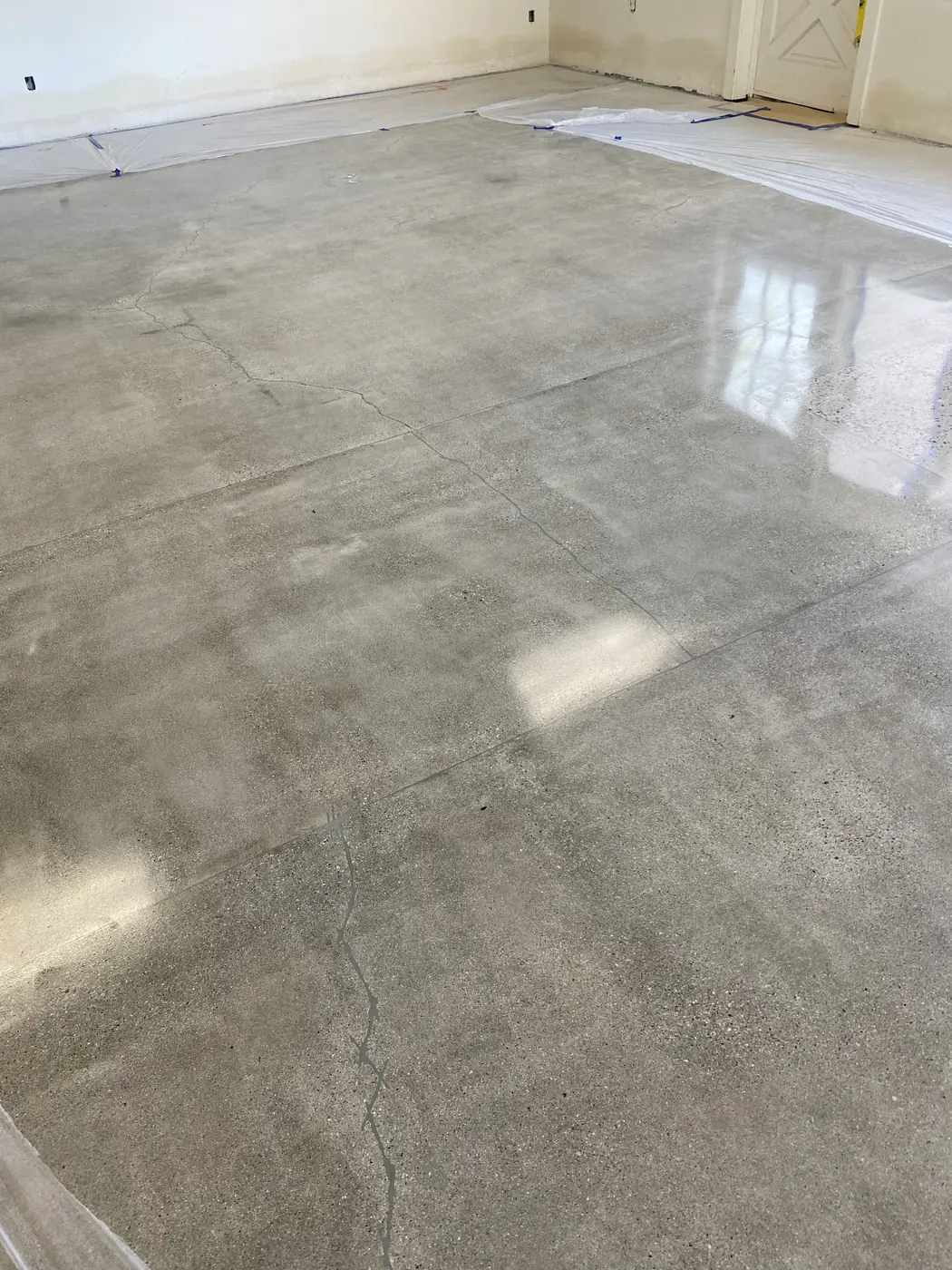
Existing cracks and joints. Control joints and cracks run through the floor whether there is a graphic or not. A good layout works with them, placing shapes so a joint falls along an edge rather than straight through a letter. Cracks can be filled, but they will still show as lines. Can your existing slab be polished goes into what an existing floor brings with it.
Placement and traffic. Graphics at entrances and in main walkways get the most wear and the most attention. Put the parts you care most about where they will be seen, and do not put a detailed logo where a pallet jack turns.
New slab or existing floor
Graphics can go into new concrete or into an existing slab that is being polished. On a new building, the best results come from planning early, so the layout is known before the floor is ground and other trades can be kept off it. On an existing floor, old coatings, adhesive and sealer have to come off first. That removal is work we do with our own crews, and it is a service in its own right for us. Concrete coating removal covers it.
Polished graphics or a coating
If you want a large, highly detailed or exactly matched graphic, a coated floor can sometimes carry more detail than dyed concrete, because the color sits in a resin layer rather than in the slab. The trade-off is the usual one between a coating and a polish. We compared them in polished concrete vs epoxy. For a durable graphic on a floor that is going to be polished anyway, building it into the concrete is hard to beat.
Looking after it
A graphic in a polished floor is cared for exactly like the rest of the floor. Dust-mop or sweep regularly to keep grit from wearing the shine, wash with a neutral cleaner, and wipe spills rather than leaving them. How to clean a polished concrete floor covers the routine. Because the color is in the concrete, there is no decal edge to lift and no painted line to wear through.
Planning a floor with graphics
Bring the artwork, the floor plan and the dates to the first conversation. We will look at the slab, tell you what the design will look like on that concrete, and agree the gloss and colors before any grinding starts. More detail is on our polished concrete and interior concrete staining pages, and acid stain vs water-based stain explains how the two kinds of color behave. We have been preparing and finishing concrete in Southern California since 1976. Book a free on-site estimate to talk through your floor.